





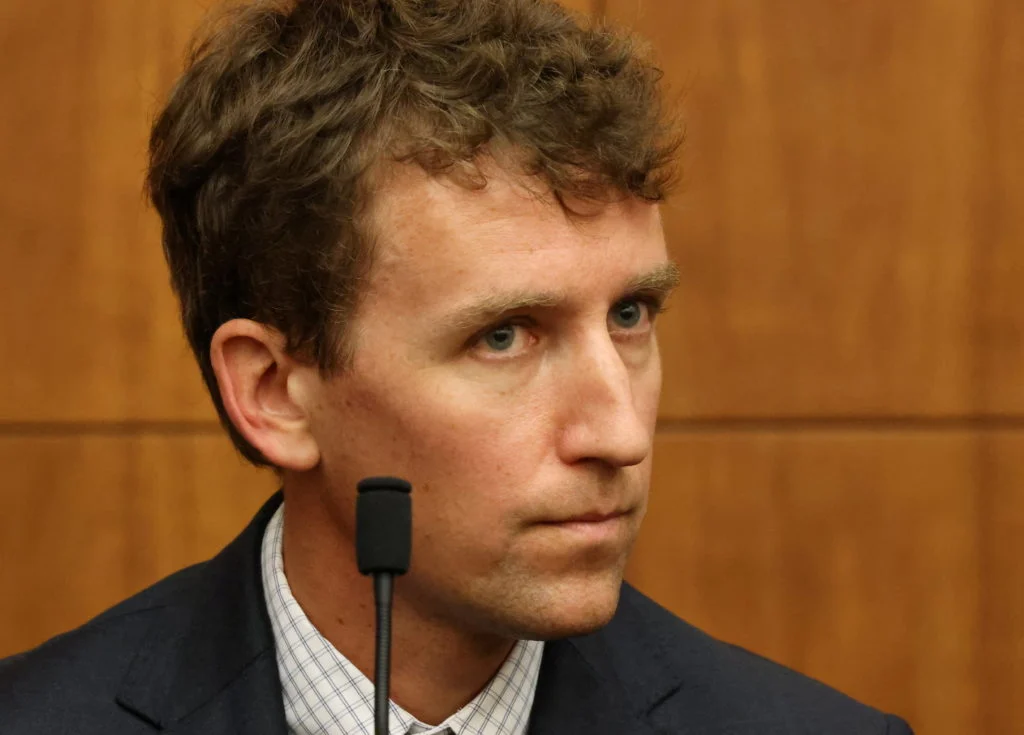
In a candid, emotionally harrowing televised interview on CBS News’ 60 Minutes this past Sunday, Patrick Clancy, the husband of Lindsay Clancy, offered a poignant look into the aftermath of one of the most publicized family tragedies in recent Massachusetts history. For the first time since a judge declared a mistrial in his wife’s case earlier this month, Patrick spoke openly about his forgiveness, his battle with profound trauma, and the urgent need to redirect public discourse toward the critical, often misunderstood, realities of perinatal mental health.
The interview serves as a stark reminder of the human cost behind the legal headlines, as the case of Lindsay Clancy—who stands accused of strangling their three young children in January 2023—continues to spark national debate regarding criminal responsibility, mental health, and the adequacy of the American medical system.
The Chronology: A Descent into Unthinkable Tragedy
The tragedy unfolded on January 24, 2023, in the quiet town of Duxbury, Massachusetts. What began as an ordinary day for the young family ended in a scene of indescribable horror. Lindsay Clancy, a labor and delivery nurse, was accused of strangling her three children: five-year-old Cora, two-year-old Dawson, and eight-month-old Callan.
Following the act, Lindsay attempted to take her own life by jumping from a second-story window. When Patrick returned home, he discovered his children unresponsive in the basement. The 911 call he placed that day, which was later played during trial proceedings, remains a haunting testament to the discovery. Patrick’s raw, guttural cries and the frantic, bewildered questions of the emergency dispatcher crystallized the terror of that afternoon for jurors and the public alike.
While Cora and Dawson were pronounced dead shortly after the incident, the youngest, Callan, clung to life for four days. During this agonizing period, Patrick remained at his son’s bedside. In his interview, he recounted the profound sorrow of those final hours: "I held him in my arms until he passed." While sitting with his son, Patrick used his free hand to type tributes to the children he had already lost, simultaneously articulating a decision that would define his public stance: he chose to forgive his wife.
The Legal Landscape: A Jury Divided
The trial, which concluded earlier this month, centered on whether Lindsay Clancy was criminally responsible for her actions. The defense maintained that Lindsay was suffering from severe, untreated postpartum psychosis—a rare and life-threatening condition that can cause mothers to experience hallucinations, delusions, and a total break from reality.
Throughout the proceedings, neither the prosecution nor the defense disputed that Lindsay had killed her children. Instead, the battle was fought over the state of her mind. Eleven of the twelve jurors were reportedly prepared to acquit, concluding that her mental health crisis rendered her incapable of understanding the wrongfulness of her actions. However, a single holdout juror sided with the prosecution’s argument that Lindsay was aware of her actions and maintained agency. This deadlock forced the judge to declare a mistrial on September 4.
The uncertainty of the outcome has left the community and the legal system in a state of suspended animation. The Plymouth County District Attorney’s office has yet to announce whether they intend to pursue a retrial, a decision that carries heavy implications for the legal standards surrounding mental illness in the Commonwealth.
The Burden of Survival: Patrick’s Journey Through Trauma
For Patrick, the tragedy did not end with the arrival of the police or the conclusion of the trial. He described a period of profound despondency, admitting that in the months following the deaths, he struggled with suicidal ideation. "There was a time I didn’t think I would live to see my 35th birthday," he told 60 Minutes, "and I was completely fine with it."
The stress of the legal proceedings compounded his grief. During his testimony, when attorneys played the recording of his 911 call, Patrick suffered a severe panic attack, a visceral manifestation of the trauma he continues to navigate. When asked if he blamed himself or felt that he had failed as a husband and father, Patrick remained resolute but burdened. "I think I did the best I could with what I had at the time," he stated. "I live with the outcome. I live with it every day."
His life has since seen the introduction of a new partner, Dr. Rachel Danis. During the interview, Dr. Danis pushed back against the vitriol and scrutiny directed at their relationship. "I was just a girl that met a guy running in Central Park on a really cold Saturday," she explained, emphasizing that her entry into his life should not be the subject of public speculation.
Beyond the Headlines: Confronting Conspiracy and Misinformation
A significant portion of the interview was dedicated to addressing the darker side of the case’s public reception. Since the tragedy, social media has been rife with conspiracy theories, with many users questioning Patrick’s role in the events and casting aspersions on the nature of the family’s life.
Patrick expressed deep frustration with this discourse, noting that it serves only to degrade the memory of his children. "I saw headlines that say ‘killer mom’ and ‘baby murderer monster’ and none of them were accurate," he said. "I believed that it was her mental illness that caused that."
He emphasized that these distractions take the focus away from the systemic failures in perinatal mental healthcare. By painting the case as a sensational crime drama rather than a medical catastrophe, the public discourse ignores the thousands of women who suffer from severe postpartum disorders and the lack of robust, accessible support systems designed to catch them before they reach a breaking point.
Implications: The Future of Perinatal Mental Health
The case of Lindsay Clancy has become a flashpoint for a broader movement seeking to reform how the medical and legal systems treat postpartum mental health. Advocates argue that the current approach—which often focuses on individual moral failure rather than medical necessity—is antiquated.
Perinatal mental health experts suggest that screening tools and support networks are often inadequate for mothers experiencing the rapid, dangerous onset of psychosis. The fact that Lindsay Clancy was already seeking treatment at the time of the incident has led many to question whether the medical system failed to identify the severity of her condition.
As the Plymouth County District Attorney weighs the path forward, the national conversation remains fixed on several key questions:
- Legal Standards: Should the legal system be more flexible when evaluating individuals experiencing recognized, albeit rare, psychiatric breaks?
- Medical Accountability: What are the obligations of healthcare providers when a patient under their care for mental health issues expresses symptoms of psychosis?
- Public Awareness: How can society shift from a culture of stigma and conspiracy to one of support and intervention?
For Patrick Clancy, the goal is simple: to honor his children by ensuring that no other family has to endure a similar collapse. By stepping into the public eye, he has moved from a private victim to a vocal advocate for systemic change. "It is a huge distraction from what really matters here," he said of the conspiracy theories, "which is perinatal mental health."
Whether or not a retrial occurs, the story of the Clancy family has fundamentally altered the discourse on motherhood, mental illness, and the nature of forgiveness in the face of unimaginable loss. As the legal system pauses to reflect, the public is left to grapple with the painful reality that behind every case file is a life—or in this case, three—that can never be replaced.