




After years of relentless escalation, a long-awaited shift has finally emerged in the American public health landscape: for the first time in a decade, the tide of the opioid epidemic appears to be receding. Following a harrowing period between 2021 and 2023, during which the United States recorded more than 105,000 overdose deaths annually—surpassing even the darkest projections made at the onset of the Covid-19 pandemic—the nation has experienced a sudden, sharp, and statistically significant decline in mortality.
In 2024, overdose deaths plummeted by 27%, according to data from the Centers for Disease Control and Prevention (CDC). Preliminary indicators for 2025 suggest this downward trend is holding, providing a glimmer of hope for a nation long defined by the grief of losing its citizens to substance use. Yet, as experts scramble to parse the data, the consensus remains one of cautious optimism. While the decline is real, the crisis is far from over, and the factors driving this improvement are as complex as they are fragile.
The Chronology of a Crisis and Its Correction
To understand the current decline, one must look at the trajectory of the preceding years. The pandemic acted as a massive accelerant to an already simmering fire. Isolation, economic instability, and a volatile drug supply pushed annual fatalities past the 100,000 threshold. For three consecutive years, the U.S. existed in a state of crisis that felt both permanent and inescapable.
The shift began to manifest in early 2024. Public health officials, accustomed to years of grim reporting, were initially skeptical of the data. However, as the months progressed, the trend became undeniable. This pattern was not restricted to the U.S. borders; international neighbors mirrored these shifts. Scotland reported a 13% decrease in 2024, while Canada saw a 9% reduction.
"It is unprecedented to see overdose deaths come down so dramatically, so quickly," said Brandon Marshall, an epidemiologist at Brown University who has spent years tracking these trends. "But we must be clear: we are nowhere near out of this crisis. The sheer number of lives lost annually remains unacceptably high."
Behind the Numbers: A Multi-Pronged Strategy
A new report published by the Commonwealth Fund, authored by senior research associate Evan Gumas, attempts to solve the puzzle of this decline. Gumas interviewed dozens of public health authorities across the U.S. and abroad to identify what, if anything, moved the needle.
The most striking finding? There is no "silver bullet." Every official interviewed by Gumas emphasized that the decline was the result of a "constellation of interventions" rather than a single policy success. Key contributors included:
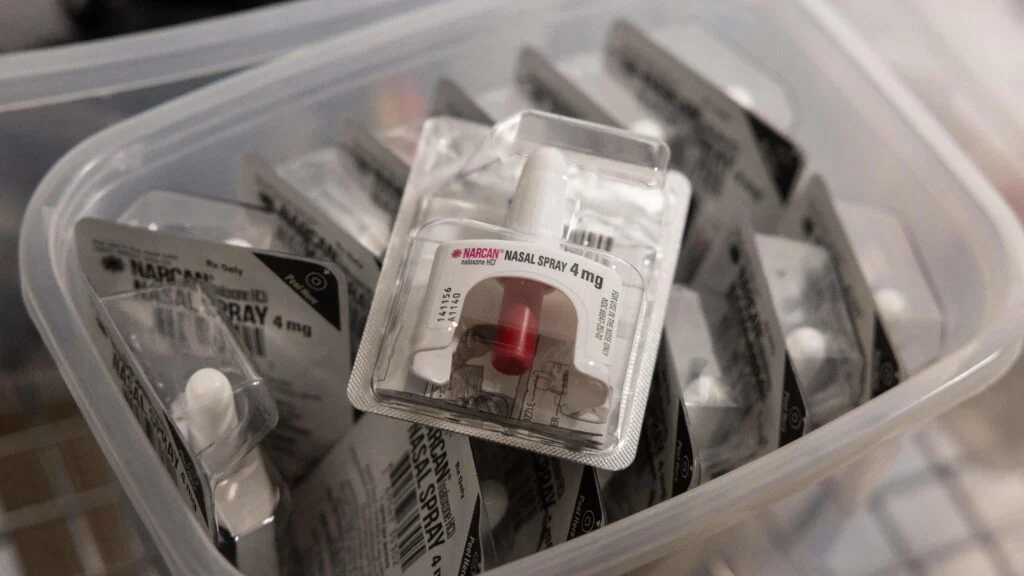
- Naloxone Saturation: Federal mandates requiring states to develop comprehensive naloxone distribution plans have significantly increased the availability of the life-saving antidote.
- Expansion of Medications for Opioid Use Disorder (MOUD): Access to methadone and buprenorphine—the gold standard of treatment—has expanded, albeit unevenly.
- Correctional Reform: A newfound focus on providing MOUD to incarcerated individuals, particularly during the high-risk period immediately following release, has proven critical.
- Enhanced Data Infrastructure: Improved state-level surveillance has allowed for more agile responses to shifts in the drug supply.
The Impact of Naloxone Saturation
The "naloxone saturation" strategy has become a cornerstone of state-level responses. Virginia serves as a primary example, implementing a robust distribution plan that preceded a 40% decrease in overdose deaths from 2023 to 2024. Maryland, meanwhile, utilized a creative distribution network—including vending machines, emergency medical services, and outreach programs—to more than double its distribution efforts, contributing to a 25% drop in fatalities over a five-year window.
Sarah Wakeman, an addiction medicine physician who directs the Substance Use Disorder Initiative at Mass General Hospital, notes that the moral imperative is clear: "Every single overdose death is really a failure, because no one should die from an opioid-related overdose when we have an antidote."
The Clinical and Social Drivers of Decline
While harm reduction has played a vital role, structural changes in the healthcare system have also contributed to the stabilization. Medicaid expansion has emerged as the most influential lever for providing long-term recovery support. By removing the financial barrier to methadone and buprenorphine, states like Colorado and New York have seen substantial growth in treatment capacity. Colorado, for instance, more than doubled its number of methadone clinics in just five years.
However, a more sobering reality also sits at the table. Experts like Dr. Wakeman suggest that "mortality saturation"—the tragic, high volume of deaths over the last five years—has fundamentally altered the size of the population at highest risk. Additionally, the drug supply is in constant flux. While fentanyl remains the primary driver, its potency has fluctuated in recent years. Furthermore, the rise of "tranqs" like xylazine and medetomidine, while dangerous in their own right, may be shifting the mortality profile of overdoses in ways that public health systems are only beginning to understand.
Official Responses and the Politics of Public Health
Despite the positive data, the political environment surrounding addiction treatment has become increasingly hostile. The current Trump administration has positioned itself in opposition to several pillars of modern harm reduction.
The Substance Abuse and Mental Health Services Administration (SAMHSA) has faced significant restructuring. In the first year of the current administration, the agency saw a massive reduction in staff and a cancellation of approximately $1.7 billion in block grant funding. This, combined with the loss of $350 million in specific overdose prevention funds, has left many state health departments scrambling to fill the void.
Furthermore, an official directive from agency leadership has cautioned states against using federal funds for harm reduction supplies, such as sterile syringes, pipes, or fentanyl test strips. This creates a disconnect between the evidence-based strategies local officials credit for the recent decline and the federal guidelines that dictate how they can fund their work.
The Looming Threat of Medicaid Cuts
If there is one shadow looming over the progress made thus far, it is the potential for significant Medicaid cuts. Research conducted by the Leonard Davis Institute of Health Economics at the University of Pennsylvania and Boston University offers a dire forecast: if these cuts are enacted, an estimated 156,000 individuals could lose access to opioid treatment. The ripple effect, according to their models, would be a doubling of the overdose rate within that specific group.
"These cuts are going to be pretty catastrophic in a lot of cases," Gumas warned. The fragility of the current decline cannot be overstated. If the infrastructure for treatment and harm reduction is dismantled, the progress of 2024 and 2025 could be erased within a single fiscal cycle.
Looking Ahead: A Call for Research and Resilience
As we move further into 2026, the global picture remains mixed. In Scotland, early data suggests that the overdose death rate may be creeping back up, serving as a warning to American policymakers that this battle is not a one-time victory.
The geographic variation within the United States—where some states have seen massive success while others continue to struggle—demands further study. Researchers like Brandon Marshall are calling for a rapid increase in funding for independent, high-quality research to identify exactly why certain states have succeeded while others lag.
"Right now, the dominant hypothesis is that this is mostly a function of the drug supply," Marshall noted. "But we need to move beyond hypotheses. We need to know which of our policies are working, which are failing, and how we can protect the gains we have made against political volatility."
The path forward requires a delicate balancing act: maintaining the momentum of harm reduction, expanding access to long-term clinical care, and protecting the funding streams that allow these programs to function. The decline in overdose deaths is a testament to the fact that, with the right resources, the opioid crisis is manageable. However, the path back to a state of normalcy is narrow, and the risk of backsliding is as high as the stakes for those struggling with substance use disorder.
Ultimately, the data from 2024 and 2025 provides a proof-of-concept. It confirms that the overdose crisis is not a law of nature, but a public health problem with identifiable, actionable solutions. Whether the United States chooses to continue down the road of evidence-based intervention or pivots toward policies that risk undermining this progress will be the defining health question of the coming years.