










By: Rob Malone (Contributing Author)
Victoria “Vicky” Ann Michelis was never a woman to be silenced, nor was she one to shrink in the face of adversity. To those who knew her, she was a fierce advocate for the underdog, a person of profound empathy, and an individual who possessed the rare courage to speak her mind without hesitation. When she was diagnosed with small cell carcinoma of the ovary, hypercalcemic type—a rare and aggressive malignancy—she refused to let the diagnosis consume her identity. Instead, she channeled her tenacity into a fight for survival and, ultimately, a mission to ensure that others would not have to endure the same limited options she faced.
Today, her spirit lives on through the Victoria Ann Michelis Fund. Managed by her close friend Rob Malone, the fund serves as a living testament to her values, bridging the gap between personal tragedy and institutional progress in the field of cancer research.
The Landscape of Ovarian Cancer: A Growing Global Challenge
To understand the urgency behind the Victoria Ann Michelis Fund’s mission, one must first confront the reality of the disease. Ovarian cancer remains one of the most lethal malignancies affecting women globally. The ovaries, vital organs responsible for egg production and hormonal regulation, can become the site of uncontrolled cellular growth. While historically viewed as a disease of the ovaries alone, modern oncology has shifted its perspective; researchers now recognize that many high-grade serous ovarian cancers originate in the distal fallopian tubes or the peritoneum—the thin, protective lining of the abdomen.
Statistical Reality
The statistics are sobering. In 2024 alone, the global community witnessed approximately 331,000 new diagnoses of ovarian cancer, with more than 200,000 women succumbing to the disease. In the United States, the outlook for 2026 projects 21,010 new cases and an estimated 12,450 deaths. These numbers represent more than just clinical data; they represent a persistent, systemic failure to detect the disease early and a lack of sufficiently innovative treatment pathways for those in the advanced stages.

Chronology: A Life of Tenacity and Advocacy
Vicky’s journey was defined by a consistent, unwavering moral compass. Long before her illness, she was known for her professional career, which was centered entirely on human interaction. Her friend Rob Malone notes that her professional life was a mirror of her personal philosophy: she had little patience for the self-important, but an endless well of compassion for the struggling and the marginalized.
The Onset of the Struggle
The trajectory of her life changed when she began experiencing symptoms of hypercalcemia—a condition resulting from elevated calcium levels in the blood, often associated with her specific, rare form of ovarian cancer. Following her diagnosis, Vicky’s reaction was characteristically pragmatic.
“The researcher came out,” Rob recalls. She did not retreat; she investigated. She sought out leading experts, scrutinized her treatment protocols, and became a fierce advocate for her own care. However, the emotional toll of the “cancer” label was undeniable. She once confided to Rob during a phone call, “They said the word ‘cancer,’ and they were talking about me.”
The Illusion of Remission and the Second Fight
After years of grueling surgeries and chemotherapy, there was a glimmer of hope. She was given the “thumbs up,” and for a time, both she and Rob believed the battle had been won. During this period of recovery, Vicky’s instinct to help others blossomed into a small nonprofit organization. Her goal was simple but vital: to educate others about the subtle symptoms of ovarian cancer, which are often masked by more benign conditions.
However, in 2017, the cancer returned. Despite her exhausting attempts to trial new treatments and her refusal to surrender, the disease proved relentless. Vicky passed away in 2020, but the foundation of her legacy was already set in stone.

The Victoria Ann Michelis Fund: A Strategic Philanthropic Force
Vicky entrusted her estate to Rob Malone with a clear directive: to honor her life by supporting the people and causes she held dear. The Victoria Ann Michelis Fund was established to support US-based nonprofits that mirror Vicky’s own passions: animal welfare, support for the hungry and homeless, aid for underserved children, and—most significantly—advancing the frontiers of cancer research.
Why the Cancer Research Institute (CRI)?
Rob Malone’s decision to direct the fund’s resources toward the Cancer Research Institute (CRI) was deliberate. Vicky’s frustration with the “same old chemotherapy paths” fueled a desire for true innovation. She believed, as do many researchers today, that the future of oncology lies not in traditional, broad-spectrum cytotoxic drugs, but in immunotherapy—harnessing the body’s own immune system to identify and destroy cancer.
“Vicky was frustrated that there wasn’t something innovative or different that could have been done,” Rob explains. By supporting the CRI, the fund is backing research that moves beyond standard care.
Scientific Implications: Engineering a Defense Against Solid Tumors
The fund’s support has specifically enabled the work of researchers like Hyung Jun Kim, PhD, a CRI Irvington Postdoctoral Fellow. Dr. Kim’s work focuses on the manipulation of macrophages—immune cells that have the potential to be powerful anti-cancer agents.
The Challenge of the Tumor Microenvironment
Solid tumors, particularly ovarian cancer, are notorious for creating an immunosuppressive microenvironment. These tumors essentially “blind” the immune system, preventing T-cells and macrophages from recognizing and attacking the malignancy. Dr. Kim’s research into reengineering these macrophages to overcome the tumor’s defenses represents a potential paradigm shift. If successful, this approach could turn the tumor’s own environment against it, providing new, targeted options for patients who have exhausted traditional treatments.

The Role of Data in Innovation
Beyond individual fellowships, the Victoria Ann Michelis Fund has made a multiyear commitment to the CRI Discovery Engine. This initiative is designed to solve one of the most significant bottlenecks in modern medicine: data silos. By creating a standardized, AI-ready repository of high-quality data, the Discovery Engine allows scientists across different institutions to compare findings, identify hidden patterns in cancer progression, and build upon the failures and successes of their peers.
Because ovarian cancer is a key focus of this initiative, the fund is effectively helping to accelerate the timeline for breakthroughs, moving the field closer to a reality where ovarian cancer is a manageable, or even curable, condition.
Conclusion: A Legacy That Transcends Time
Vicky Michelis did not want to be defined by her cancer, and looking at the impact of the fund that bears her name, it is clear that she is not. Her legacy is not found in the hospital records of her illness, but in the laboratory benches where scientists are finding new ways to activate the immune system, and in the communities where the vulnerable are being supported by her generosity.
By standing beside those who need help most, Vicky’s life continues to serve as a beacon. The work supported by her fund—the research into macrophage engineering and the development of the Discovery Engine—is slowly turning the tide. It is providing the one thing that Vicky desperately sought: more time, more options, and ultimately, more hope for those who find themselves walking the path she once traveled.
Through the Victoria Ann Michelis Fund, her voice remains loud, her empathy remains active, and her fight continues.
How You Can Help
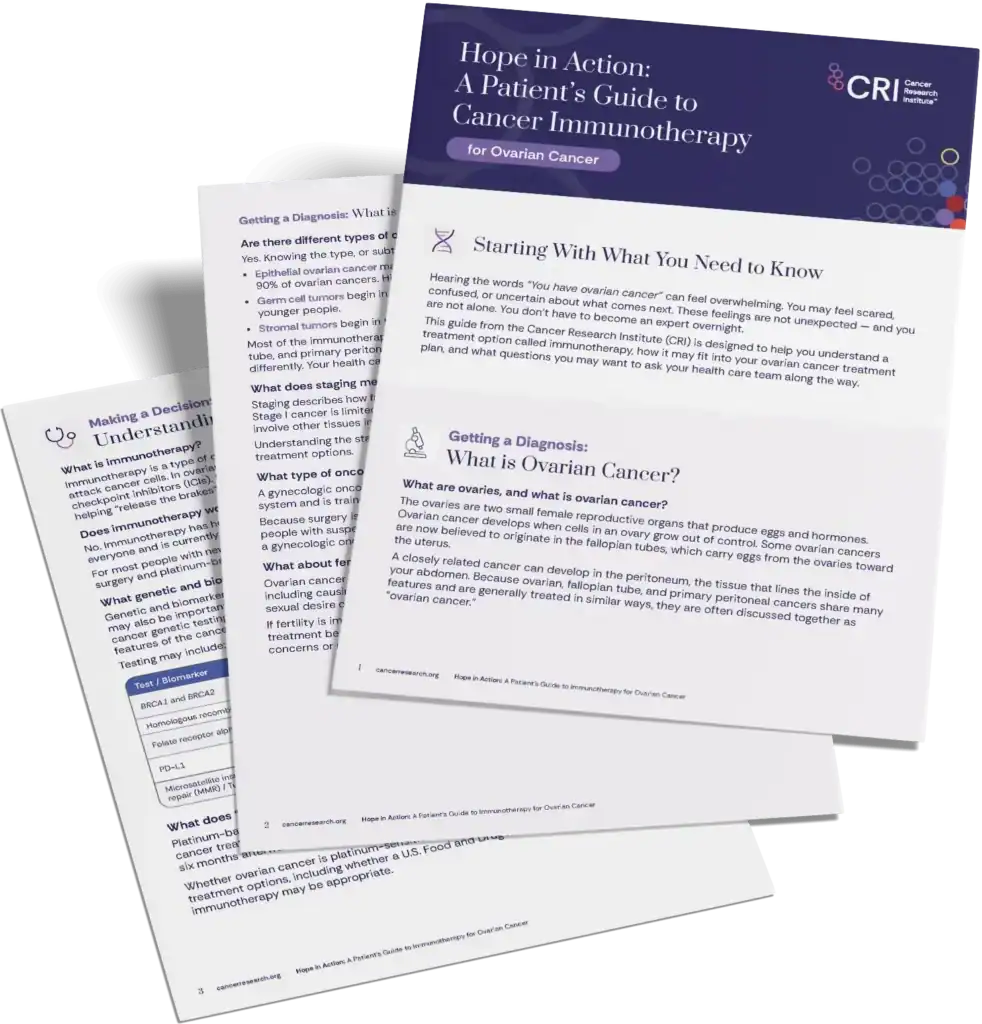
The battle against ovarian cancer requires a collaborative effort. By supporting organizations dedicated to high-impact, innovative research, you can help move the needle from treatment to transformation. To learn more about how you can support the pursuit of new cancer therapies, visit the official channels of the Cancer Research Institute and consider how your contribution can carry forward a legacy of hope.