By Jan Groh
April 2026
On March 29, 2026, the global medical community and the millions of patients living with connective tissue disorders suffered an immeasurable loss. Professor Rodney Grahame, CBE, MD, FRCP—a titan of rheumatology and a singular, compassionate voice for those living with Ehlers-Danlos Syndrome (EDS) and Hypermobility Spectrum Disorders (HSD)—passed away. For decades, Dr. Grahame served not only as a clinician but as a lighthouse for patients who had been repeatedly dismissed by a medical establishment that largely refused to acknowledge the systemic reality of their pain.
His death marks the end of an era in rheumatology, yet his contributions remain the bedrock upon which current understanding of hypermobility is built. As we reflect on his life, we recognize a man who chose to listen when others turned away, transforming the diagnostic landscape for a generation of patients.
The Genesis of Advocacy: A Personal Journey
My own path toward understanding my body began in the summer of 2007. At age 40, following a mundane back injury sustained while organizing medical records, I was left grappling with chronic pain that defied conventional explanation. A massage therapist first suggested I look into "hypermobility."
Searching the internet for that term led me directly to the work of Dr. Rodney Grahame. Before I found him, I was "just bendy." I was a person whose joints seemed to operate on a different set of rules than everyone else’s, yet I lacked the vocabulary to articulate it to my primary care physician. Dr. Grahame’s literature bridged that gap. He provided the framework to understand that my symptoms were not psychosomatic, nor were they merely a quirk of anatomy; they were a systemic physiological reality. While I did not receive a formal diagnosis of hypermobile Ehlers-Danlos Syndrome (hEDS) until 2012, the guidance provided by his early articles allowed me to manage my movements and prevent further injury during those intervening years of uncertainty.
Chronology of a Medical Pioneer
Dr. Grahame’s career was defined by a steady, persistent curiosity that evolved into a lifelong crusade for patient recognition. His work spans over half a century, tracing the history of how we understand connective tissue.
- 1971: Dr. Grahame publishes seminal research in the Proceedings of the Royal Society of Medicine, signaling his early interest in the mechanics of joint pathology.
- 1983: He co-authors the groundbreaking clinical text Hypermobility of Joints alongside Drs. Peter Beighton and Howard Bird. This book would become the "bible" for clinicians attempting to navigate the complexities of joint hypermobility.
- 1998: In recognition of his tireless services to disabled people, he is appointed Commander of the Order of the British Empire (CBE).
- 2008: He collaborates with Malfait, Hakim, and DePaepe to publish research on the genetic basis of hypermobility syndromes, a pivotal moment in moving the conversation from "symptom management" to "etiological understanding."
- 2010: He releases Hypermobility, Fibromyalgia and Chronic Pain, further cementing the link between joint laxity and widespread, systemic pain.
- 2012: The updated edition of Hypermobility of Joints is published, reflecting three decades of clinical evolution.
- 2014: During the EDNF Conference, Dr. Grahame delivers his now-famous indictment of the medical establishment’s neglect of EDS patients.
- 2018: The Ehlers-Danlos Society commemorates his 50th anniversary as a physician within the National Health Service (NHS), honoring his legacy as a mentor and clinician.
Supporting Data: From "Bendy" to "Systemic"
Dr. Grahame’s intellectual rigor was the primary engine that drove the shift in terminology from the outdated "Hypermobility Syndrome" to the modern, nuanced categories of hEDS and Hypermobility Spectrum Disorders (HSD).
Before Grahame’s influence, medical training typically viewed hypermobility as a benign trait—an advantage for gymnasts or musicians, perhaps, but rarely a clinical concern. Grahame utilized clinical observation and data to disprove this. He recognized that hypermobility was the "canary in the coal mine" for a suite of body-wide issues, including autonomic dysfunction, chronic pain, and gastrointestinal distress.
His collaboration with colleagues to delineate the genetic foundations of these syndromes was not merely academic; it was an act of medical liberation. By providing a genetic and clinical basis for the condition, he stripped away the stigma of "malingering" that had plagued patients for centuries. His work gave doctors the tools to stop questioning the patient’s reality and start measuring their physiology.
Official Responses and the Weight of His Words
The impact of Dr. Grahame’s advocacy was perhaps most poignantly captured during the 2014 Ehlers-Danlos National Foundation Conference. Addressing a room full of patients, families, and researchers, he stated: "No other condition in the history of modern medicine has been neglected in such a way as Ehlers-Danlos syndrome."
These words served as a watershed moment for the community. For a man of his stature—a distinguished, decorated British rheumatologist—to stand on a public stage and acknowledge the systemic failures of his own profession was profoundly validating. It turned the tide of advocacy. It was no longer a plea from patients to be heard; it was a demand from the scientific community to be better.
The Ehlers-Danlos Society, in their 2018 tribute, noted that Dr. Grahame’s influence extended to every corner of the globe. He did not operate in an ivory tower. He was a frequent speaker at patient-led conferences, often seen in conversation with advocates like the late John Ferman, founder of Chronic Pain Partners. He understood that the best data often came from the patients themselves.
Implications: A Future Built on His Foundation
The death of Professor Grahame necessitates a moment of introspection for the medical community. While the landscape for EDS and HSD patients has improved significantly since 1971, the "neglect" he identified in 2014 remains a lingering shadow in many parts of the healthcare system.
The Path Forward
The implications of his passing are twofold:
- Clinical Continuity: As a new generation of rheumatologists and geneticists enters the field, the reliance on Grahame’s foundational texts and clinical methods remains vital. His work must continue to be integrated into medical school curricula to ensure that future clinicians recognize the subtle markers of connective tissue disorders during initial exams.
- Patient-Centered Research: Grahame’s legacy is a blueprint for future research. His ability to link joint laxity to chronic pain and systemic symptoms provides the framework for ongoing studies into the comorbidities of EDS—including mast cell activation and dysautonomia.
We must move beyond the basic diagnostic criteria and toward the level of comprehensive, multidisciplinary care that Dr. Grahame championed. The tools he helped create, such as the GP Toolkit, are not just reference guides; they are safeguards against future medical gaslighting.
Final Reflections
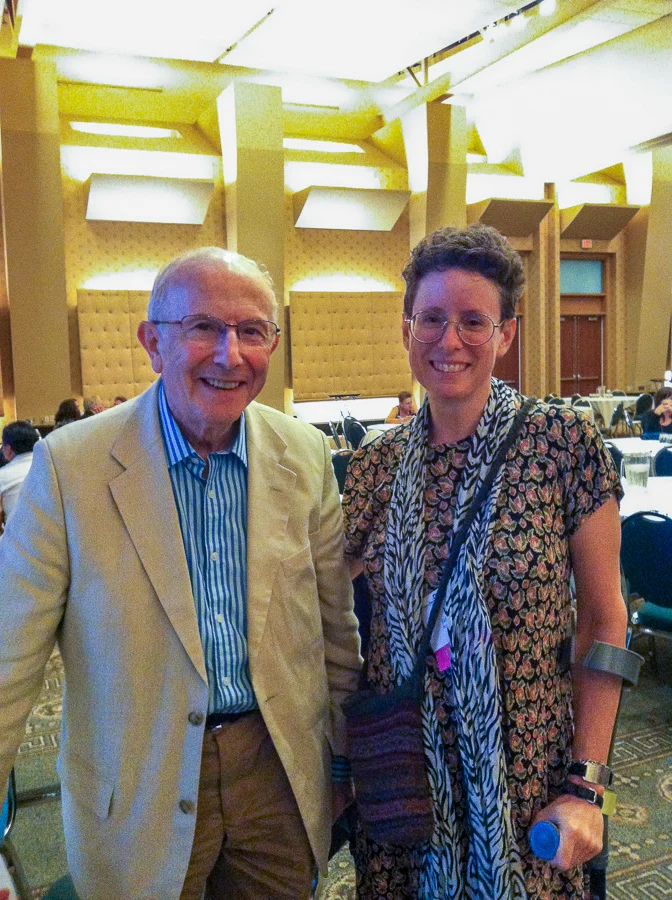
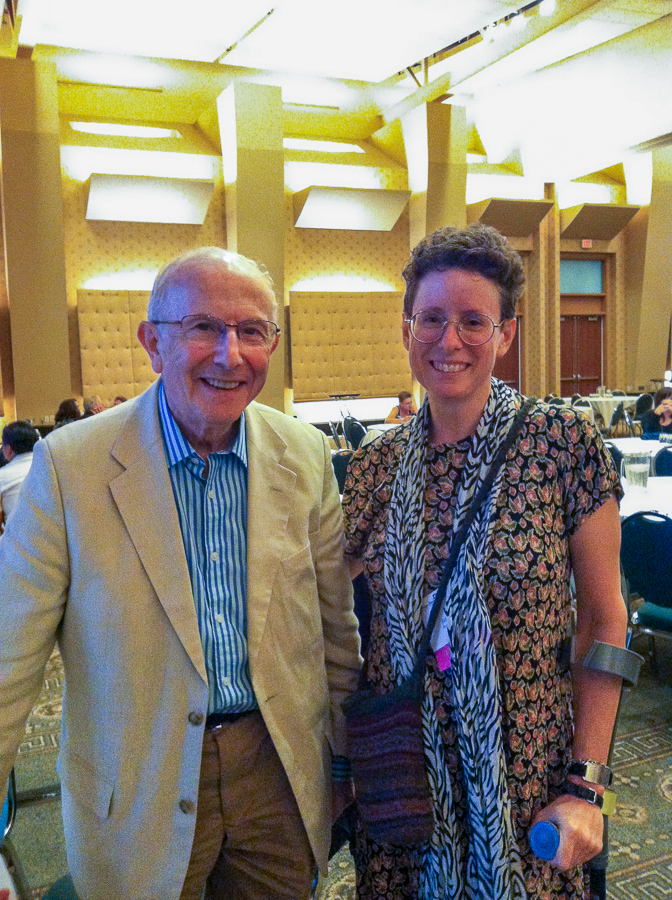
In the photograph taken at the 2013 EDNF conference, Dr. Grahame is seen smiling—a warm, genuine expression of a man who clearly loved the work he did and the people he served. He was a beacon of intellectual humility. In an age of increasingly specialized and siloed medicine, he remained a generalist in the truest sense: a doctor who looked at the whole patient, saw their suffering, and refused to accept that "nothing could be done."
Professor Rodney Grahame’s life was a testament to the power of a single, compassionate professional to change the course of medical history. He leaves behind an outsized legacy that lives on in the thousands of patients who finally received a diagnosis, in the doctors who learned to listen, and in the ongoing fight for better care.
We are forever grateful for his brilliance, his voice, and his unwavering belief that every patient deserves to be heard. Rest in peace, Professor Grahame. Your work continues in every one of us.