





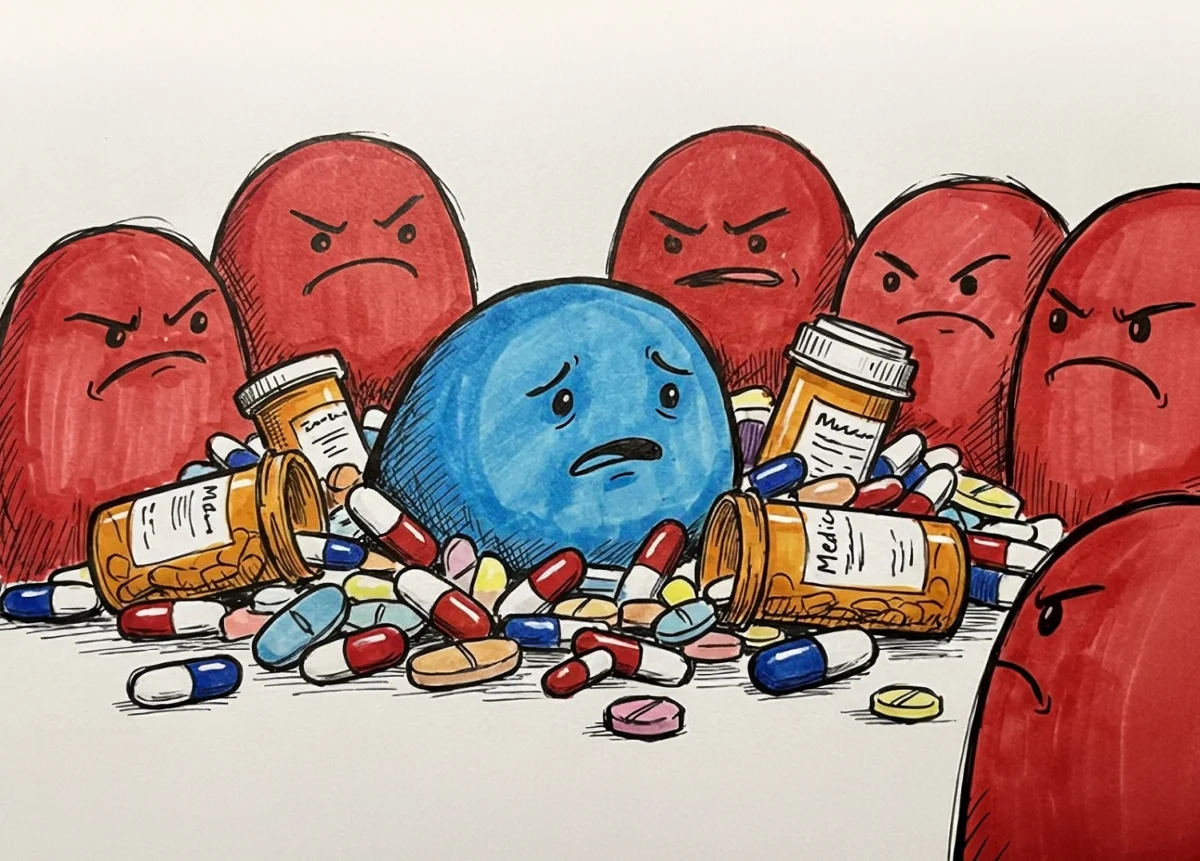
The intersection of neurodivergence and the American psychiatric system has come under increasing scrutiny as more individuals come forward with accounts of long-term harm. A recent personal testimony, published by the advocacy platform Mad in America, provides a harrowing look at a twenty-year odyssey through the mental health system—a journey marked by family coercion, "medical cocktails," and a documented decline in cognitive function.
The account follows a man, born in 1984 and diagnosed with autism in infancy, who alleges that two decades of psychiatric intervention not only failed to address his underlying social and familial trauma but actively contributed to the erosion of his physical health and intellectual capacity. His story serves as a flashpoint for a broader national conversation regarding the ethics of "sedating" neurodivergent populations and the lack of informed consent in pharmaceutical treatments.
Main Facts: The Cost of Chemical Intervention
The central premise of the account is the "institutionalization of the home." Beginning in 2005, the subject was pressured by his family into psychiatric care, not because of a clear mental health crisis, but because his family perceived his autistic traits—social withdrawal, "weird" behavior, and difficulty communicating—as symptoms of clinical depression.
Key facts emerging from this case include:
- Polypharmacy without Diagnosis: The subject reports being placed on a "never-ending cocktail" of medications, starting with Zoloft, without receiving a formal psychiatric diagnosis beyond his pre-existing autism.
- Cognitive Erosion: A clinical evaluation in 2025 confirmed the subject’s IQ had dropped to 104, a decline of more than twenty points from his pre-medication baseline.
- Physical Manifestations: Long-term medication use was followed by the development of epilepsy in 2021, which the subject’s neurologist suggested was accompanied by structural changes in the brain.
- Professional Negligence: Despite expressing concerns about drug interactions and side effects, the subject alleges his psychiatrists repeatedly ignored his requests for workplace accommodations and dismissed his adverse reactions as needing "more time to work."
A Chronology of Coercion: 2005–2025
2005–2006: The Genesis of Treatment
The subject’s entry into the psychiatric system was catalyzed by familial friction. In 2005, his parents confronted him regarding his behavior during his sister’s pregnancy. Lacking the verbal fluency to defend his need for space, his silence was interpreted as pathology. By January 2006, his "boredom" at a family dinner was labeled as depression. Under parental pressure, he began a regimen of Selective Serotonin Reuptake Inhibitors (SSRIs).
2008–2010: The Cycle of Relapse
An attempt to cease medication in 2008 resulted in a "rebound" effect characterized by increased irritability and nocturnal shouting matches with family members. Rather than investigating the root causes of this domestic toxicity, medical professionals and family members viewed these outbursts as proof of a biological need for medication, trapping the subject in a cycle of dependency.
2010–2019: The "Lost Decade"
The 2010s are described by the subject as a "lost decade"—a period of heavy sedation and "Stockholm Syndrome." During this time, he remained living with his parents, supported by Supplemental Security Income (SSI), his memories of the era blurred by the sedative effects of his prescriptions. He describes being "sedated into submission," unable to muster the agency to move out or seek independent living despite advice from peers.
2019–2023: Professional Struggle and Physical Collapse
A brief return to the workforce in 2019 exposed the fragility of his medicated state. Working in a high-stress call center, he suffered from "zoned-out" states and lapses in judgment. In April 2021, the situation turned critical when he collapsed at work, suffering a grand mal seizure that resulted in shoulder displacement. Despite brain scans showing structural alterations, his psychiatrist reportedly insisted on continuing the medication regimen.
2024–2025: The Break and Recovery
In early 2025, after years of being "ghosted" by his clinic and facing mounting credit card debt fueled by impulsive, medicated decision-making, the subject chose to forgo psychiatric medications entirely. He moved into his own apartment, finally breaking the domestic cycle that had initiated his treatment twenty years prior.
Supporting Data: The Risks of Long-Term Psychotropic Use
The subject’s experience mirrors a growing body of scientific literature regarding the long-term effects of psychotropic medications on neurodivergent individuals.
The Problem of Polypharmacy
The practice of prescribing multiple psychiatric medications simultaneously—polypharmacy—is increasingly common but poorly researched. A study published in The Lancet Psychiatry suggests that while individual drugs undergo rigorous testing, the cumulative effect of "cocktails" can lead to metabolic syndrome, cognitive impairment, and neurological tremors.

IQ and Cognitive Decline
The subject’s reported 20-point IQ drop is a significant clinical marker. Research into anticholinergic drugs and certain antipsychotics has shown a correlation between long-term use and "pseudodementia" or cognitive slowing. For an individual with autism, whose cognitive strengths are often their primary tool for navigating a neurotypical world, this loss is devastating.
The "Chemical Imbalance" Myth
The subject’s critique of psychiatry as "pseudoscience" aligns with recent academic shifts. A landmark 2022 umbrella review led by Professor Joanna Moncrieff of University College London found "no convincing evidence" that depression is caused by a serotonin deficiency. This undermines the foundational logic used by the subject’s doctors in 2006 to justify his initial Zoloft prescription.
Official Responses: The Industry Stance
The American Psychiatric Association (APA) and the pharmaceutical industry generally maintain that medications are essential tools for managing debilitating symptoms.
The APA Position: The APA emphasizes that psychiatric disorders are "real, treatable medical conditions." They argue that for many, medication is life-saving and that any cessation of treatment should be done strictly under medical supervision to avoid withdrawal symptoms (often mistaken for a relapse of the original condition).
The Pharmaceutical Industry: Industry representatives typically point to FDA approval processes as proof of safety. They argue that adverse effects are rare and that the "benefit-to-risk ratio" favors intervention. However, critics point out that most FDA trials for psychotropic drugs last only six to eight weeks, leaving the effects of twenty-year usage, such as that experienced by the subject, largely unstudied.
Medical Ethics and Informed Consent: Many medical ethicists argue that "coerced" treatment—where a patient complies only due to family pressure or fear—violates the principle of autonomy. The subject’s claim that he received "no warnings" about drug interactions or side effects suggests a failure in the duty of care.
Implications: A Shift in National Health Policy
The subject’s narrative concludes with a call for systemic reform, specifically citing the leadership of Robert F. Kennedy Jr. at the Department of Health and Human Services (HHS). This reflects a burgeoning political movement centered on "Medical Freedom" and skepticism of "Big Pharma."
Potential Policy Changes
The implications of this case suggest several areas for legislative and medical reform:
- Banning Pediatric Psychotropic Advertising: Advocates argue that direct-to-consumer advertising encourages the over-medicalization of normal developmental variations in children and adolescents.
- Informed Consent Legislation: Strengthening requirements for doctors to provide written documentation of potential long-term cognitive and physical risks before initiating treatment.
- Investment in Alternative Therapies: Shifting federal funding toward "talk therapies," sensory-friendly workplace accommodations, and social support systems for autistic adults, rather than relying solely on chemical management.
- Scrutiny of the "Autism-to-Psychiatry" Pipeline: There is an urgent need to distinguish between the core traits of autism (which are neurological) and co-occurring mental health issues. Treating autism as a "behavioral problem" to be suppressed with sedatives is increasingly viewed as a human rights concern.
The Future of Neurodivergence
For the individual at the center of this account, the damage is partially irreversible. However, his transition to independent living and his decision to monitor his own health markers signal a shift from "patient" to "self-advocate."
His story remains a cautionary tale for the medical community. It highlights a system that, in its attempt to "fix" a neurodivergent individual to suit a toxic family environment, may have cost him his health, his career, and twenty years of his life. As the national dialogue around mental health continues to evolve, the "sedated decade" stands as a reminder that the goal of medicine should be the restoration of agency, not merely the enforcement of compliance.