When the subject of "core strength" arises, the cultural shorthand immediately turns to the visual: chiseled midsections, shredded abs, and the grueling pursuit of a six-pack. However, as we cross the threshold into our fifties and beyond, the definition of a "strong core" must undergo a radical shift. For the aging body, the core is no longer about aesthetics; it is the vital foundation of independence, functional movement, and long-term health.
James Brady, a Certified Personal Trainer (CPT) at OriGym, argues that if you are over 50, your priority should be "functional resilience." According to Brady, your core is the body’s central support system—a complex network of muscles that does more than look good; it protects your spine, stabilizes your pelvis, and acts as the kinetic bridge between your upper and lower body.
To help readers gauge their functional health, we break down the five core movements that serve as the gold standard for vitality after 50.
The Biological Necessity of Core Stability After 50
To understand why these tests matter, one must first look at the physiological changes that occur in the middle and later years. Research consistently indicates that core strength is inextricably linked to longevity and quality of life.
The Science of Support
Your core muscles—which include the rectus abdominis, obliques, transverse abdominis, multifidus, and the pelvic floor—function as a biological corset. When these muscles are weak, the burden of movement shifts to the joints, particularly the lumbar spine and hips. Scientific literature confirms that a robust core facilitates efficient force transfer, reducing the mechanical stress placed on joints during daily tasks like lifting groceries or navigating uneven terrain.
The Fall Prevention Factor
Perhaps most critical for the over-50 demographic is the correlation between core weakness and fall risk. A sedentary lifestyle or the natural loss of muscle mass (sarcopenia) can lead to a destabilized center of gravity. Studies published in journals like Nature and various geriatric health archives have shown that older adults with superior trunk stability demonstrate significantly better balance and a lower incidence of life-altering falls. Testing your core isn’t just an exercise; it is an act of preventative medicine.
The 5 Core Tests: A Chronological Assessment
If you can perform the following five movements with precision, control, and stamina, you are likely maintaining a level of functional fitness that keeps you well ahead of the curve for your age group.
1. The Plank: The Ultimate Endurance Benchmark
The plank is the litmus test for total-body tension. It requires the synchronized activation of the shoulders, glutes, quads, and abdominal wall.
The Assessment: Can you hold a perfect plank for 60 seconds without your hips sagging or your lower back arching?
- The Technique: Start in a forearm plank position. Keep your elbows directly under your shoulders. Squeeze your glutes, engage your quads, and pull your belly button toward your spine. Your body should form a straight line from head to heels.
- Why it Matters: A sagging back indicates a failure of the transverse abdominis, the deep muscle that acts as your internal weight belt.
2. The Dead Bug: Mastering Coordination
The dead bug is a masterclass in spinal stability. It challenges your ability to keep the spine neutral while your limbs move—a requirement for almost every functional activity.
The Assessment: Can you lower opposite limbs simultaneously without your lower back lifting off the floor?
- The Technique: Lie on your back with arms extended toward the ceiling and legs in a tabletop position. Slowly lower your right arm behind your head while extending your left leg straight out. Return to the center and switch.
- Why it Matters: This movement prevents the "compensation pattern" where the lower back arches to make up for weak abdominal muscles, a leading cause of chronic back pain.
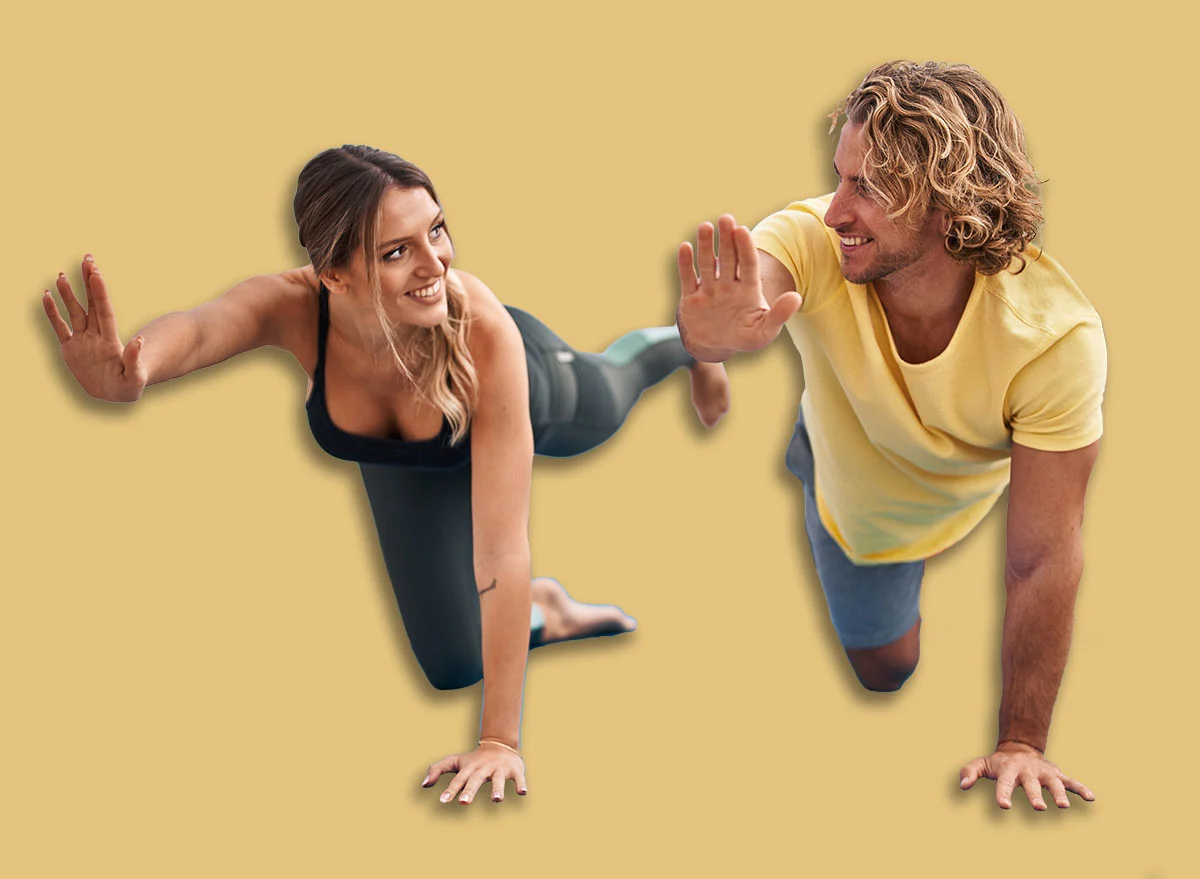
3. The Bird Dog: Cross-Body Stability
This movement requires balance and diagonal engagement, training the brain and body to stabilize during cross-body movement—much like how we walk.
The Assessment: Can you extend the opposite arm and leg while keeping your hips perfectly level, like a table?
- The Technique: Start on all fours. Simultaneously reach your right arm forward and your left leg backward. Keep your core tight to prevent your hips from rocking.
- Why it Matters: It strengthens the multifidus muscles, which run along the spine, providing essential support for spinal health and posture.
4. Russian Twists: Rotational Resilience
We rarely move in a perfectly linear fashion. Life requires turning, reaching, and carrying—all of which involve rotation.
The Assessment: Can you maintain a stable, upright torso while rotating from side to side?
- The Technique: Sit on the floor, lean back slightly with a flat back, and lift your feet a few inches. Rotate your torso to touch the floor on either side.
- Why it Matters: By targeting the obliques, you protect your spine against shear forces during everyday twisting motions, which is when most people experience disc injuries.
5. Glute Bridges: The Pelvic Anchor
"A strong core is not just about the abs," says Brady. "The glutes play a major role in pelvic stability and lower back support."
The Assessment: Can you lift your hips high enough to create a straight line from knees to shoulders without cramping in the hamstrings?
- The Technique: Lie on your back, knees bent, feet flat on the floor. Drive through your heels to lift your hips toward the ceiling, squeezing your glutes at the top.
- Why it Matters: Weak glutes lead to "gluteal amnesia," forcing the lower back to overwork. A strong posterior chain is your best defense against the stiffness associated with aging.
Implications for Long-Term Mobility
The implications of these exercises extend far beyond the gym floor. By integrating these movements into a weekly routine, you are effectively "future-proofing" your body.
Improving Postural Integrity
As we age, the tendency to slouch increases due to the weakening of the posterior chain and the shortening of chest muscles. These five moves force the body into an upright, aligned position. Consistent practice combats the "kyphosis" (hunchback) posture that often develops in later years, allowing for better lung capacity and a more confident gait.
Boosting Metabolic Health
While the primary goal is functional, the secondary benefit is metabolic. Engaging the largest muscles in the body—the glutes—combined with the isometric hold of the plank, helps regulate blood sugar levels and increases caloric expenditure, even in a resting state.
Expert Advice on Implementation
James Brady recommends starting slow. "You don’t need to be an athlete to start," he notes. "If you struggle with the plank, start by doing it against a wall or an elevated surface like a countertop. The goal is not perfection on day one; it is consistency."
For those currently experiencing back pain or joint discomfort, it is highly recommended to consult with a physical therapist or a medical professional before beginning a new regimen. However, for the average adult over 50, these movements represent the safest and most effective path to reclaiming physical autonomy.
Conclusion: A New Mindset for the Second Half
The transition into your fifties is the perfect time to pivot from a performance-based fitness mindset to a longevity-based one. By focusing on the core, you are investing in the most important piece of equipment you will ever own: your body.
If you find that you cannot easily complete these five tests, do not be discouraged. Use this as a diagnostic tool to identify where your weaknesses lie. By dedicating just 15 to 20 minutes a day to these foundational movements, you can rebuild your support system, sharpen your balance, and ensure that your next decades are characterized by strength and ease of movement rather than limitation.
The Takeaway: Your core is your center of gravity, your shield against injury, and your engine for movement. Treat it with the respect it deserves, and it will support you for years to come.