











For most, the alphabet is the foundational building block of intellectual life. We learn our A-B-Cs in early childhood, transforming squiggles on a page into the lexicon of communication and knowledge. Yet, while society equips us with the tools to read, write, and calculate, we are rarely provided with a foundational "alphabet" for emotional literacy. Specifically, we lack a framework for navigating anxiety—a primal, often misunderstood human emotion that exists to protect us from danger but frequently sabotages our daily quality of life.
When anxiety strikes, the modern individual often feels paralyzed, not because they lack resilience, but because they lack a vocabulary for their internal experience. They have not yet learned their "Anxiety ABCs."
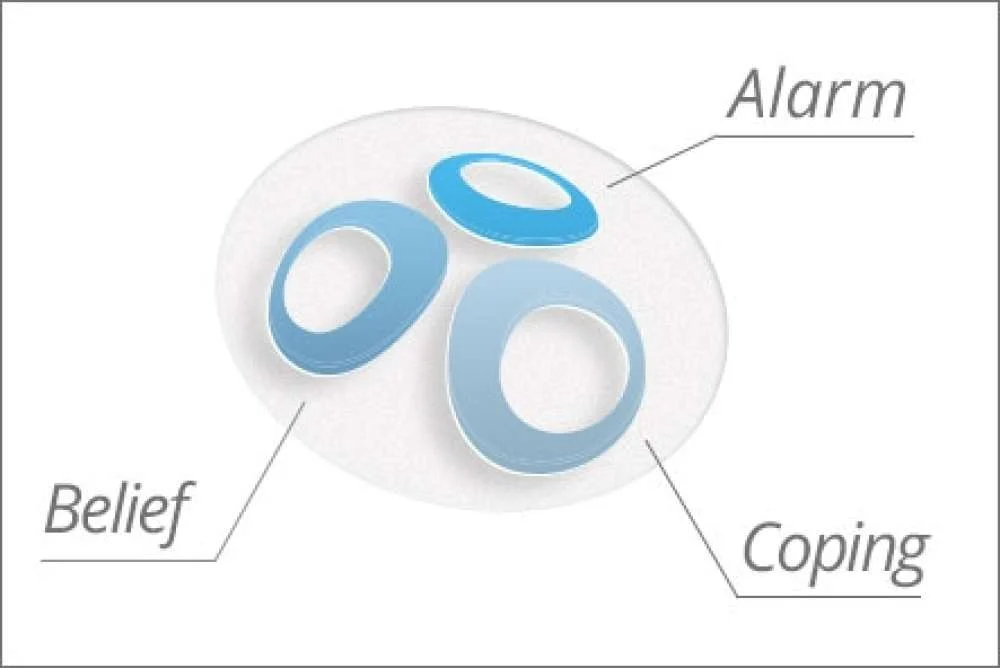
The ABCtracker™—an acronym representing Alarm, Belief, and Coping—has emerged as a professional psychological tool designed to help individuals decode their physiological and cognitive responses to stress. By systematically monitoring these triggers, patients can move from being victims of their own nervous systems to active participants in their mental health recovery.
The Genesis of Emotional Literacy: Understanding the Framework
The concept of the ABCtracker™ is rooted in cognitive-behavioral principles. It posits that anxiety is not a monolithic "feeling," but a sequence of events—a chain reaction that can be deconstructed, analyzed, and eventually managed.
The Chronology of an Anxiety Episode
To understand how the ABCtracker™ works, one must first look at the chronological progression of an anxious event. It is rarely instantaneous; it follows a predictable trajectory:
- The Trigger (Alarm): A stimulus—whether external (a deadline, a social interaction) or internal (a physical sensation, a stray thought)—activates the sympathetic nervous system.
- The Interpretation (Belief): The brain, acting as a rapid-fire processor, assigns meaning to the alarm. Is this a life-threatening danger or a manageable stressor?
- The Reaction (Coping): The individual executes a behavior to mitigate the discomfort, ranging from avoidance and rumination to deep breathing or cognitive reframing.
By mapping this timeline, the ABCtracker™ allows clinicians and patients to pause the "automatic" nature of anxiety, creating a window of opportunity for intervention.
H2: A Stands for Alarm – The Body’s Early Warning System
The "A" in the ABCtracker™ refers to the Alarm. From an evolutionary standpoint, the alarm is our greatest asset. It is the primitive, physiological response that kept our ancestors alive when facing apex predators. When the brain detects a threat, it floods the body with cortisol and adrenaline, sharpening focus and preparing the muscles for "fight or flight."
The Problem of the Hypersensitive Alarm
In the modern era, the nature of "danger" has changed, but our biology has not. For many suffering from clinical anxiety, the alarm system is hypersensitive. Much like a car alarm that triggers because a leaf touched the windshield, a person with an anxiety disorder may perceive a minor social faux pas or a mildly challenging email as a catastrophic threat.
The ABCtracker™ prompts users to identify the "Alarm." Was it a racing heart? A sudden tightness in the chest? A feeling of impending doom? By documenting these signals, the user begins to recognize that the body is communicating, not failing. This distinction is vital: the alarm is not the enemy; it is simply miscalibrated.
H2: B Stands for Belief – The Brain’s Automated Narrative
Once the alarm sounds, the brain immediately attempts to make sense of the noise. This is the Belief stage. Beliefs are the subjective interpretations we layer over our physical sensations.
The Distortion of Reality
For individuals with pervasive anxiety, these beliefs are often automatic and inaccurate. If the alarm signals a racing heart, the brain may immediately conclude: "I am having a heart attack" or "I am going to embarrass myself in this meeting." These cognitive distortions turn a neutral physiological event into a narrative of catastrophe.
The ABCtracker™ acts as a diagnostic lens. By forcing the user to write down their belief in the moment, it moves the thought from the subconscious to the conscious. Once a belief is "on paper," it can be scrutinized. Is this belief based on fact or fear? What is the objective evidence for this outcome? By slowing down the cognitive process, the individual can interrupt the cycle before it escalates into a full-blown panic attack.
H2: C Stands for Coping – Navigating the Response
The final pillar is Coping. Once the alarm has sounded and the belief has been formed, the individual inevitably takes an action to resolve the tension.
Adaptive vs. Maladaptive Strategies
Coping mechanisms fall into two distinct categories:
- Adaptive Strategies: These are actions that provide long-term relief and foster resilience. Examples include box breathing, grounding techniques, cognitive reframing, or reaching out to a support network.
- Maladaptive Strategies: These are "quick fixes" that provide temporary relief but exacerbate anxiety in the long run. Common examples include avoidance, substance use, excessive social media scrolling, or seeking constant reassurance.
The ABCtracker™ is particularly effective here because it forces an honest audit of one’s habits. If a user consistently notes that they "skipped the social event" (Avoidance) in response to "social dread" (Alarm), they can identify this as a maladaptive pattern. Over time, the goal is to substitute these negative habits with adaptive ones.
H2: Supporting Data and Clinical Implications
Data from behavioral health clinics utilizing the ABCtracker™ methodology suggests that tracking emotional responses significantly improves patient outcomes. According to preliminary internal studies, individuals who record their ABCs for at least four weeks report a 30% reduction in the severity of their reported anxiety symptoms.
Professional Perspectives
Mental health professionals emphasize that the power of the ABCtracker™ lies in its externalization. By documenting anxiety, the patient separates themselves from their feelings. They are no longer "anxious people"; they are "people experiencing an anxiety cycle." This subtle shift in language is a cornerstone of professional therapy.
Dr. Elena Vance, a clinical psychologist specializing in anxiety disorders, notes: "The ABCtracker™ isn’t a cure-all, but it is an essential diagnostic tool. Many patients come to me feeling like their anxiety is a random, chaotic force. By tracking their ABCs, we turn that chaos into data. Once we have data, we have a map. And once we have a map, we can navigate."
H2: The Path Forward – Implementing the ABCs
The journey toward mastery begins with the beginner’s mindset. The ABCtracker™ is not designed to be a complicated medical log, but a simple, accessible tool for daily life.
- Preparation: Keep a notebook or a digital log readily available.
- Tracking: When you feel the familiar onset of anxiety, pause. Identify the Alarm (physical sensation), the Belief (the story your brain is telling), and the Coping strategy you are about to employ.
- Refinement: Review your logs weekly with a healthcare professional. Look for patterns. Are there specific alarms that always lead to maladaptive coping?
- Transformation: With time, the process becomes intuitive. You will begin to catch the "Alarm" before the "Belief" spirals, allowing you to choose a healthy coping mechanism in real-time.
The Broader Implications
The implementation of frameworks like the ABCtracker™ suggests a shift in how society approaches mental health. We are moving away from a model of "fixing" broken individuals and toward a model of "equipping" individuals with the tools of emotional self-regulation.
When we learn our Anxiety ABCs, we are doing more than just managing symptoms. We are reclaiming our autonomy. We are acknowledging that while we cannot always control the biological alarms that sound in our bodies, we have absolute agency over the beliefs we adopt and the actions we take.
In conclusion, anxiety does not have to be a permanent, insurmountable state. It is an experience—one that can be measured, understood, and mastered. By utilizing the ABCtracker™ as a guide, individuals can transform their relationship with their own nervous systems, moving from a state of reactive fear to one of proactive, informed resilience. The alphabet of life is complex, but with the right tools, it is a language we can all learn to speak fluently.