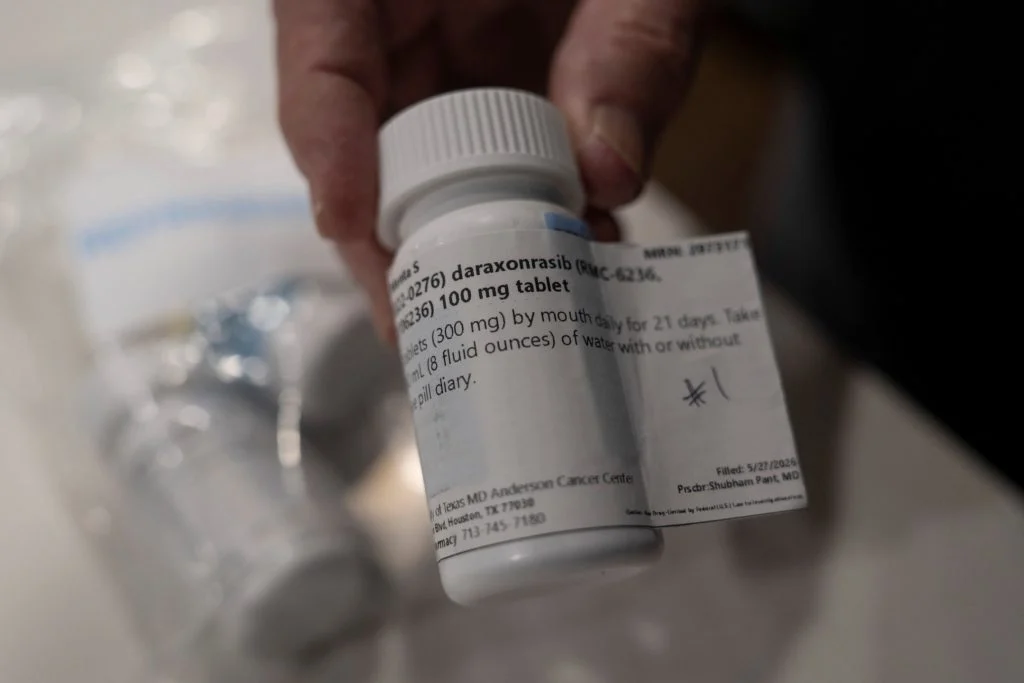
For decades, the mention of pancreatic cancer has been synonymous with a grim prognosis. Often diagnosed at advanced stages, the disease has long been considered one of the most formidable challenges in modern medicine, with a five-year survival rate hovering at a stagnant 13 percent. However, a significant medical milestone has emerged that promises to shift the landscape of oncology: the development of an experimental drug, daraxonrasib, which has demonstrated the ability to extend the lives of patients suffering from this aggressive malignancy.
The Main Facts: A Paradigm Shift in Treatment
The breakthrough centers on a once-a-day oral medication that targets mutations of the KRAS gene. For years, the KRAS gene—a common driver of pancreatic cancer—was categorized by chemists and oncologists as "undruggable." The complexity of the protein’s structure meant that standard pharmaceutical approaches were ineffective, leaving chemotherapy as the only viable, albeit often insufficient, standard of care.
Recent clinical trials have provided a glimpse of a new reality. In a cohort of patients who had already exhausted at least one round of chemotherapy, the administration of daraxonrasib yielded remarkable results. Patients treated with the drug lived an average of 13 months, compared to just six months for those who did not receive it. This doubling of survival time in a stage-four patient population is, according to experts, entirely unprecedented in the history of pancreatic cancer research.
Chronology: From “Undruggable” to Clinical Reality
The journey to this moment has been defined by sixteen years of intensive, often frustrating research.
- The Era of Despair: For decades, pancreatic cancer research was defined by incremental gains. The KRAS mutation was identified early on as a critical player in tumor growth, but it remained elusive to targeted therapy due to its smooth surface, which lacked the "pockets" where traditional drugs usually attach.
- The Breakthrough: Scientific persistence eventually led to the development of inhibitors capable of binding to these elusive proteins. As researchers began to refine these molecules, clinical trials were initiated to test their efficacy in humans.
- The Weekend of Discovery: The most recent data, presented at a major medical conference, was met with raw emotion from the oncology community. Dr. Rachna Shroff, associate director of clinical investigations at the University of Arizona Comprehensive Cancer Center, described the room’s reaction as a moment of "tears of joy." After years of witnessing the rapid decline of patients, the validation of years of lab work felt, to many in the room, like a turning point.
- Current Status: While the drug is still experimental, the FDA has granted some patients early access, and the manufacturer is currently pursuing an expedited approval process to make the medication more widely available.
Supporting Data: The Power of Targeted Intervention
The clinical trial data provides a compelling case for the efficacy of daraxonrasib. Perhaps most striking is the drug’s performance regardless of the specific KRAS mutation status. While the drug was designed to target the KRAS pathway, initial studies suggest it provides meaningful benefits across a broad spectrum of patients.
Tumor Reduction and Patient Quality of Life
The human impact of this research is perhaps best illustrated by high-profile cases such as that of former U.S. Senator Ben Sasse. Diagnosed with pancreatic cancer and given a life expectancy of mere months in late 2023, Sasse has publicly attributed his survival to a combination of prayer and the experimental drug. He reported a 76 percent reduction in tumor volume over four months—a figure that underscores the drug’s potency.
However, the medical community remains clear-eyed about the trade-offs. The treatment is not without significant side effects. Patients have reported severe dermatological reactions, with some describing a sensation of burning skin. Dr. Shroff emphasizes that this is a "learning curve" for the oncology field. "We are learning how to be preemptive," she notes, explaining that by working closely with dermatologists and utilizing topical steroids and oral antibiotics, physicians are becoming better at mitigating these reactions. Importantly, the clinical data shows that only a small percentage of patients discontinued the treatment due to these side effects, suggesting that the clinical benefit outweighs the toxicity for many.
Official Responses and Expert Perspectives
The medical community is reacting with a blend of professional optimism and measured caution. Dr. Shroff, who has spent over a decade and a half treating this specific disease, refers to the drug as a "game changer."
"We have not ever seen a doubling of survival when it comes to treating this disease," Dr. Shroff stated during a recent briefing. "That is incredibly impactful… but it is also so meaningful to patients who are hopefully going to see more milestones, more important moments in their life."
The consensus among leading oncologists is that this drug should be offered to all patients who have failed an initial line of chemotherapy. The shift is not just in the drug itself, but in the proactive management of the patient’s journey, where multidisciplinary teams are now better equipped to handle the "nasty" side effects that once might have caused patients to stop therapy prematurely.
Implications: The "RAS Revolution"
The implications of this breakthrough extend far beyond pancreatic cancer. The KRAS mutation is a ubiquitous presence in oncology; it is a primary driver in many forms of colorectal and lung cancer, two of the most common and deadly cancers worldwide.
The Holy Grail of Oncology
For decades, researchers referred to the RAS pathway as the "Holy Grail" of cancer research. The success of daraxonrasib serves as the definitive "proof of principle." It confirms that the pathway can be manipulated, and that targeting it produces tangible, positive clinical outcomes.
This realization has triggered what Dr. Shroff calls the "RAS revolution." With the success of this drug in pancreatic cancer, the medical community is now poised to accelerate research into how these inhibitors can be utilized in other KRAS-driven tumors. Clinical trials are currently expanding to investigate the drug’s efficacy in colorectal and lung cancer populations.
This development represents a fundamental change in strategy. Instead of focusing solely on broad-spectrum chemotherapy—which attacks both healthy and cancerous cells—the focus is moving toward precision medicine that targets the specific genetic "engine" driving the tumor.
Conclusion: A Future of Hope
While it is essential to remain cautious—as the drug is still undergoing formal regulatory review—the current data provides a legitimate reason for hope. For the families of the 52,000 Americans expected to lose their lives to pancreatic cancer this year, the promise of an extra seven months of life, or perhaps more, is not merely a statistical improvement; it is a profound gift of time.
As the "RAS revolution" gains momentum, the focus will now turn to refinement, accessibility, and long-term data. The medical community is entering a phase where the impossible is beginning to look, if not entirely curable, at least manageable. For a field that has long been defined by the word "terminal," that represents the most significant victory in a generation.