In a landmark development that could redefine the future of orthopedic medicine, a team of researchers at Stanford Medicine has identified a potential "fountain of youth" for human joints. A recent study, published in the journal Science, details how blocking a specific protein associated with aging can successfully restore lost cartilage in older mice and prevent the onset of osteoarthritis following traumatic injury.
For the millions of individuals suffering from the debilitating effects of joint degradation, this discovery offers a radical shift in perspective: instead of relying on palliative care or invasive surgical interventions, medicine may soon be capable of coaxing the body into repairing its own structural tissues.
The Core Discovery: Silencing the "Gerozyme"
At the center of this breakthrough is a protein known as 15-PGDH. Researchers have categorized this protein as a "gerozyme"—a term coined by the Stanford team to describe enzymes that become increasingly abundant with age, acting as biochemical brakes on tissue function and regeneration.
The mechanism behind the treatment is elegant in its simplicity: by inhibiting 15-PGDH, the body’s natural levels of prostaglandin E2—a molecule essential for healthy tissue maintenance—are allowed to rise. When 15-PGDH is blocked, older animals in the study demonstrated not only a reversal of cartilage thinning but also a return of the tissue to a more youthful, functional state.
Unlike previous regenerative therapies that relied heavily on the introduction or stimulation of stem cells, this approach functions through "cellular reprogramming." Existing cartilage-producing cells, known as chondrocytes, are essentially "retuned" to abandon their inflammatory, degenerative gene activity and resume the production of healthy, smooth hyaline cartilage—the type required for frictionless joint movement.
Chronology of a Scientific Breakthrough
The path to this discovery was not linear; it was built upon years of foundational research into how tissues age and fail.
2023: The Identification of Gerozymes
The Stanford team, led by Helen Blau, PhD, and Nidhi Bhutani, PhD, first identified the concept of gerozymes in 2023. Their earlier work revealed that 15-PGDH was a major culprit in age-related muscle decline. In those initial experiments, blocking the protein led to increased muscle mass and endurance in aging mice, while artificially increasing it in young mice accelerated muscle weakness.
The Hypothesis Shift
Following the success in muscle tissue, the researchers turned their attention to the musculoskeletal system at large. They observed that while stem cells are often touted as the "holy grail" of regeneration, they are notoriously difficult to harness in articular cartilage, which lacks a ready supply of these regenerative cells.
Recent Trials
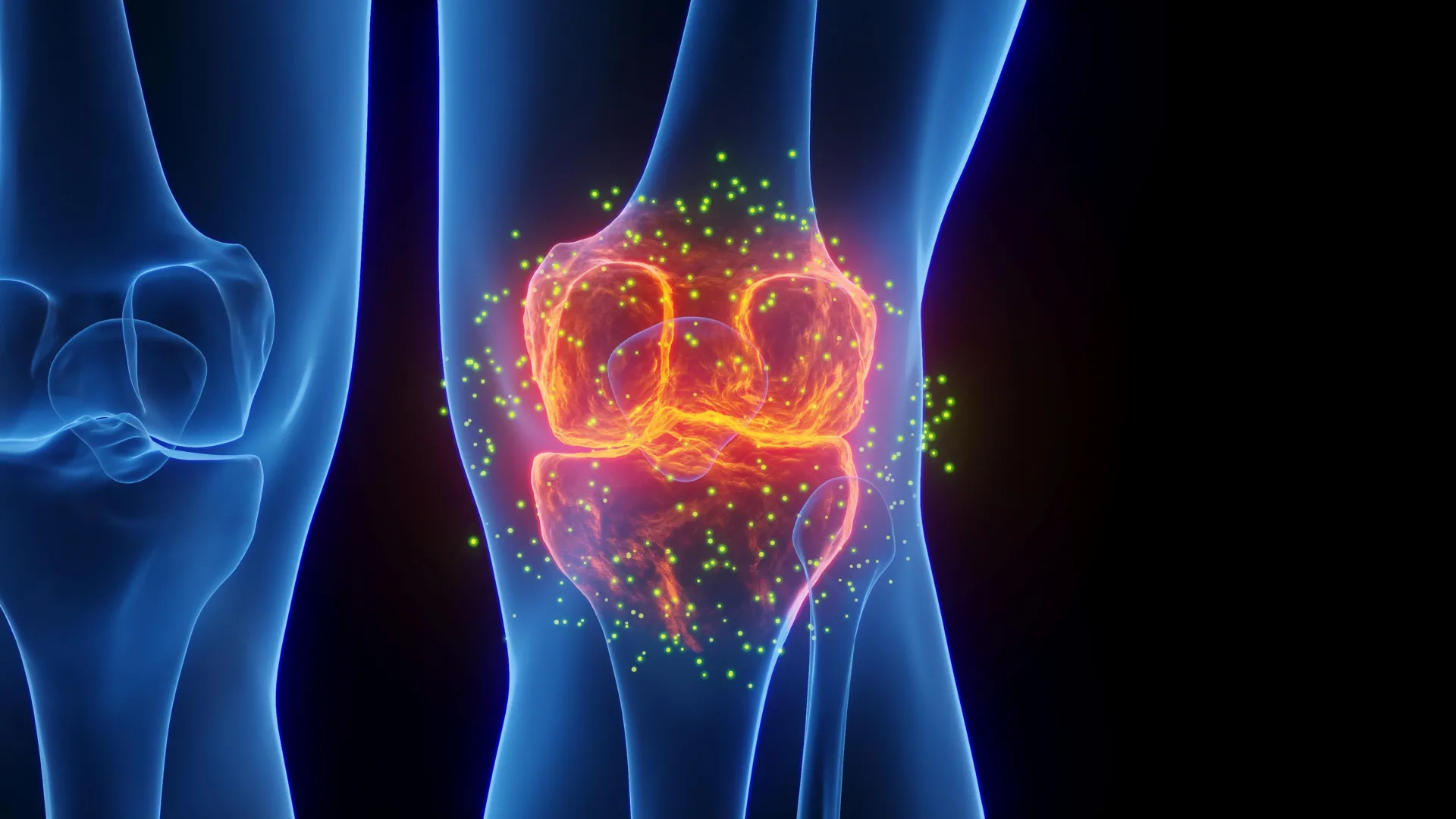
In the most recent study, the team compared cartilage samples from young and old mice. They discovered that 15-PGDH levels roughly doubled as the mice aged. When they administered a small-molecule inhibitor to block this protein—either via systemic injection or direct local injection into the knee—the results were immediate and transformative. The cartilage grew thicker and, crucially, maintained the structural integrity of hyaline cartilage rather than forming inferior scar-like fibrocartilage.
Supporting Data: Why This Changes the Landscape
Osteoarthritis (OA) is a pervasive global health crisis, affecting approximately one in five adults in the United States alone. It is a disease of attrition: as chondrocytes age or face the stress of obesity and injury, they begin to secrete inflammatory molecules that dismantle collagen. This leads to a vicious cycle of thinning cartilage, bone-on-bone friction, and chronic pain. Currently, the medical industry spends an estimated $65 billion annually on direct health care costs for OA, yet current treatments are limited to pain management and total joint replacement.
The Impact of Injury
The study also utilized a mouse model simulating ACL tears—a common injury that often serves as a precursor to early-onset osteoarthritis. While traditional surgery can fix the ligament, the joint often remains compromised. In the Stanford study, mice treated with the 15-PGDH inhibitor for four weeks post-injury showed a significant reduction in the development of osteoarthritis. Their mobility returned to near-normal levels, as measured by weight distribution on the injured limb.
Genomic Reprogramming
The molecular data is perhaps the most compelling aspect of the research. Genetic analysis of the chondrocytes revealed a dramatic shift in the "gene signature" of the joint. Before treatment, 8% of cells were engaged in aggressive cartilage breakdown. After treatment, that number plummeted to 3%. Conversely, the population of cells dedicated to building healthy hyaline cartilage doubled, rising from 22% to 42%.
Official Responses and Perspectives
The senior authors of the study view these findings as a pivot point for the field of orthopedics.
"This is a new way of regenerating adult tissue, and it has significant clinical promise," said Dr. Helen Blau, director of the Baxter Laboratory for Stem Cell Biology. "We were looking for stem cells, but they are clearly not involved. It’s very exciting to see that we can stimulate cells already present in the joint to perform their original, youthful duties."
Dr. Nidhi Bhutani, an associate professor of orthopedic surgery, emphasized the clinical urgency of the discovery. "Millions of people suffer from joint pain and swelling as they age. It is a huge unmet medical need. Until now, there has been no drug that directly treats the cause of cartilage loss. This gerozyme inhibitor causes a dramatic regeneration of cartilage beyond that reported in response to any other drug or intervention."
The researchers were particularly encouraged by the human tissue trials. Using samples harvested from patients undergoing knee replacement surgeries, the team applied the 15-PGDH inhibitor to the tissue in a controlled setting. Within one week, the human samples began producing new, functional cartilage, confirming that the biological pathway is conserved across species.
Future Implications: From Bench to Bedside
The potential implications for the healthcare system are profound. If this treatment can successfully translate to human clinical trials, it could fundamentally disrupt the $65 billion annual expenditure on osteoarthritis.
The Path to Clinical Trials
The drug being used to block 15-PGDH is already undergoing Phase 1 clinical trials for age-related muscle weakness, which provides a significant head start regarding safety data. Because the drug has already been deemed safe for use in healthy human volunteers, the path toward a clinical trial for cartilage regeneration is significantly shorter than that of a brand-new, untested molecule.
Preventing the "Replacement" Era
The ultimate goal is to move beyond the "joint replacement era." By injecting a local 15-PGDH inhibitor into the knees or hips of patients in the early stages of arthritis, clinicians hope to stop the disease in its tracks, allowing the body to naturally rebuild its own shock absorbers. For the patient, this means the difference between a lifetime of mobility and the long, difficult road of surgical recovery and physical therapy associated with artificial implants.
While the team acknowledges that more work is required to determine the long-term efficacy and ideal delivery methods—whether through localized injections or systemic oral medications—the consensus is clear: the era of regenerative joint health may finally be within reach.
As the researchers continue to refine the application of the 15-PGDH inhibitor, the scientific community remains cautiously optimistic. For the millions currently living in the shadow of chronic joint pain, this study represents more than just a successful experiment; it represents the first real possibility of a future where we can age with our own, naturally restored joints.