










The release of the 2025–2030 Dietary Guidelines for Americans (DGAs) was met with immediate intrigue. Framed by the pithy, consumer-friendly mantra to “eat real food,” this latest iteration of federal nutrition policy marks a significant departure from its predecessors in both visual presentation and tone. However, beneath the polished, accessible interface lies a document that has ignited a firestorm of controversy among nutrition scientists, public health experts, and policy observers.
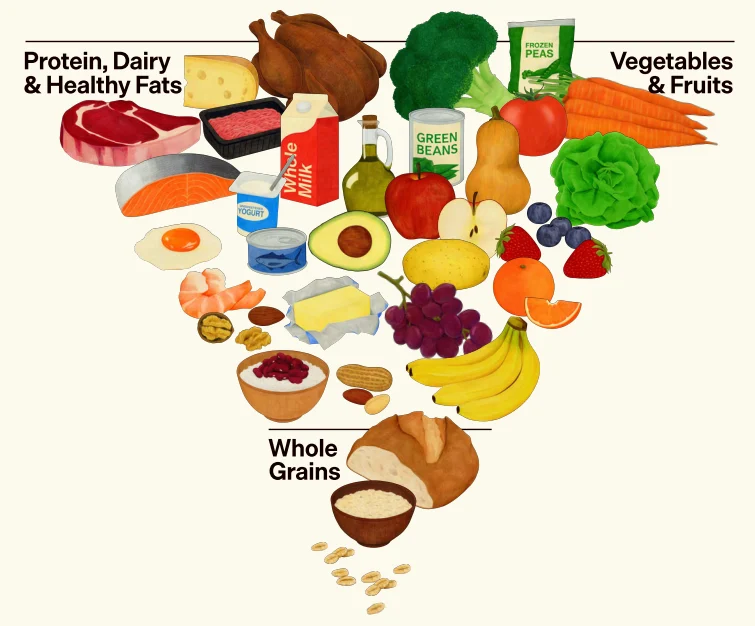
While the new guidelines take a laudable, hardline stance against the encroaching tide of ultra-processed foods and added sugars, they simultaneously introduce a "New Food Pyramid" that appears to contradict the very scientific consensus the guidelines claim to uphold. By emphasizing animal-based proteins and full-fat dairy, the government has created a visual narrative that threatens to undermine decades of public health education regarding saturated fat and cardiovascular disease.
The Evolution of Federal Nutrition Policy: A Chronology
To understand the weight of the 2025–2030 DGAs, one must view them through the lens of their unique creation. Typically, the DGAs are the product of a two-year, transparent synthesis of nutrition science conducted by an independent Dietary Guidelines Advisory Committee (DGAC). This committee, composed of leading academics and researchers, reviews the latest peer-reviewed evidence to provide a roadmap for the U.S. Departments of Agriculture (USDA) and Health and Human Services (HHS).
In this cycle, the process hit an unprecedented roadblock. The original report submitted by the independent committee—a document grounded in rigorous, systematic review—was effectively sidelined by the current administration. In its place, a supplemental scientific analysis was conducted by a group of individuals selected via a "federal contracting process."
This shift has drawn intense scrutiny. Critics point to the lack of transparency in the selection of these reviewers and, more alarmingly, have highlighted documented financial ties between these individuals and the beef and dairy industries. Dr. Deirdre Tobias, an assistant professor at the Harvard T.H. Chan School of Public Health and a member of the original 2025-2030 DGAC, noted that the final product lacks the methodological transparency and rigor expected of federal health policy. The result is a document that, while ostensibly scientific, has been accused of deviating from the replicable, unbiased standards required to safeguard public health.
Key Shifts: From “Processed” to “Real” Food
The most significant evolution in this edition of the DGAs is the explicit targeting of “highly processed foods.” While previous versions of the guidelines focused on limiting sodium and simple sugars, the 2025–2030 update attempts to define a broader, albeit nebulous, category of foods to avoid.
The guidelines are clear: sugar-sweetened beverages, ready-to-eat packaged snacks, and refined carbohydrates like white bread are to be relegated to the margins of the American diet. This is a welcome shift for many public health advocates who have long argued that the “calorically dense, nutrient-poor” nature of the modern American diet is the primary driver of obesity and metabolic syndrome.
Furthermore, the guidelines have tightened the screws on added sugar. Whereas previous versions allowed for up to 10% of daily calories from added sugars, the new text adopts an even stricter tone, asserting that no amount of added sugar is considered a component of a truly healthy diet. Most notably, the guidelines now suggest that children under the age of 10 should avoid added sugars entirely—a significant leap from the previous age-two threshold.
The Saturated Fat Contradiction: Math vs. Imagery
The most contentious aspect of the new DGAs is the visual messaging regarding healthy fats. The "New Food Pyramid" positions steak, full-fat cheese, butter, and whole milk in a prominent, elevated status. This visual hierarchy stands in direct, uncomfortable opposition to the written text of the same document, which maintains the longstanding recommendation that saturated fat should account for no more than 10% of total daily caloric intake.
The danger of this visual-textual mismatch is not merely theoretical; it is a matter of basic arithmetic. Consider a standard 2,000-calorie diet, where the 10% limit allows for approximately 22 grams of saturated fat. If an individual follows the "New Food Pyramid" recommendations—consuming three servings of full-fat dairy, such as a cup of whole milk (5g), a serving of full-fat Greek yogurt (6g), and an ounce of cheddar cheese (6g)—they have already hit 17 grams of saturated fat. If that individual then uses a tablespoon of butter (7g) or beef tallow (6g) for cooking, they have exceeded their daily allowance before even consuming a single serving of meat, poultry, or other protein sources.
Dr. Frank Hu, chair of the Department of Nutrition at Harvard, emphasizes that these mixed messages are potentially hazardous. "The mixed messages surrounding saturated-fat-rich foods may lead to confusion and a higher intake of saturated fat, which in turn elevates LDL cholesterol and increases cardiovascular risk," Dr. Hu explains. He notes that while the guidelines mention olive oil, they fail to prioritize it or other plant-based oils that are richer in essential fatty acids and more effective at promoting heart health than animal-derived fats.
Protein Overload and the “Package” Problem
The 2025–2030 guidelines have also sparked debate over protein intake. The recommendation has jumped to 1.2–1.6 grams of protein per kilogram of body weight—a 50–100% increase over the previous minimum requirements.
While protein is essential for muscle maintenance and metabolic health, the guidelines fail to distinguish between the “protein package.” As Dr. Hu points out, when we consume protein, we are also consuming the accompanying fats, sodium, and fiber. A piece of salmon offers a vastly different nutritional profile than a marbled ribeye, yet the guidelines treat them as interchangeable units of "protein." By failing to guide consumers toward plant-based proteins or lean fish, the guidelines risk encouraging an intake of animal proteins that, while high in protein, are also loaded with the very saturated fats the guidelines elsewhere warn against.
Implications for Public Health and Sustainability
Beyond the individual health outcomes, the new DGAs remain silent on two of the most critical issues of the modern era: environmental sustainability and socioeconomic equity. The food system is a massive contributor to global climate change, yet the federal government continues to produce nutrition guidelines as if human health exists in a vacuum.
By ignoring the environmental impact of industrial animal agriculture, the 2025–2030 DGAs miss a crucial opportunity to align human health with planetary health. Furthermore, by providing guidelines that are often unaffordable or culturally inaccessible, the policy risks alienating the very populations it is meant to serve. If the guidelines are not grounded in the reality of how Americans shop, cook, and live, they are destined to join their predecessors in the long list of well-intentioned but largely ignored government documents.
Conclusion: Navigating the Confusion
The 2025–2030 Dietary Guidelines for Americans represent a curious paradox. In some respects, they are the most progressive version to date, finally calling out the dangers of ultra-processed foods and setting a more ambitious bar for sugar reduction. Yet, by embracing a visual rhetoric that promotes animal-based saturated fats and failing to reconcile that imagery with its own scientific limits, the document risks causing more confusion than clarity.
For the average American, the message remains clear: the best dietary advice often comes from outside the lobby-influenced chambers of federal policy. Whether through the Harvard Healthy Eating Plate or the guidance of a registered dietitian, individuals are encouraged to prioritize whole grains, legumes, nuts, seeds, and healthy plant oils over the animal-heavy recommendations found in the latest federal pyramid.
Ultimately, the impact of these guidelines will be measured not by their publication, but by the health of the American public. If the goal is a healthier nation, the government must move beyond the "New Food Pyramid" and return to a model of nutrition policy that prioritizes rigorous science, transparency, and a clear, unwavering commitment to heart-healthy, sustainable, and evidence-based eating. Until then, consumers should exercise caution, looking past the glossy graphics to the underlying, sometimes contradictory, text of the guidelines.