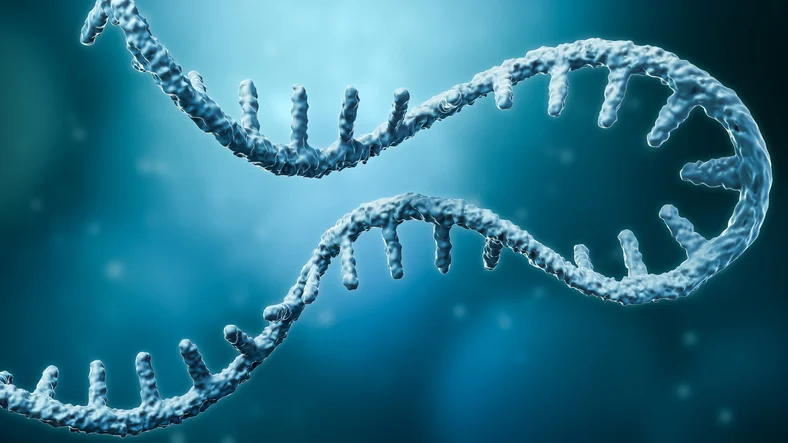
In a development that promises to reshape the landscape of modern oncology, pharmaceutical giants Moderna and Merck have announced a landmark success in their Phase 3 clinical trial for intismeran autogene. This personalized messenger RNA (mRNA) therapy, when combined with Merck’s blockbuster immunotherapy Keytruda (pembrolizumab), has demonstrated a statistically significant and clinically meaningful improvement in treating patients with completely resected Stage IIB–IV melanoma.
This result marks the first time an mRNA-based cancer vaccine has successfully cleared the high bar of a Phase 3 trial, signaling a potential new era where the immune system is "taught" to identify and neutralize tumors with surgical precision.
Main Facts: The Power of Personalized Precision
At its core, intismeran autogene represents the pinnacle of precision medicine. Unlike traditional chemotherapy, which often acts as a blunt instrument against rapidly dividing cells, intismeran is tailored specifically to the unique molecular fingerprint of an individual patient’s cancer.
The manufacturing process is a marvel of biotechnology:
- Tumor Analysis: Researchers analyze a sample of the patient’s tumor to identify "neoantigens"—proteins that exist only on the surface of those specific cancer cells.
- mRNA Encoding: The therapy is engineered to contain mRNA sequences that code for up to 34 of these unique neoantigens.
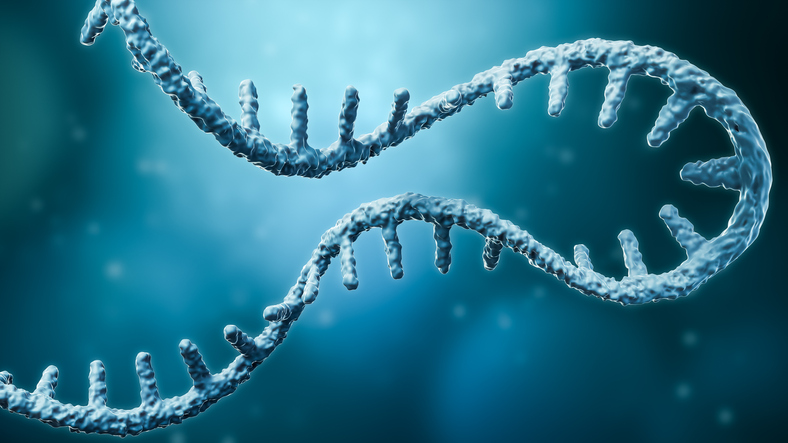
- Lipid Nanoparticle Delivery: Encapsulated in lipid nanoparticles, the mRNA is injected into the patient.
- Immune Activation: Once inside the body, the mRNA instructs cells to produce these neoantigens. This serves as a "wanted poster," training the patient’s immune system to recognize, track, and destroy any lingering cancer cells that may have escaped surgery.
The Phase 3 trial, which enrolled 1,137 patients, aimed to prove that this combination therapy could significantly improve Recurrence-Free Survival (RFS) and Distant Metastasis-Free Survival (DMFS) compared to the current standard of care—Keytruda monotherapy.
Chronology: A Decade of Collaborative Innovation
The road to this breakthrough has been paved by nearly a decade of strategic partnership and iterative scientific discovery.
- 2016: Merck and Moderna solidified their partnership, with Merck providing an upfront payment of $200 million to explore personalized cancer vaccines. At the time, the concept of an mRNA cancer vaccine was considered high-risk, high-reward research.
- 2022: Bolstered by promising early data, Merck exercised its option to co-develop and share costs equally for the therapy, then known as mRNA-4157, in a deal worth $250 million.
- January 2024: The partnership released five-year follow-up data from a Phase 2b trial. The results were striking: the combination of intismeran and Keytruda reduced the risk of cancer recurrence or death by 49% compared to Keytruda alone.
- August 2026: The companies announced that the pivotal Phase 3 INTerpath-001 trial met its primary and secondary endpoints, effectively validating the therapy’s clinical utility in a large-scale, rigorous setting.
Supporting Data: Why This Matters
While the specific numerical results of the Phase 3 trial are being held for an upcoming medical conference, the strength of the interim analysis is sufficient for the companies to initiate discussions with global health authorities.
The significance of these findings cannot be overstated. In the context of adjuvant therapy—treatment given after surgery to prevent the cancer from coming back—the ability to prevent recurrence is the "holy grail" of oncology. By combining the immune-checkpoint inhibition of Keytruda (which takes the "brakes" off the immune system) with the targeted "GPS" guidance provided by intismeran (which tells the immune system exactly what to attack), the two companies have created a synergistic effect that appears vastly superior to monotherapy.
The trial is the most advanced of eight separate studies currently exploring intismeran across various tumor types, including non-small cell lung cancer (NSCLC), bladder cancer, and renal cell carcinoma. The success in melanoma provides a "proof-of-concept" that suggests these mRNA platforms may be effective against a wide array of solid tumors.
Official Responses: A Landmark Moment
The medical community has reacted to the news with a mixture of professional excitement and cautious optimism. Professor Georgina Long, medical director of Melanoma Institute Australia and principal investigator of the study, provided a ringing endorsement of the findings.
"Intismeran in combination with pembrolizumab has the potential to establish a new treatment paradigm in the adjuvant melanoma setting, helping patients remain cancer-free for longer," Professor Long stated. She described the results as a "landmark moment," emphasizing that for patients who have already undergone surgery, this therapy offers a vital layer of protection that was previously unattainable.
Executives from both Moderna and Merck have echoed these sentiments, framing the success as a vindication of their long-term R&D strategy. For Moderna, in particular, this is a pivotal diversification point, proving that their mRNA technology—which gained global fame during the Covid-19 pandemic—is a versatile platform for life-saving oncology treatments.
Implications: The Future of Cancer Treatment
The implications of the INTerpath-001 success ripple far beyond the field of melanoma.
1. Regulatory Pathways and Market Access
With the Phase 3 endpoints met, Merck and Moderna are now preparing for "Rolling Submissions" to the FDA and other international regulatory bodies. If approved, intismeran will likely become the gold standard for adjuvant melanoma treatment, potentially shifting the treatment paradigm for thousands of patients annually.
2. Financial and Strategic Impact
Wall Street analysts have reacted favorably to the announcement. Daina Graybosch of Leerink Partners hailed the results as a "historic cancer vaccine success," noting that it opens the door for a new generation of vaccine research. Analysts at William Blair emphasized that this breakthrough provides a clear path for Moderna to diversify its revenue stream beyond infectious disease vaccines (Spikevax and mNexspike), solidifying its position as a powerhouse in the biotech sector.
3. The "Next-Gen" Oncology Horizon
The success of intismeran suggests that we are moving toward a future of "bespoke" oncology. If a patient’s unique tumor mutations can be mapped and neutralized by a custom-manufactured mRNA dose, the survival outcomes for previously "untreatable" cancers could improve dramatically.
Furthermore, this success lowers the risk profile for other mRNA-based oncology candidates currently in the pipeline. By demonstrating that the platform can successfully navigate the complexities of the immune system to target cancer cells, the trial has effectively de-risked the entire field of neoantigen-based therapeutics.
4. Patient Quality of Life
Beyond the raw statistics of recurrence-free survival, the shift toward adjuvant mRNA therapy represents a significant improvement in patient experience. By potentially preventing the need for more aggressive, late-stage systemic treatments, intismeran may allow patients to maintain a higher quality of life, avoiding the toxicity often associated with repeated, systemic chemotherapy regimens.
Conclusion
The announcement from Merck and Moderna is more than just a successful trial result; it is a testament to the maturation of mRNA technology. By successfully marrying the deep immunology of checkpoint inhibitors with the precision of personalized genetic instruction, the partners have provided a blueprint for the future of cancer care.
As the scientific community awaits the full data presentation at upcoming medical meetings, one thing is clear: the era of personalized cancer vaccines has arrived. For patients facing the daunting reality of high-risk melanoma, the promise of intismeran autogene offers something that was once in short supply: a fighting chance at a life free from the specter of recurrence.