








In the quiet, climate-controlled expanse of the Smithsonian’s National Zoo, a 848-pound calf named Linh Mai is doing what baby elephants do best: playing with her "aunties," splashing in water, and charming crowds of awestruck visitors. Yet, beneath her playful exterior lies a scientific mission of international consequence. Linh Mai is the subject of a revolutionary medical strategy aimed at conquering Elephant Endotheliotropic Herpesvirus (EEHV), a silent, lethal pathogen that serves as the leading cause of death among young Asian elephants globally.
For decades, the conservation community has been paralyzed by the sudden, brutal nature of EEHV. Now, researchers at the National Zoo are flipping the script, attempting to harness the power of the calf’s own immune system to transform a death sentence into a manageable, survivable infection.
The Silent Killer: Understanding the EEHV Crisis
To understand why Linh Mai’s journey is so critical, one must understand the shadow that hangs over every Asian elephant calf. EEHV is a complex, virulent virus that is effectively ubiquitous in the species. Experts estimate that nearly all Asian elephants carry the virus in a latent state; however, when the virus activates—often during a period of stress or waning maternal antibodies—the results are frequently catastrophic.
The disease is notoriously "insidious," as described by Tony Barthel, the Director of Animal Care at the Smithsonian’s National Zoo. It strikes with terrifying speed. A calf can appear perfectly healthy in the morning and succumb to the disease within twenty-four hours. Approximately 60 percent of young elephants who develop clinical signs of EEHV do not survive. Because the virus can remain hidden for years before manifesting, it has proven remarkably difficult for veterinarians to predict or preempt.
A Chronology of Hope: From Rocky Beginnings to Scientific Innovation
The Arrival of Linh Mai
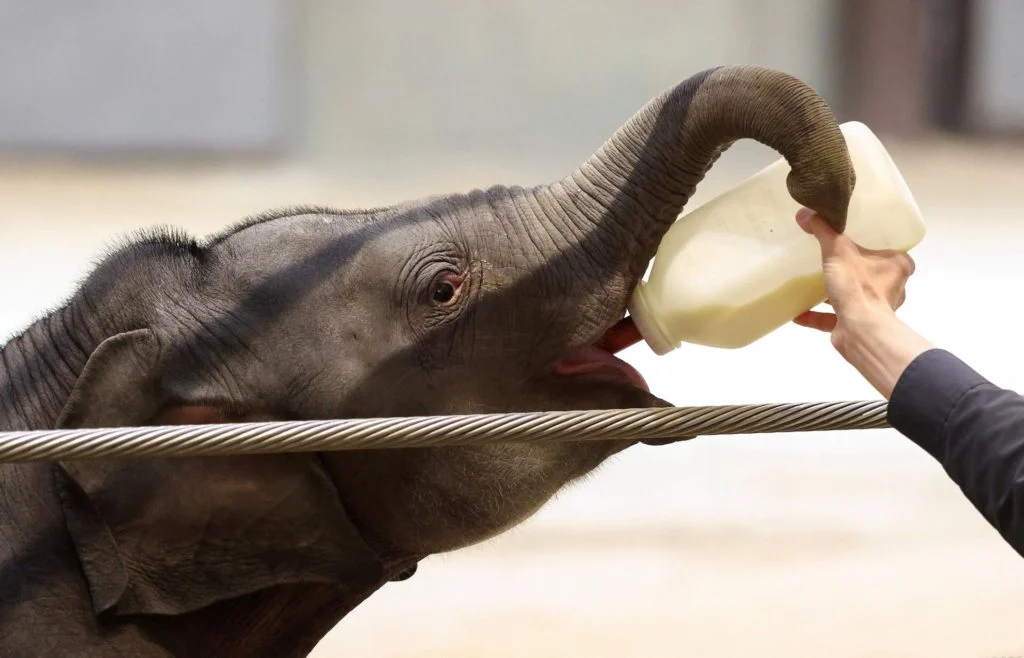
Linh Mai’s story began in February, marked by a series of challenges that required round-the-clock intervention. Following her birth—the first at the National Zoo in 25 years—her mother exhibited aggressive behavior, preventing the calf from nursing. This "rocky start" necessitated a monumental effort by zoo staff, who pivoted to specialized, hand-reared formula feeding. For weeks, the veterinary and animal care teams lived in a state of high alert, managing her nutrition, socialization with elder herd members, and overall development.
The Shift in Strategy
With the calf stabilized and thriving, the zoo’s focus shifted to the long-term existential threat: EEHV. Traditional methods of treating the virus once it has presented clinical symptoms have been largely reactive and often ineffective due to the speed of the virus’s progression.
In a bold departure from traditional protocols, the veterinary team, led by Dr. James Steeil, has initiated a program of "controlled exposure." The goal is to introduce the virus to Linh Mai in tiny, manageable doses while she still possesses the protective antibodies transferred from her mother. The hope is that this exposure will act as a form of natural inoculation, allowing her body to mount an immune response and develop long-term, protective immunity without the life-threatening impact of a full-blown infection.
The Mechanics of the Study: Science in the Trunk
The process is a testament to the sophistication of modern zoological medicine. To track the virus, veterinarians have trained the elephants to participate in their own care. Staff use saline solution to flush the elephant’s trunk, after which the calf lowers her head to blow the mucus-filled fluid into a collection bag.
This sample is immediately processed in the zoo’s dedicated EEHV laboratory. If the virus is detected at low levels, the team can monitor its progress in real-time. By introducing small, controlled amounts of the virus via syringe, the team is effectively "training" Linh Mai’s immune system. Dr. Steeil describes this as taking control of the narrative, moving from a position of defense to a position of guided immunity.
Supporting Data and Clinical Observations
The data supporting this shift is rooted in the immunological understanding of how mammals respond to pathogens. In human medicine, vaccines function by exposing the body to a weakened or inactivated form of a virus to stimulate antibody production. While the EEHV approach is more direct, the underlying principle is similar.
- Prevalence: 100% of Asian elephant populations are estimated to harbor the virus.
- Mortality: 60% of calves experiencing active viremia succumb to the illness.
- Response Time: Current clinical treatments are often too slow, as the virus can reach lethal thresholds in less than a day.
- Developmental Milestones: At 848 pounds, Linh Mai’s growth metrics suggest a robust physical condition, which is a critical variable in her ability to withstand both the virus and the controlled exposure process.
Official Perspectives: The Experts Speak
The leadership at the Smithsonian is under no illusions regarding the complexity of the task. Tony Barthel, who has spent his career in animal care, emphasizes that this is not just about one elephant; it is about the survival of a species.
"It’s an insidious disease that really has a significant impact on this species," Barthel says. "After that [maternal] immunity is dissipated, they can have a real crisis. And they can go from your first subtle symptom to death in a day. It can be dramatic. And so, cracking that nut is a massive focus of ours."
Dr. James Steeil remains cautiously optimistic. His vision for the project extends beyond the walls of the National Zoo. "My hope and dreams for this project is that we can develop another tool in the tool chest that allows us to fight this disease at various time points to help prevent the death of any elephant," Steeil stated. The team views their work as a "labor of love," recognizing that every piece of data gleaned from Linh Mai’s progress could be the key to saving calves in zoos and sanctuaries around the world.
Implications for Global Conservation
The implications of the Smithsonian’s research cannot be overstated. If this method of controlled exposure proves successful, it could fundamentally alter the management of captive elephant populations.
- Standardizing Care: If successful, this protocol could be shared with zoos and research institutions globally, creating a standardized, proactive approach to EEHV rather than the current fragmented, reactive response.
- Herd Dynamics: By ensuring the survival of calves, zoos can maintain healthier, multi-generational herds, which are essential for the social and psychological well-being of the species.
- Public Engagement: Beyond the science, the presence of a thriving, healthy calf serves as a powerful ambassador. As Barthel notes, Linh Mai allows the zoo to "connect with our guests and bring them into these stories." This engagement is vital for driving funding and political will toward broader Asian elephant conservation efforts, including habitat protection and anti-poaching initiatives.
Looking Toward the Future
As Linh Mai continues to grow, her role in the herd is evolving. She is no longer just a fragile calf in need of specialized formula; she is a contributing member of the social structure at the National Zoo. The "aunties" who have guided her since birth continue to provide the social scaffolding necessary for her to thrive.
The road ahead is not without risks. The veterinary team monitors her daily, knowing that biology is rarely linear and that pathogens are notoriously unpredictable. However, the atmosphere at the Smithsonian is one of tempered confidence. By meeting the disease on their own terms, the staff is doing everything in their power to ensure that Linh Mai—and future generations of Asian elephants—can grow up in a world where EEHV is a challenge to be managed, rather than an inevitable end.
For now, the little calf continues her adventures, oblivious to the fact that her every milestone is being recorded as a potential turning point in the history of her species. Whether playing in the water or leaning into her keepers for a medical checkup, Linh Mai stands as a symbol of hope—a tiny, 848-pound giant carrying the weight of a monumental medical mission on her shoulders.