








For decades, the medical community has faced a fundamental challenge in cardiology: how to effectively repair heart tissue following a catastrophic myocardial infarction, commonly known as a heart attack. While modern medicine excels at restoring blood flow and preventing immediate fatality, the long-term prognosis for many patients remains grim. The heart, unlike the skin or liver, has a limited capacity for self-repair; instead, it replaces damaged muscle with non-contractile scar tissue. This scarring process often leads to the progressive weakening of the heart, culminating in chronic congestive heart failure.
However, a groundbreaking development in bioengineering is poised to shift this paradigm. Researchers at the University of California San Diego (UCSD) have pioneered a revolutionary biomaterial designed to travel through the bloodstream, offering a minimally invasive, "inside-out" approach to calming inflammation and triggering tissue regeneration. By leveraging the body’s own vascular network, this technology promises to reach damaged organs that were previously considered inaccessible to direct therapeutic intervention.
The Genesis of a Regenerative Strategy
The development of this injectable biomaterial did not happen overnight; it is the culmination of years of rigorous experimentation by a team led by Karen Christman, a professor of bioengineering at the Jacobs School of Engineering at UCSD.
A Chronological Evolution of Cardiac Repair
The journey began with the creation of a hydrogel derived from the natural scaffolding of cardiac muscle tissue, known as the extracellular matrix (ECM). In earlier iterations, this gel was designed for direct delivery into the heart muscle via a catheter. The concept was simple yet elegant: by injecting a supportive matrix into the damaged site, clinicians could provide a biological "scaffold" that encourages the body’s cells to migrate, proliferate, and eventually repair the damaged area.
In the fall of 2019, the team reached a major milestone when they reported the results of a successful Phase 1 human clinical trial. The study demonstrated that the transendocardial injection of "VentriGel"—the team’s cardiac ECM hydrogel—was both safe and feasible for patients suffering from left ventricular dysfunction post-heart attack.
Despite this success, a significant limitation remained. The direct injection method required specialized, invasive procedures that could not be performed immediately following a heart attack, as the heart tissue was too fragile to withstand the mechanical stress of a needle-based intervention. Recognizing this, the research team pivoted, setting their sights on a more versatile delivery method: intravenous (IV) infusion.
Refining the Science: From Macro to Nano
To make the biomaterial suitable for systemic delivery, the researchers had to solve a critical engineering puzzle: particle size. The original hydrogel contained particles too large to traverse the microvasculature. Martin Spang, the paper’s first author and a doctoral alumnus of the Christman lab, utilized high-speed centrifugation to isolate nano-sized particles from the liquid precursor of the hydrogel.
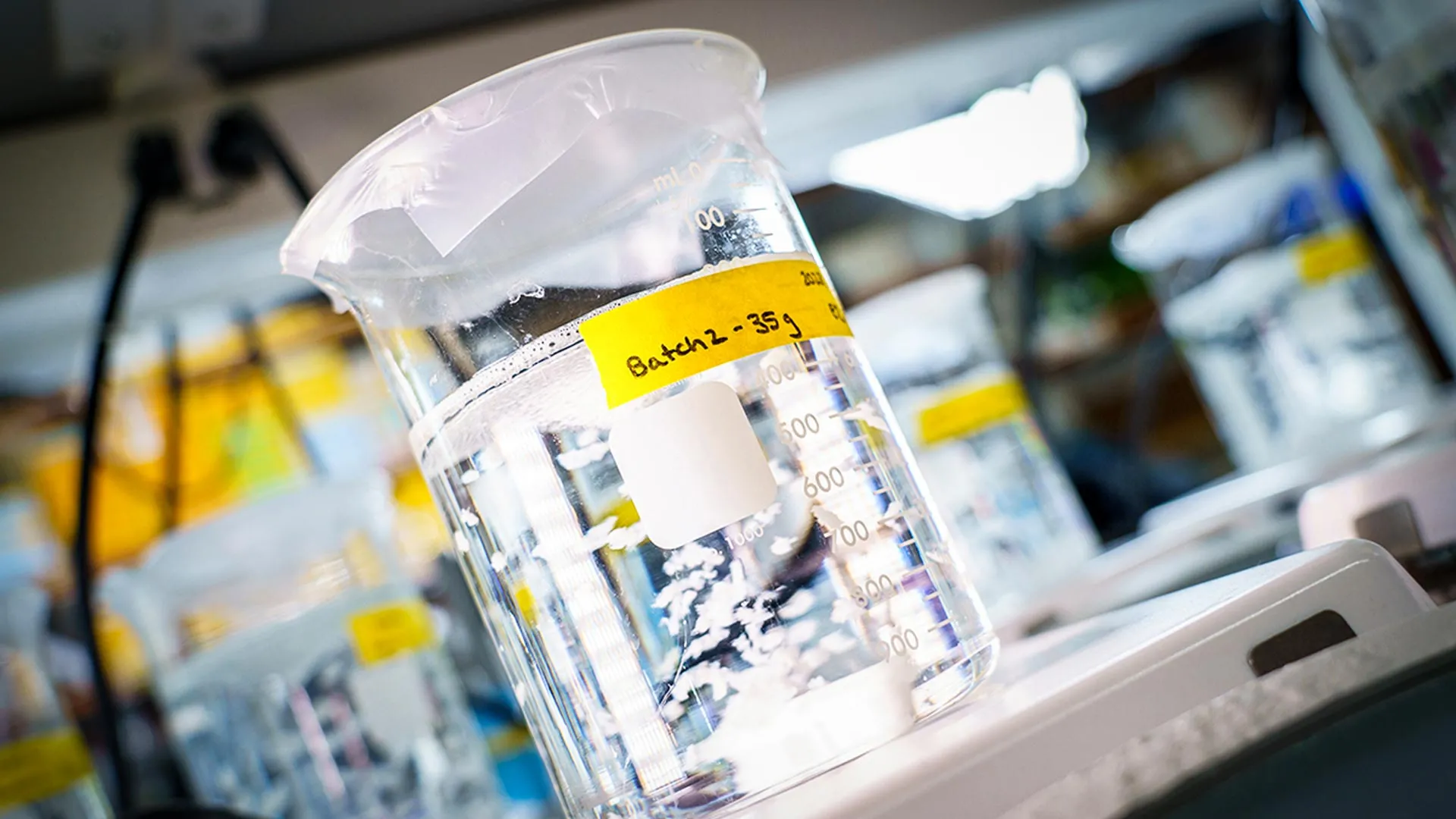
The resulting material—a freeze-dried, sterile powder—can be reconstituted with water and delivered through an IV or infused directly into a coronary artery. Once introduced into the bloodstream, the material acts as a smart delivery system, specifically localizing to areas of injury by binding to the "leaky" microvasculature that characterizes inflamed, post-infarct tissue.
Supporting Data: Mechanisms of Action and Efficacy
The 2022 study, published in Nature Biomedical Engineering, provided the first robust evidence that this systemic approach could yield local results. When tested in rodent and porcine models of acute myocardial infarction, the findings were transformative.
Healing from Within
The researchers initially hypothesized that the biomaterial would simply accumulate in the damaged tissue. However, they observed a more profound biological response: the biomaterial actively attached to the endothelial cells lining the blood vessels. By sealing the gaps that form between these cells after an injury, the material appeared to accelerate the healing of the vascular lining itself.
This process significantly dampened the inflammatory response—the primary driver of long-term tissue destruction after a heart attack. Key metrics in the animal models included:
- Improved Wall Motion: Reduced left ventricular volumes and enhanced muscle contraction.
- Gene Expression Shifts: Analysis showed the activation of gene pathways associated with tissue repair and a decrease in pro-inflammatory markers.
- Rapid Degradation: The material was found to be largely degraded and cleared by the body within three days, leaving behind only the biological "instruction" for the tissue to heal.
Deepening the Understanding: The 2025 Perspective
The research has continued to evolve. A follow-up study published in Nature Communications in 2025, utilizing advanced spatial transcriptomics and single-nucleus RNA sequencing, provided a high-resolution map of how these ECM-based materials orchestrate recovery. The study confirmed that the biomaterial does more than just fill space; it modulates the immune environment, stimulates lymphatic development, promotes fibroblast activation, and even supports neurogenesis—all vital components of a comprehensive regenerative response.
Official Responses and Clinical Outlook
The medical community has responded with cautious optimism, viewing the technology as a potential "holy grail" for interventional cardiology.
Dr. Ryan R. Reeves, a physician in the UC San Diego Division of Cardiovascular Medicine, emphasizes the urgent clinical need for such a therapy. "Coronary artery disease, acute myocardial infarction, and congestive heart failure continue to be the most burdensome public health problems affecting our society today," Dr. Reeves noted. "As an interventional cardiologist, who treats patients with these conditions on a daily basis, I would love to have another therapy to improve patient outcomes and reduce debilitating symptoms. This easy-to-administer therapy has the potential to play a significant role in our treatment approach."
Karen Christman, the lead scientist behind the project, remains focused on the translational path. She has co-founded a startup, Ventrix Bio, Inc., to navigate the complex journey from the lab bench to the hospital bedside. While the team prepares to seek FDA authorization for human clinical trials, the broader implications of their work have already begun to ripple through the field of regenerative medicine.
Implications: Beyond the Heart
While the initial focus has been on cardiac recovery, the versatility of this biomaterial suggests a far broader range of applications. Because all organs are supplied by the circulatory system, the "bloodstream-as-a-highway" approach could theoretically be used to treat any inflammatory condition characterized by leaky blood vessels.
The Future of Targeted Therapy
In early proof-of-concept experiments, the research team successfully tested the biomaterial in rat models of traumatic brain injury and pulmonary arterial hypertension. In both cases, the ability to deliver regenerative signals directly to the site of trauma, without the need for invasive surgery, proved highly effective.
The implications for medicine are profound:
- Reduced Surgical Trauma: By utilizing existing blood vessels, surgeons can avoid the risks associated with open-tissue procedures.
- Early Intervention: Patients could receive treatment immediately upon admission to the emergency room, rather than waiting weeks for tissue to stabilize.
- Broad Applicability: If successfully translated, this platform could treat everything from stroke-induced brain damage to chronic lung conditions.
The Path to Human Trials
As of late 2025, the technology is entering a critical phase. Ventrix Bio is currently navigating the regulatory landscape, with interest mounting regarding its potential to help vulnerable patient populations. For instance, a clinical trial listing has emerged for the use of related cardiac ECM materials in children suffering from hypoplastic left heart syndrome—a rare and life-threatening heart defect.
While the intravascular version of the biomaterial still awaits full human testing, the momentum is undeniable. The transition from an experimental hydrogel to a systemically delivered regenerative therapy represents one of the most significant leaps in bioengineering in recent years. If the clinical trials mirror the success observed in animal models, this technology could provide the first-ever direct therapy for repairing the human heart, fundamentally altering the trajectory of millions of lives affected by cardiovascular disease.
As Dr. Christman aptly summarized, "This biomaterial allows for treating damaged tissue from the inside out. It’s a new approach to regenerative engineering." For a field long defined by managing symptoms and slowing decline, this new approach offers the first real hope of genuine, biological restoration.