



As the autumnal shift approaches, the standard rhythm of public health planning—a reliable cycle of federal review, advisory consensus, and public rollout—has been disrupted. For years, the Centers for Disease Control and Prevention (CDC) and the Food and Drug Administration (FDA) have functioned in tandem to guide the American public through the complexities of seasonal respiratory virus protection. However, in 2026, the gears of this machinery have slowed, stalled by a confluence of political friction, administrative restructuring, and an unprecedented level of skepticism emanating from the highest levels of the Trump administration.
For frontline clinicians and concerned parents alike, the message is one of cautious navigation. While vaccines are being produced and supplies are moving toward distribution, the authoritative, centralized guidance that typically anchors the fall immunization season is absent, replaced by a patchwork of professional medical society statements and legal maneuvering.
The Institutional Breakdown: A Chronology of Disruption
To understand the current state of affairs, one must examine the divergence between the FDA and the CDC. The FDA, which regulates the composition and safety of pharmaceutical products, has largely maintained its procedural timeline. By March 2026, the agency had issued its critical recommendations regarding the composition of influenza vaccines for the upcoming season, followed by guidance on COVID-19 formulations in May.
However, the breakdown occurs at the CDC’s Advisory Committee on Immunization Practices (ACIP). The ACIP serves as the critical bridge between scientific data and public policy. It is the body responsible for translating the FDA’s technical requirements into clinical practice, defining precisely which cohorts—from immunocompromised seniors to pediatric populations—require specific doses and schedules.
The absence of ACIP’s March and June meetings this year is a significant departure from standard procedure. David Freedman, MD, professor emeritus of infectious diseases at the University of Alabama at Birmingham and a spokesperson for the Infectious Diseases Society of America (IDSA), underscored the gravity of this void. "Typically, the FDA meets, and then ACIP follows to make recommendations about how to use those vaccines," Freedman explained. "That was not done this year."
The timeline of this disruption tracks closely with the broader administrative changes overseen by the Department of Health and Human Services (HHS). In June 2025, a sweeping reorganization of the ACIP saw the ousting of long-standing committee members, a move initiated by Secretary Robert F. Kennedy Jr. This transformation prompted legal challenges, culminating in a March 2026 federal court decision that forced a partial reversal of these personnel changes and mandated that the agency revert to its pre-June 2025 schedules.
Filling the Void: The Role of Professional Medical Societies
With federal advisory machinery compromised, a vacuum of clinical authority emerged. Recognizing the potential for public confusion and the risk to patient safety, major medical organizations stepped into the breach. The IDSA, the American Academy of Pediatrics (AAP), the American College of Obstetricians and Gynecologists, and the American Academy of Family Physicians (AAFP) have collectively mobilized to issue independent clinical guidance.
These organizations are effectively acting as the de facto arbiters of current vaccine protocols. By synthesizing the existing body of peer-reviewed evidence and the FDA’s compositional recommendations, these groups aim to provide a roadmap for primary care physicians, obstetricians, and pediatricians.
Flor Munoz, MD, a pediatric infectious disease specialist at Baylor College of Medicine in Houston, notes that clinicians are largely relying on the guidance that was established prior to the June 2025 administrative shake-up. "Physicians are generally going by the guidance available before June 2025," she noted, emphasizing that while the federal committee is quiet, the medical community is maintaining continuity in care.
Furthermore, economic safeguards remain in place. Richard Hughes IV, MPH, legal counsel for the AAP, confirmed in June that insurers have pledged to continue covering all recommended vaccines without cost-sharing through the end of 2027. This commitment is intended to insulate the patient from the bureaucratic volatility, ensuring that financial barriers do not exacerbate the confusion caused by political friction.
The Emerging Conflict: Executive Orders vs. Clinical Practice
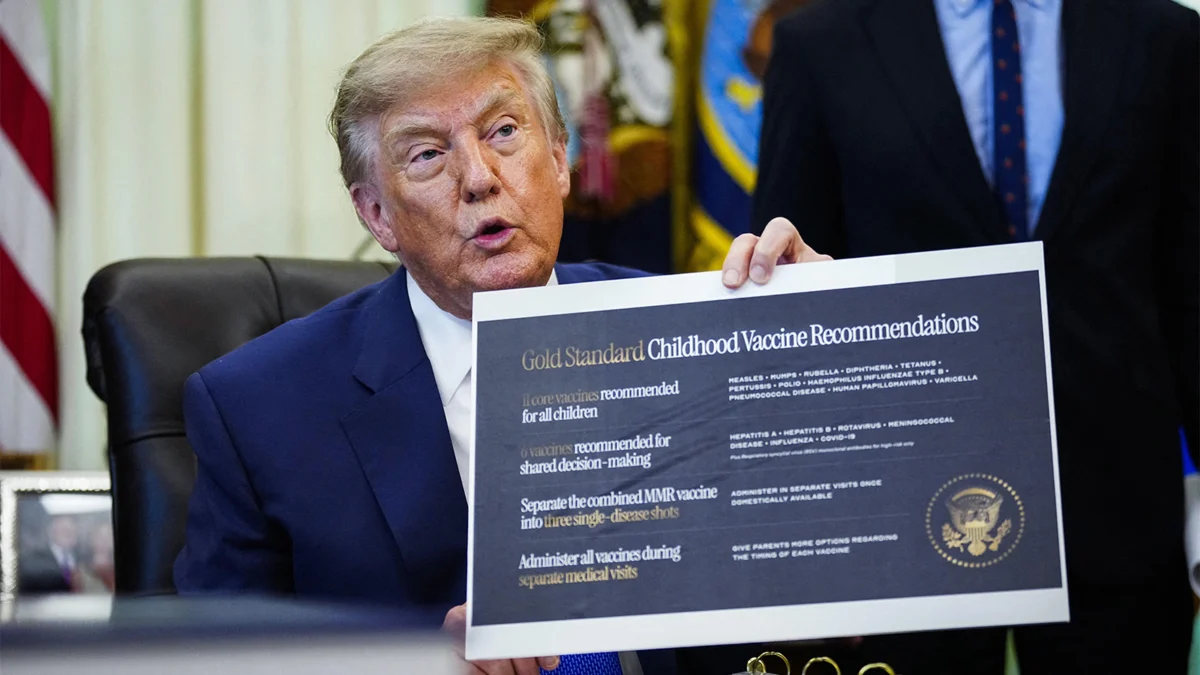
The friction between the executive branch and the public health apparatus reached a new peak earlier this week when President Trump issued an executive order aimed at altering the pediatric immunization schedule. The directive seeks to curtail the number of universally recommended childhood vaccines and advocates for the decoupling of the measles, mumps, and rubella (MMR) vaccine into separate components.
Perhaps most provocatively, the order attempts to reclassify COVID-19 and influenza vaccinations for children under the umbrella of "shared decision-making"—a shift that would downgrade these shots from standard, recommended preventive measures to optional interventions discussed on a case-by-case basis.
However, legal experts and medical organizations are quick to point out the limitations of executive power in this domain. The AAFP has explicitly stated that an executive order cannot unilaterally alter ACIP recommendations or the established CDC immunization schedules. Because these schedules are grounded in regulatory frameworks and statutory requirements, they exist beyond the reach of a simple administrative directive.
Nevertheless, the attempt to change the status quo creates a "shade of gray" regarding new technologies. For instance, the FDA recently approved the first mRNA-based influenza vaccine, mFlusiva, from Moderna, designed for adults aged 50 and older. While the product is slated for release this season, its integration into the official, recommended schedule remains murky. Without a functioning ACIP to formally "write in" this new product, healthcare providers are left to decide for themselves how to prioritize this new technology against established egg-based or recombinant options.
Supporting Data and the VFC Program
Despite the overarching political instability, there is one area where observers express cautious optimism: the Vaccines for Children (VFC) program. This federal initiative remains the backbone of pediatric immunization for families who face economic hardship. Dr. Munoz emphasized that the VFC program’s operations should remain insulated from the current discord.
The stability of the VFC program is vital because, historically, when clinical guidance becomes fragmented, the first victims are the most vulnerable populations. The CDC’s website currently reflects a forced reversion to the status quo following the March court ruling, which mandates that the agency maintain the vaccination schedules that existed prior to the 2025 administrative purge. While this provides a temporary anchor, it does little to address the long-term need for updated guidance on emerging threats and new vaccine platforms.
The Broader Implications: Public Trust and Vaccine Uptake
The most profound danger identified by experts is not necessarily a lack of vaccine supply, but a decline in vaccine confidence. The correlation between institutional consensus and public uptake is well-documented; when health authorities speak with a unified voice, adherence to recommended schedules is typically higher. Conversely, when the process is politicized, the resulting uncertainty becomes a deterrent.
"A concern that is real is, because of this confusion, people might not come and get their vaccines," Dr. Munoz warned. This sentiment is echoed by the AAFP, which released a pointed statement noting that "continued efforts to undermine the safety and efficacy of vaccines are incredibly dangerous and will have grave consequences for children and families."
The potential for a "vaccine gap"—whereby parents, confused by conflicting messages from the White House and their own pediatricians, opt out of recommended doses—is the primary concern of public health officials. If the current trend of political interference continues, the nation risks a erosion of the progress made over decades of standardized immunization policy.
As the fall season approaches, the burden of ensuring public health has effectively shifted from federal committees to the individual practitioner. Doctors are now forced to navigate a landscape where they must interpret medical evidence in the shadow of executive pressure. The success of the 2026-2027 respiratory season will rely on the resilience of these individual clinical relationships and the commitment of medical societies to hold the line on evidence-based medicine.
While the HHS has remained silent on these developments, failing to respond to multiple requests for comment, the medical community continues to prepare. They are betting on the fact that, regardless of political theater, the fundamental necessity of protecting the population against influenza, COVID-19, and other respiratory pathogens remains an immutable priority of modern medicine. Whether the public follows that lead, however, remains to be seen.