



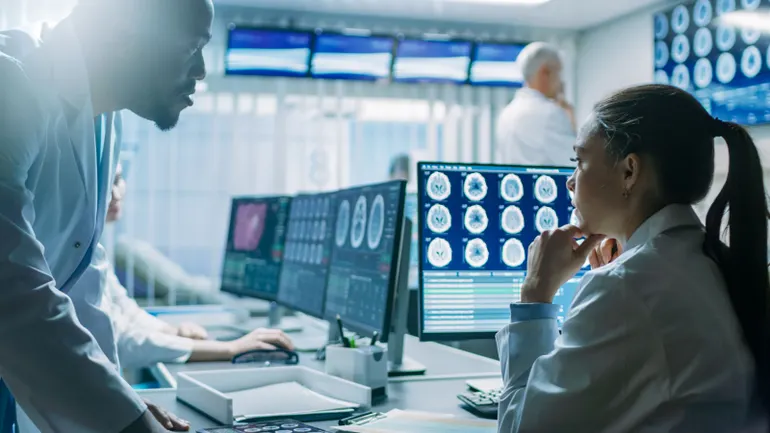
Healthcare has always been, at its core, a human endeavor. It is defined by the researcher chasing a breakthrough, the student finding their professional path, and the clinician standing at the bedside during a patient’s most vulnerable moments. Yet, in the modern era, the silent, reliable backbone of these interactions is technology. Today, that backbone is undergoing a radical transformation as Artificial Intelligence (AI) moves from a theoretical novelty to a clinical necessity.
Across the United States, Dell Technologies is partnering with health systems, life sciences enterprises, and community programs to redefine what is possible in patient care. By providing the digital infrastructure necessary to support AI, these collaborations are accelerating scientific discovery, training the next generation of care teams, and, ultimately, improving outcomes for patients worldwide.
The Foundation of Innovation: Why AI Needs Infrastructure
The rapid adoption of AI in healthcare is not merely a matter of software—it is a matter of scale. Organizations that are successfully integrating AI into their workflows share a common thread: a robust, secure infrastructure foundation. Without the right data management, compliance protocols, and computational power, AI remains an isolated experiment rather than a transformative tool.
Dell’s "AI Factory" has emerged as a critical path for healthcare organizations, offering a blueprint to scale AI securely. By integrating data management with an open partner ecosystem, Dell provides the hardware and software stability that hospitals and research centers require to navigate the complexities of modern medicine.
Chronology of Progress: Real-World Applications
The evolution of healthcare technology is best observed through the concrete partnerships formed over the past year. From drug discovery to bedside imaging, the following milestones highlight the shift toward a digitally augmented medical landscape.
1. Accelerating the Pharmaceutical Pipeline
In May 2026, at Dell Technologies World, Eli Lilly & Company provided a masterclass in the intersection of AI and life sciences. The company demonstrated how high-performance computing serves as a critical lever in closing the gap between a laboratory breakthrough and a life-saving medication. By utilizing advanced AI-driven infrastructure, Eli Lilly is not only accelerating drug discovery but also streamlining manufacturing processes to ensure that therapies reach patients with unprecedented speed.
2. Revolutionizing Clinical Imaging
Also unveiled at the event was the Eonis Vision solution—a breakthrough in how clinicians interact with diagnostic data. Comprising Avatar Medical Vision software and the Barco Eonis 3D display, and powered by Dell Pro Precision workstations and NVIDIA RTX PRO GPU acceleration, the solution converts standard CT and MRI scans into interactive, patient-specific 3D anatomy.
This eliminates the need for cumbersome headsets or specialized glasses, allowing doctors to display high-fidelity, rotatable 3D models of a patient’s internal organs during consultations. This visual bridge helps improve patient understanding, alleviates anxiety, and facilitates more informed, collaborative conversations at the point of care.
3. High-Performance Computing in Academic Health
Beth Israel Lahey Health is currently expanding its research computing infrastructure with a Dell High-Performance Computing (HPC) cluster. This investment is designed to provide the processing power necessary for precision medicine, which was previously unattainable at this scale. The primary objective is to leverage AI to transform clinical trial recruitment and expand access to innovative therapies across complex medical fields, including oncology, neurology, cardiology, and infectious disease.
4. Computational Pathology at the University of Pittsburgh
The University of Pittsburgh’s Department of Pathology has established the Computational Pathology and AI Center of Excellence (CPACE). By implementing Dell servers and storage systems, CPACE aims to diagnose disease earlier and more accurately. The goal is to move AI-assisted tissue analysis from the research bench to the clinical desk, significantly reducing the time it takes to convert a digital discovery into a actionable diagnosis for a patient.
5. Bringing the Hospital Home
The model of care is also moving beyond the traditional clinic. DispatchHealth, a leader in home-based hospital-level care, operates across more than 20 states. To support clinicians who operate in unpredictable home environments, the organization has standardized its operations on Dell Pro Rugged AI PCs equipped with 5G connectivity. This hardware ensures that clinicians have constant, durable access to patient data, streamlining workflows and resulting in projected cost savings of more than $1.5 million over three years.
Supporting Data: The Efficiency Gap
The push for digital transformation is driven by hard data. In the healthcare sector, time is quite literally synonymous with life.
- Operational Efficiency: For organizations like DispatchHealth, the deployment of ruggedized AI hardware has demonstrated that mobile, always-connected infrastructure reduces the administrative burden on clinicians. By minimizing the time spent struggling with connectivity or outdated data, clinicians can refocus their energy on patient outcomes.
- Cost-Effectiveness: The $1.5 million savings projection over three years at DispatchHealth highlights that investment in high-quality infrastructure is not just a clinical requirement but a financial one.
- Throughput and Scale: The adoption of HPC clusters, such as the one at Beth Israel Lahey Health, allows for the processing of massive genomic and clinical datasets that would overwhelm standard enterprise servers. This scale is the only way to support the "precision medicine" model, where treatments are tailored to the specific genetic makeup of an individual.
Official Perspectives: The Human-Centric Mandate
"Innovation in healthcare doesn’t start in the data center," says leadership at Dell Technologies. "It starts with people." This sentiment is the driving force behind the company’s commitment to social impact, particularly in education.
A primary example is Dell’s support of the Boston Children’s Hospital COACH (Community Opportunities and Advancement at Children’s Hospital) Internship Program. Now in its 19th year, the program provides paid internships to Boston-area youth, offering them exposure to clinical, research, administrative, and operational roles. By providing modern laptops and accessories to these interns, Dell ensures that the next generation of healthcare workers is digitally native from day one. This investment ensures that 90 interns can engage in cloud-based systems and virtual collaboration, fostering a workforce that is ready for the demands of 21st-century medicine.
Implications for the Future of Healthcare
The shift toward an AI-integrated healthcare system carries significant implications for the industry.
1. The Death of the "One-Size-Fits-All" Approach
With the integration of AI and high-performance computing, we are moving away from standardized care and toward hyper-personalized medicine. Whether it is 3D anatomical modeling for surgery or genomic-based cancer therapy, the technology allows for care plans that are tailored to the individual rather than the population average.
2. The Democratization of Expertise
AI-assisted diagnosis, such as that being developed at the University of Pittsburgh’s CPACE, acts as a force multiplier for pathologists and radiologists. By providing advanced diagnostic insights, AI can help clinicians in smaller, rural, or underserved communities reach the same diagnostic accuracy as those at top-tier research hospitals.
3. The Security Imperative
As healthcare becomes more digital, the burden of security becomes heavier. The "Dell AI Factory" approach acknowledges that data privacy and regulatory compliance (such as HIPAA) are not "add-ons"—they must be built into the foundation. As AI models become more complex, the ability to manage data securely will be the primary filter between successful health systems and those that lag behind.
4. Redefining the Workforce
The focus on programs like COACH acknowledges that technology is useless without a workforce that understands how to wield it. We are entering an era where clinical intuition must be paired with data literacy. The future healthcare professional will not just be a healer; they will be a data-driven practitioner who knows how to interpret the outputs of the machines that support them.
Conclusion: Building Together
Across every one of these collaborations—from the smallest community clinic in a remote area to the largest academic health system—the common thread remains: technology matters most when it starts with the human outcome.
Whether the goal is a faster diagnosis, a student finding their professional path, a researcher unlocking a cure, or a patient feeling more informed and comfortable during a consultation, the infrastructure provided by Dell Technologies is designed to serve those human ends. As AI continues to reshape the boundaries of medical possibility, the goal is to ensure that every organization can harness these tools with absolute confidence. The digital pulse of healthcare is quickening, and through robust infrastructure, the industry is proving that it is ready to meet the challenge.
For more information on how Dell Technologies is enabling the next generation of clinical care, visit Dell.com/Healthcare.