




In the world of professional bodybuilding, the pursuit of physical perfection is often viewed as a solitary journey—a battle of the self against the iron. Yet, for eight-time Mr. Olympia champion Lee Haney, the most critical victory of his life was not won on a stage under the blinding glare of arena spotlights, but in the sterile, hopeful environment of a hospital operating room.
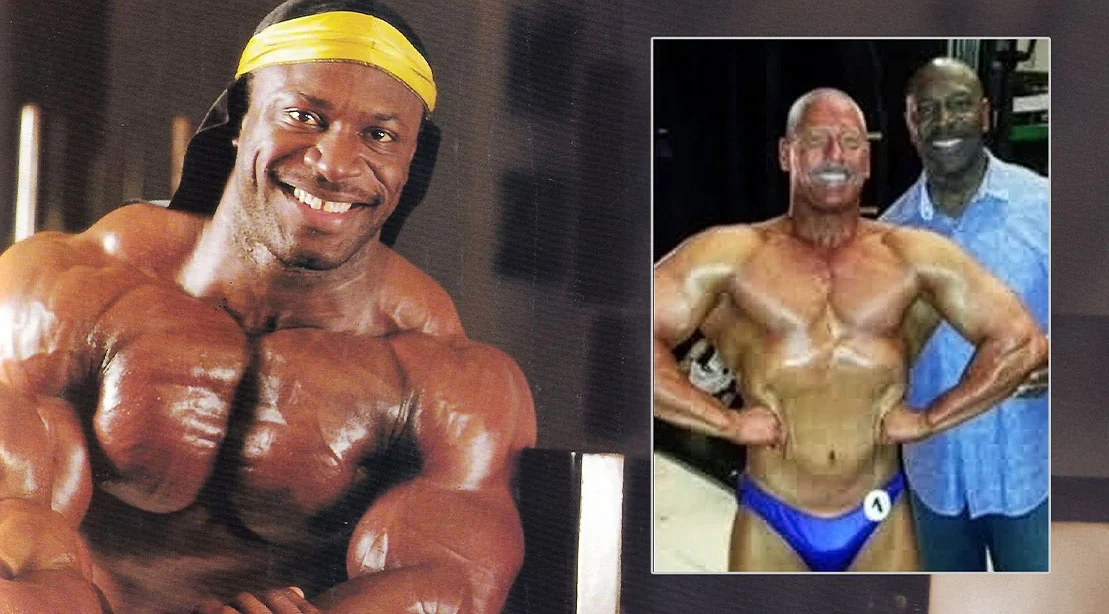
This week, the 66-year-old icon, who defined an era of bodybuilding dominance between 1984 and 1991, shared the miraculous news that he has successfully undergone a kidney transplant. The life-saving procedure, which concluded after a grueling 12-hour surgery at Emory University Hospital in Atlanta, Georgia, brought to a close a harrowing chapter that began earlier this spring. What makes this story resonate far beyond the fitness industry, however, is the identity of the donor: a fellow bodybuilder whose connection to Haney spans nearly four decades.
The Chronology of a Crisis: From Diagnosis to Restoration
The public became aware of the gravity of Haney’s health situation in March 2026, when the legend took to social media to broadcast a desperate plea. After being diagnosed with kidney failure, Haney and his family were faced with the sobering reality of long transplant waiting lists. With the support of his son, Joshua, who acted as a primary advocate in the search for a donor, the Haney family launched a digital campaign that reached across the globe.
The call to action was simple, yet the stakes could not have been higher. The plea for a matching kidney donor went viral, picked up by major sports outlets and bodybuilding publications. For months, Haney waited, maintaining a spirit of resilience that mirrored the discipline he once displayed in the gym.
"Prayers went up, and the Lord answered," Haney wrote in an emotional post on September 29, 2026. The turning point arrived shortly after Haney returned home from a trip to Italy. The news was unequivocal: a perfect match had been identified.
The donor was identified as Richard Miller, a man with whom Haney shared a history that felt almost serendipitous. Their paths first converged in 1985—the very year Haney was cementing his legacy as the king of the bodybuilding world. Decades later, in 2014, their lives intersected once more at a competition. That Miller, a man who had admired Haney from the fringes of the sport for years, would eventually be the one to provide a literal lifeline is a narrative that has touched the hearts of thousands.
The Anatomy of an "Iron Brotherhood"
In a statement that highlighted the depth of their bond, Haney described Miller not just as a donor, but as an "Iron Brother."
"Richard told me the Lord pressed upon his heart to bless me with a kidney, and I will be forever grateful," Haney shared. For the bodybuilding community, the term "brotherhood" is often thrown around as a platitude, but in this instance, it took on a visceral, biological reality. The act of donating a kidney is one of the most significant sacrifices one human can make for another, involving invasive surgery, recovery time, and a lifelong commitment to monitoring one’s own health.
For Miller, the decision was clearly rooted in a profound sense of respect for the man who served as a standard-bearer for the sport. Haney, who shares the record for the most Mr. Olympia titles (eight) with the legendary Ronnie Coleman, has spent his post-competitive life as an ambassador for health, wellness, and faith. Seeing that legacy reciprocated in such a selfless act of medical intervention has provided a rare, uplifting moment in a year often dominated by darker news cycles.
Medical Excellence and the Road to Recovery
The success of the procedure was attributed to the surgical team led by Dr. Cristea, MD, at Emory University Hospital. The complexity of a 12-hour transplant surgery for a patient of Haney’s age and background cannot be overstated.
"Following a 12-hour surgery, I woke up with a new kidney and another testimony of God’s grace," Haney stated. The recovery process, while challenging, is reportedly proceeding well. The medical team is focusing on ensuring that Haney’s body accepts the new organ, while simultaneously monitoring Miller, who is recovering from the donor nephrectomy.
The choice of Emory University Hospital—a top-tier facility in Atlanta—ensured that Haney had access to the cutting-edge immunosuppressive protocols necessary to prevent organ rejection. As the industry watches, the focus has shifted from the shock of the diagnosis to the celebration of a successful medical intervention.
A Global Outpouring: Industry Reactions
The news of the transplant rippled through the bodybuilding world, drawing responses from legends who once stood on stage alongside Haney, as well as the new generation of athletes who look up to him as a pioneer.
Phil Heath, a seven-time Mr. Olympia winner, and Brandon Curry, a former Mr. Olympia champion, were among the many high-profile figures who publicly offered their support. The comment sections of Haney’s social media posts have become a mosaic of well-wishes from fans in every corner of the world.
"Lee is one of those rare individuals who is loved by all," wrote one follower, reflecting a common sentiment within the community. For many, Haney represents the "Golden Era" of bodybuilding—a time when the sport was defined by symmetry, grace, and an approachable persona that transcended the gym. The collective relief felt by his fanbase underscores his status as an enduring icon.
Implications for the Bodybuilding Community
This story serves as a poignant reminder of the vulnerabilities inherent in the aging process, even for those who have dedicated their lives to extreme physical health. The rigors of professional bodybuilding—often involving heavy supplementation, extreme dietary protocols, and intense physiological stress—have long been a subject of debate regarding long-term health.
Haney’s experience has sparked conversations about the importance of kidney health, proactive screening, and the potential for the bodybuilding community to serve as a support network for athletes who find themselves in medical distress. It also highlights the transformative power of social media when used as a tool for altruism rather than just performance metrics.
By being transparent about his health, Haney has helped de-stigmatize the process of seeking organ donation. His journey from the peak of professional success to the vulnerability of a hospital bed provides a humanizing perspective on a man who, for many, seemed invincible.
Looking Ahead: The Legacy of a Champion
As Lee Haney begins his recovery, his focus remains on gratitude. He has long advocated for a life balanced between physical training and spiritual grounding, and this recent trial has only served to reinforce those core tenets.
The story of Lee Haney and Richard Miller is a testament to the fact that, even in a world obsessed with individual achievement, we remain inextricably linked by our capacity for compassion. For the fans who have followed Haney since his first Sandow trophy in 1984, this is not just a story of a recovery—it is a story of a hero who was saved by the very community he helped build.
As the industry moves forward, the "Iron Brotherhood" will likely look to this event as a defining moment of unity. The hope is that both men continue their recovery with the same strength and resilience that characterized their respective paths to this moment.
For those wishing to keep up with Haney’s progress, he continues to provide updates through his official Instagram, where he maintains his role as an inspiration to thousands. In the end, the eight Sandow trophies he holds are only metal; the true measure of his impact, it seems, is the life he has touched and the lives that, in return, have chosen to touch his.
To follow Lee Haney on Instagram and stay updated on his recovery, click here.