










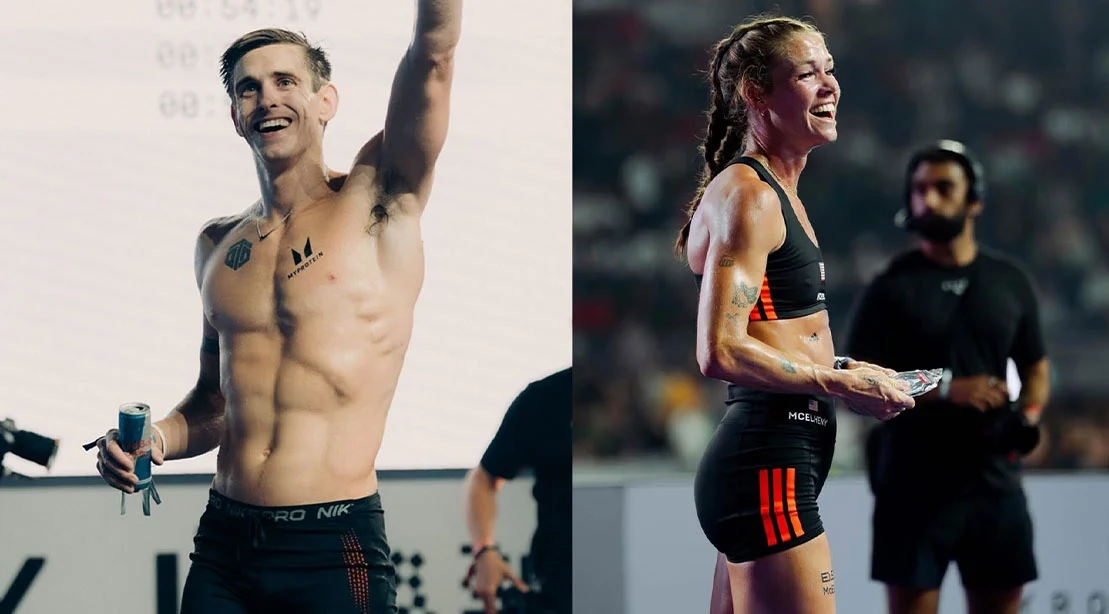
The landscape of professional functional fitness shifted dramatically on June 18, 2026, as Stockholm, Sweden, played host to the pinnacle of the sport: the HYROX Elite 15 World Championships. In an awe-inspiring display of endurance, strategy, and sheer physical tenacity, two American athletes—Dylan Scott and Alyssa McElheny—ascended to the top of the podium, cementing their legacies in a discipline that continues to redefine the boundaries of human performance.
The Elite 15 race is not merely a test of strength; it is a high-stakes tactical chess match played at a heart-rate-shattering pace. With the world’s fifteen fittest men and women converging on Stockholm, the competition was characterized by razor-thin margins and strategic volatility. By the time the dust settled, the global leaderboard had been rewritten, ushering in a new era for the HYROX professional circuit.
The Men’s Elite 15: A Masterclass in Tactical Resilience
The men’s division was defined by an unpredictable ebb and flow, where leaders shifted with every station. Dylan Scott’s victory, with an official finish time of 53:47, was a testament to the "never-give-up" ethos that defines elite-level HYROX.
The Chronology of a Championship Run
From the moment the starting pistol fired, the intensity was palpable. The course—a punishing circuit featuring the Ski Erg, followed by a relentless rotation of sled pushes, sled pulls, burpee broad jumps, rowing, farmers carries, sandbag lunges, and the iconic wall balls—demanded a perfect balance of aerobic capacity and muscular endurance.
Early in the race, Scott faced significant adversity. "I got punished by the sled early," Scott remarked post-race. For many, such a setback on a high-friction station like the sled push would have signaled the end of podium aspirations. However, Scott maintained a stoic internal rhythm, focusing on consistent output rather than immediate recovery of lost time.
As the race progressed, the leaderboard remained tight. Germany’s Tim Wenisch, the 2025 champion, looked poised to defend his title. Going into the final wall ball station, Wenisch held a narrow lead, appearing to have the tactical advantage necessary to cross the line first. However, the final station served as the ultimate equalizer. Scott surged, overtaking the reigning champion in the closing seconds. He crossed the finish line in 53:47, narrowly edging out Belgium’s Louis Osselaer (54:02) and Wenisch (54:04).
The Women’s Elite 15: A Calculated Ascent
While the men’s race was decided in the final meters, the women’s final was defined by a decisive surge that shifted the momentum of the entire event. Alyssa McElheny demonstrated a level of composure that separated her from a field of world-class contenders.
A Turning Point at the Sled Pull
The women’s division saw a tactical masterclass from McElheny. The field was crowded with talent, including Australia’s Joanna Wietrzyk and England’s Sinead Bent. Throughout the initial running segments and the Ski Erg, the group remained tightly packed.
The pivotal moment occurred at the sled pull. Recognizing a slight lull in the pace of her competitors, McElheny accelerated, effectively breaking the draft of the lead pack. Once in the lead, she did not look back. Her ability to maintain high power output during the farmers carry and sandbag lunges allowed her to create a buffer that her rivals could not close. She crossed the finish line in 56:59, securing the title ahead of Wietrzyk (57:14) and Bent (57:24).
Data-Driven Performance: The Mechanics of the Elite 15
To understand the magnitude of these performances, one must look at the specific demands of the Stockholm course. HYROX is unique in its "repeatability" requirement—the ability to perform a high-intensity movement, run for one kilometer, and immediately engage in another high-intensity movement.
Comparative Analysis of the Podium Finishers
The data from Stockholm reveals that the difference between gold and bronze was merely seconds, emphasizing the importance of transition speed.
| Athlete | Final Time | Key Strength Area |
|---|---|---|
| Dylan Scott (USA) | 53:47 | Late-race pacing/Wall balls |
| Louis Osselaer (BEL) | 54:02 | Consistency across sled stations |
| Tim Wenisch (GER) | 54:04 | Early-race explosive power |
For the women, the data suggests that endurance during the middle-third of the race (rows and carries) was the deciding factor. McElheny’s ability to minimize "dead time" between the rowing machine and the farmers carry was the statistical differentiator that allowed her to hold off Wietrzyk’s late-race charge.
Official Perspectives and Athlete Reflections
The atmosphere in Stockholm was electric, a sentiment echoed by the victors in their post-race reflections. The HYROX community has cultivated an environment that is as much about mutual respect as it is about competition.
Scott on Strategic Patience
Dylan Scott’s reflection on his win provides insight into the psychological makeup required to succeed at this level. "It allowed me to lead two seconds of the race, and they were the two most important ones," he noted. His win was not the result of being the fastest at every single station, but rather the result of being the most efficient across the entire duration of the course. By refusing to panic after the sled push, he maintained the physiological reserve necessary to launch his final attack.
McElheny on the "Gift" of Competition
For Alyssa McElheny, the victory was deeply personal. "This sport and these people have been such a gift," she stated. Her victory represents a culmination of years of training and a testament to the growth of the women’s professional field. Her comments highlight a growing trend in functional fitness: the camaraderie among athletes who push each other to break human performance ceilings.
Implications for the Future of HYROX
The 2026 World Championships have set a new benchmark for the sport. As HYROX continues to expand its global footprint, the implications of the Stockholm results are multifaceted.
1. The Professionalization of the Sport
The sheer speed of these finishers suggests that the "amateur" era of HYROX is firmly behind us. Training programs are becoming increasingly specialized, with athletes focusing on metabolic efficiency and specific movement mechanics that save seconds at every transition. The rise of American dominance also suggests a shift in the sport’s epicenter, with U.S.-based training facilities investing heavily in high-performance HYROX coaching.
2. Tactical Evolution
The fact that the 2025 champion (Wenisch) was overtaken in the final moments underscores a shift toward "back-loading" races. Athletes are learning to conserve energy for a final, anaerobic burst, rather than going all-out from the start. This tactical evolution will likely influence how future Elite 15 races are structured and approached.
3. Broadening the Horizon
Beyond the individual Elite 15, the success of the Stockholm event has reinvigorated interest in the Doubles and Adaptive categories. The inclusion of these divisions ensures that the sport remains inclusive while still providing a high-level spectacle for the professional Elite 15. The increased engagement in these categories serves as a pipeline, ensuring that the next generation of talent is ready to step onto the world stage.
Conclusion: A New Chapter in Functional Fitness
As the sun set over Stockholm on June 18, the world of HYROX looked very different than it did just 24 hours prior. Dylan Scott and Alyssa McElheny have etched their names into history, but more importantly, they have signaled to the rest of the world that the ceiling for human performance is moving higher every year.
The 2026 World Championships were not just a competition; they were a display of the indomitable human spirit. Whether through the tactical brilliance of a final-station overtake or the relentless grit of a mid-race lead, the athletes in Stockholm proved that in the world of HYROX, every second is earned, and every victory is hard-fought.
For those inspired by these performances, the road to the next world championship begins now. The data has been recorded, the standards have been set, and the race to define the future of functional fitness continues.
For comprehensive results from the 2026 HYROX World Championships, including the full standings for the Elite 15, Doubles, and Adaptive categories, please visit the official TrainROX results portal.
To stay connected with the journey of the new world champions, you can follow Dylan Scott on Instagram here and Alyssa McElheny here.