For the better part of the last decade, the healthcare industry has been obsessed with a single, binary metric: adoption. In the early days of the digital health revolution, the conversation was dominated by skepticism. Would patients actually trust wearable devices? Would they feel comfortable scheduling virtual appointments? Would they embrace the shift toward managing their own well-being outside the walls of a traditional doctor’s office?
These were critical questions. A 2014 study highlighted the precarious nature of this nascent market, noting that digital health apps were used, on average, just three times per month. At the time, every download and every new user was a victory—a sign that the digital transformation of medicine was gaining a foothold. But as the industry has matured, that metric has lost its luster. Today, the most relevant question is no longer whether a patient will download an app, but whether they will keep using it six months after the novelty fades.
The Shift from Novelty to Necessity
The digital health landscape has evolved from a collection of experimental gadgets into a background rhythm of modern life. We have moved past the “novelty phase,” where users were driven by curiosity, into a phase defined by utility and habit.
Modern patients are no longer asking if they should use digital tools; they are asking how those tools fit into the chaotic reality of their daily lives. A user might check their sleep data while brewing coffee, glance at activity levels during a lunch break, or use a stress-tracking app after a particularly taxing board meeting. These interactions are brief, often unremarkable, and entirely integrated into the user’s personal routine.
This evolution represents a fundamental change in how the industry must evaluate success. For years, "innovation" was defined by feature creep—more integrations, more complex data dashboards, and higher-frequency notification pings. However, real-world users rarely care about the technical specifications of their devices. They care about friction. Does this tool make my life easier? Does it help me accomplish a goal I care about? Does it reduce the cognitive load of managing my health?
A Chronology of the Digital Health Maturity Curve
To understand where the industry is heading, one must look at how we arrived here. The trajectory of digital health follows a clear, if sometimes turbulent, timeline:
- 2010–2015: The Exploration Era. This period was defined by the “Quantified Self” movement. Enthusiasts experimented with early wearables, and healthcare providers watched from the sidelines, largely skeptical of the clinical utility of consumer data.
- 2016–2019: The Integration Push. As digital health tools became more sophisticated, the industry focused on interoperability. The goal was to sync wearable data with Electronic Health Records (EHRs) and encourage providers to act on patient-generated data.
- 2020–2022: The Pandemic Surge. Covid-19 acted as a massive catalyst for adoption. Virtual care and remote monitoring became a necessity rather than a luxury. This period saw a massive influx of investment and user enrollment, often driven by temporary circumstances rather than long-term habit formation.
- 2023–Present: The Pragmatism Phase. We are currently in a period of market correction. The “curiosity-driven” users have largely fallen away, leaving behind a core group of users who treat digital tools as essential to their daily health management. This is the era of the “Convenience Test.”
The Convenience Test and Passive Engagement
The industry is learning a hard lesson: engagement is not the same as convenience. In fact, many successful digital health products are succeeding precisely because they require less of the user, not more.
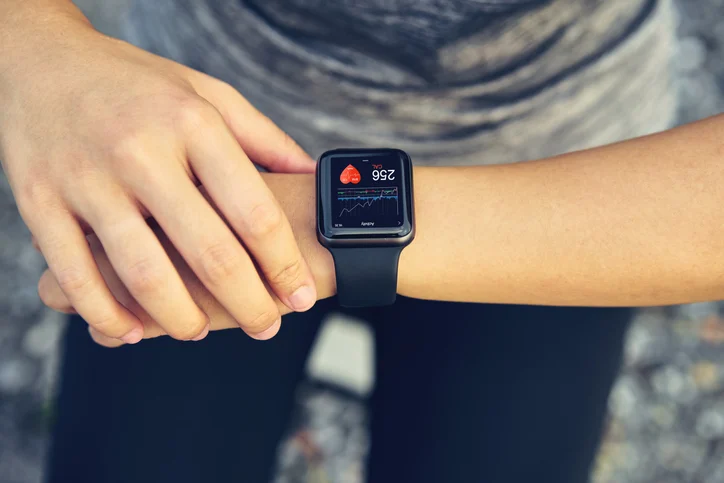
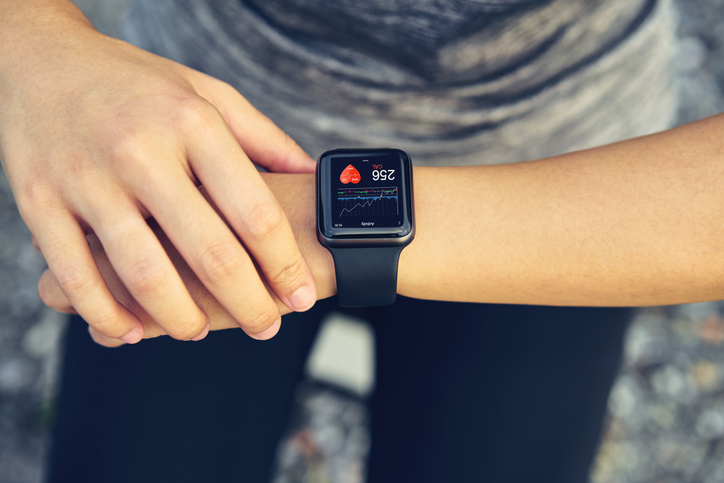
This is why passive monitoring—technologies that work in the background without requiring manual input—is gaining such significant traction. Patients are busy, distracted, and juggling countless responsibilities. An app that demands constant manual data entry is often doomed to be deleted, regardless of how robust its clinical features might be. Conversely, a wearable that quietly tracks heart rate variability, sleep stages, or blood oxygen levels, and only alerts the user when something is amiss, is far more likely to earn a permanent place in their life.
This phenomenon mirrors the history of consumer technology. Much like the Tamagotchi craze of the 1990s—which captured global attention for a short time before fading into nostalgia—many digital health apps suffer from "engagement fatigue." The products that survive are those that evolve from a "pet" that needs constant attention into a "tool" that serves a quiet, structural purpose.
Supporting Data: Why Usage Metrics Can Deceive
For healthcare organizations, relying solely on standard usage metrics is a dangerous trap. Traditional analytics—logins, screen time, and feature clicks—can tell a provider that a user is engaging, but they rarely explain why.
Data might show that a patient logs into their glucose monitoring app every morning at 8:00 AM. But does that mean the app is working? Perhaps the user is logging in because they are anxious about their levels, or perhaps they are doing it because they feel forced to by a care plan. Traditional metrics cannot capture the emotional context:
- Reassurance: Does the tool lower anxiety?
- Agency: Does the tool make the patient feel more in control of a chronic condition?
- Reinforcement: Does the tool validate healthy lifestyle choices in a way that feels rewarding rather than punitive?
As artificial intelligence (AI) begins to dominate the digital health stack, this context becomes even more vital. AI is exceptionally good at finding patterns, but it requires human-centric design to ensure those patterns are useful. If an AI provides a recommendation that doesn’t align with a user’s lifestyle, it becomes just another notification to be dismissed.
Implications for the Future: Design for Reality
The next chapter of digital health will be written by companies that stop trying to compete with the rest of the patient’s life and start designing for it.
1. From "Patient" to "Person"
The industry must move away from designing for the "patient" and start designing for the "person." A person does not live in a vacuum; they live in a world of work, family, and stress. If a digital tool ignores these realities, it will be discarded as soon as the initial excitement wanes.
2. The AI-Driven Personalization
AI will accelerate the shift toward "invisible" health. Instead of asking patients to interpret complex data, AI will act as a concierge, surfacing insights only when necessary. The goal should be to provide "just-in-time" guidance that feels like a natural extension of the user’s intuition.
3. Contextual Research
To truly understand long-term use, organizations must employ qualitative research methods that go beyond the dashboard. They need to talk to users, observe them in their environments, and understand the "why" behind the "what." This involves a move toward conversational insights—understanding the narrative of the user’s health journey rather than just the raw output of their devices.
Conclusion: The Path Forward
The healthcare industry has spent the last decade asking, "Will they use it?" Now, it must ask, "Why will they keep it?"
The winners of the next decade will not necessarily be those with the most advanced sensors or the most complex algorithms. They will be the ones that master the art of integration—creating tools that offer lasting value, respect the user’s time, and ultimately become a seamless part of the user’s daily life. The transition from adoption to habit is the ultimate litmus test for any technology in the healthcare space. Those that pass will not just capture a market share; they will become essential companions in the management of human health.