










Contributing Author: Blood Cancer United
September marks Blood Cancer Awareness Month—a time dedicated to celebrating the remarkable strides made in oncology while addressing the evolving needs of a growing community of survivors. As treatment protocols for blood cancers become increasingly sophisticated, the definition of "successful treatment" is shifting. For a rising number of younger patients, survival is no longer the final goal; the quality of life after cancer, including the possibility of building a family, has become a primary concern.
A groundbreaking collaborative study spearheaded by Blood Cancer United, in partnership with the Moffitt Cancer Center and University of Florida Health, is now tackling the critical, yet under-researched, question: Does CAR T-cell therapy impact long-term fertility?
The Evolution of CAR T-Cell Therapy
Chimeric Antigen Receptor (CAR) T-cell therapy represents one of the most significant leaps in modern medicine. Unlike traditional treatments that rely on broad-spectrum chemistry, this form of immunotherapy is highly personalized.
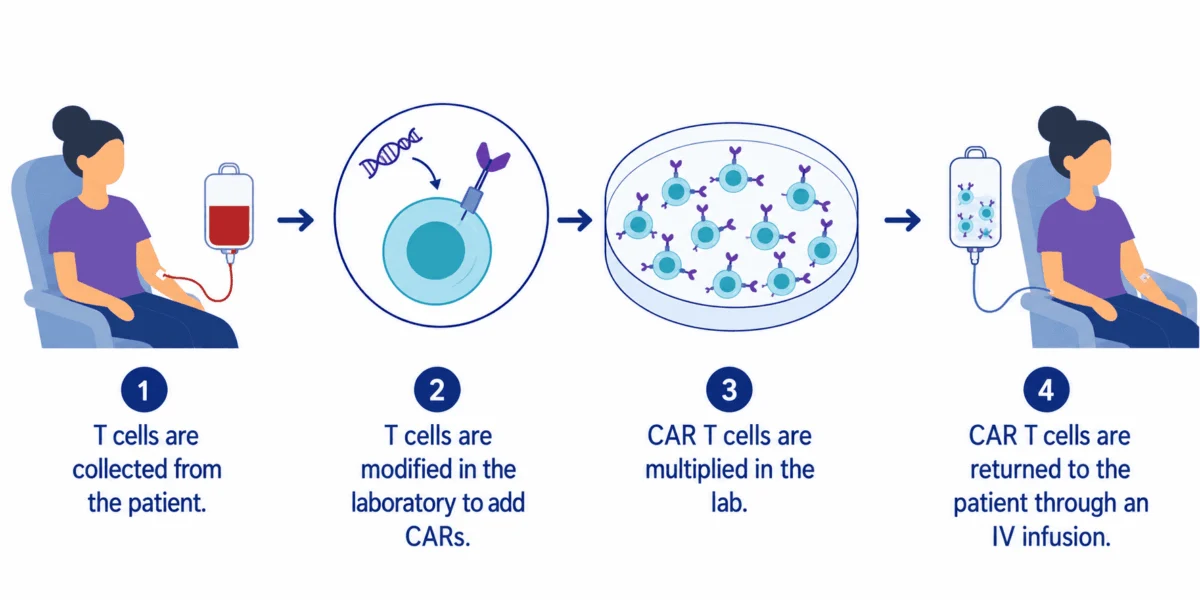
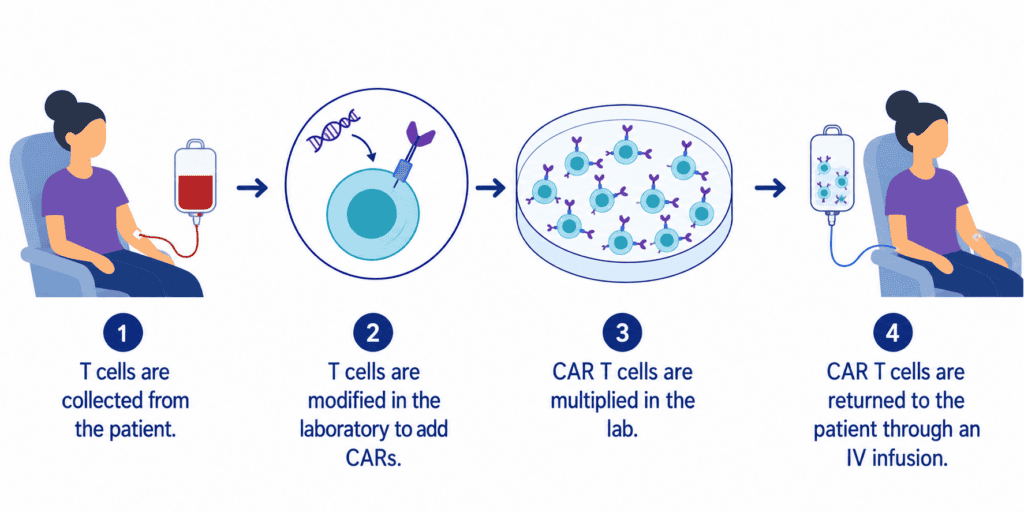
The process begins by harvesting a patient’s own T cells—the "soldiers" of the immune system. These cells are sent to a laboratory where they are genetically re-engineered to express a chimeric antigen receptor (CAR) on their surface. This receptor acts as a biological "GPS," allowing the T cells to identify and latch onto specific markers on the surface of cancer cells. Once the modified cells are reinfused into the patient, they multiply and launch a targeted assault on the malignancy.
The journey to this clinical reality was decades in the making. A major catalyst occurred in 2010 when Dr. Carl June, a prominent scientific advisor, led research that achieved remission in patients with previously incurable, refractory leukemia. This milestone paved the way for the FDA’s first approval of a CAR T-cell therapy in 2017. Today, these living drugs offer new hope for patients with specific leukemias, lymphomas, and multiple myeloma.
A Complex Historical Context
While CAR T-cell therapy is a marvel of science, our understanding of its reproductive side effects remains limited. This knowledge gap is not due to a lack of interest, but rather the complexity of the patient population.
Historically, the first cohorts to receive CAR T-cell therapy were those with aggressive, treatment-resistant cancers. Many of these individuals had already endured years of intensive chemotherapy, radiation, and stem cell transplants—all of which are known to carry significant risks to reproductive health. Furthermore, prior to the CAR T infusion, patients undergo a "lymphodepletion" regimen—a brief course of chemotherapy designed to clear space for the new cells to expand.
Because of these compounding factors, researchers have found it incredibly difficult to isolate the impact of CAR T-cell therapy itself. If a patient experiences infertility, is it the result of the CAR T cells, the preceding chemotherapy, the radiation, or the underlying disease itself? Deciphering this medical puzzle is the primary objective of the new study.
Chronology: From Early Trials to Modern Survivorship
The development of CAR T-cell therapy has been a rapid, iterative process. To understand the current focus on fertility, we must look at how the field has matured:
- 2010–2012: Early-phase clinical trials demonstrate that genetically modified T cells can induce durable remissions in refractory blood cancers. At this stage, the priority was strictly safety and efficacy—keeping patients alive when all other options had failed.
- 2017: The FDA grants its first approval for a CAR T-cell therapy. The medical community shifts from experimental phase to clinical standard-of-care implementation.
- 2020–2024: As the number of long-term survivors grows, the "survivorship" conversation gains momentum. Quality-of-life issues, including reproductive health, move to the forefront of clinical discussions.
- 2026: Researchers at Blood Cancer United launch the first large-scale patient-facing survey to systematically collect data on pregnancy and fertility among CAR T-cell recipients, marking a new era of "patient-centered" oncology.
Preliminary Findings: A Glimmer of Hope
The research team has released preliminary data from 106 survey respondents, offering a long-awaited glimpse into the post-treatment reproductive landscape. Of those surveyed, 32 individuals expressed a desire to have children following their therapy. Among them, 12 actively attempted to conceive.
The results, while preliminary, are cautiously optimistic: six of these individuals reported successful pregnancies. Of these, four were female respondents and two were partners of male respondents. Notably, all six pregnancies resulted in either live births (three) or were ongoing at the time of the data cutoff (three). Perhaps most importantly, none of these pregnancies required the use of assisted reproductive technology (ART).
While this data is far from conclusive, it serves as a critical proof-of-concept: it confirms that conception is possible following CAR T-cell therapy. However, the researchers emphasize that these numbers are small and do not yet allow for statistical generalizations regarding risk or fertility rates.
Insights from Autoimmune Research
Interestingly, the medical community is gaining additional data from an unexpected source: autoimmune disease research. CAR T-cell therapy is currently being tested as a treatment for conditions like lupus, where patients often have different disease histories than those with blood cancer.
A 2026 report provided a crucial data point: 14 pregnancies occurred among 13 patients who had received CAR T-cell therapy for autoimmune disease, resulting in eight healthy infants. While we must be careful not to conflate autoimmune patients with cancer survivors—who have different exposure profiles to cytotoxic drugs—this data adds another layer to the growing body of knowledge regarding reproductive health and immunotherapy.
Official Perspectives and Clinical Implications
Dr. Nina Logan, Senior Director of Research and Clinical Programs at Blood Cancer United, highlights the necessity of this work. "These early findings are encouraging, but they also highlight how much we still need to learn," she states. "Our goal is to give patients and their care teams better information about fertility after CAR T-cell therapy so they can have informed conversations about treatment, survivorship, and their plans for the future."
The implications of this research are profound. If clinicians can eventually determine whether CAR T-cell therapy independently impacts fertility, it will fundamentally change the pre-treatment consultation process. Currently, many oncologists rely on conservative estimates based on previous treatments. A clearer understanding would allow for more personalized guidance, including proactive discussions about fertility preservation—such as egg or sperm banking—before the infusion of CAR T cells.
Moving Forward: How You Can Help
The study is ongoing, and the research team is calling for broader participation to increase the statistical power of their findings. The CAR T-Cell Therapy and Fertility Survey is designed to capture a wider range of patient experiences, including laboratory-based measures and long-term reproductive outcomes.
For those who have received CAR T-cell therapy for blood cancer, participating in this survey is a unique opportunity to contribute to the future of survivorship. By sharing their data, survivors are not just helping themselves; they are providing the evidence-based foundation that will allow future generations of patients to plan their families with confidence and clarity.
Conclusion: A New Era of Survivorship
We are moving toward a future where cancer treatment is measured not only in months of progression-free survival but in the ability of patients to return to the lives they dreamed of before their diagnosis. Research into the intersection of CAR T-cell therapy and fertility is a testament to this shift.
As we continue to collect data, the medical community is moving closer to an era of "informed survivorship," where the physical, emotional, and reproductive needs of patients are addressed with the same rigor as the cancer itself. For those navigating the path after CAR T-cell therapy, the message is clear: your future, including your desire to build a family, is an essential part of the medical conversation.
Sources and Further Reading
- Pediatric cancer immunotherapy and potential for impact on fertility: A need for evidence-based guidance. Transplant Cell Ther, 2024.
- Fertility outcomes following CAR T-cell therapy: Results from a patient-facing survey. Tandem Meetings | Transplantation & Cellular Therapy Meetings of ASTCT and CIBMTR, 2026.
- Pregnancies in patients with autoimmune disease receiving CAR T-cell therapy. N Engl J Med, 2026.
- Approved Cellular and Gene Therapy Products. U.S. Food and Drug Administration, 2026.
Disclaimer: This article is intended for informational purposes only. The Cancer Research Institute (CRI) and Blood Cancer United do not endorse or recommend the study, participation in the study, or the study sponsor. CRI is not involved in conducting the study or determining eligibility. Please contact the study team directly for professional medical guidance.