Contributing author: Blood Cancer United
September marks Blood Cancer Awareness Month—a time dedicated not only to celebrating the remarkable breakthroughs in oncology but also to addressing the evolving challenges faced by an increasing number of long-term survivors. As medical science pushes the boundaries of life expectancy, the focus of clinical research is shifting from mere survival to the quality of life after cancer. Among the most pressing questions for younger patients is a deeply personal one: After overcoming the most aggressive forms of blood cancer, will I be able to have biological children?
A collaborative initiative led by researchers at Blood Cancer United, the Moffitt Cancer Center, and University of Florida Health is currently tackling this uncertainty. By gathering firsthand data from patients who have undergone Chimeric Antigen Receptor (CAR) T-cell therapy, the team aims to demystify the reproductive implications of this life-saving treatment.
Understanding the Landscape: What is CAR T-Cell Therapy?
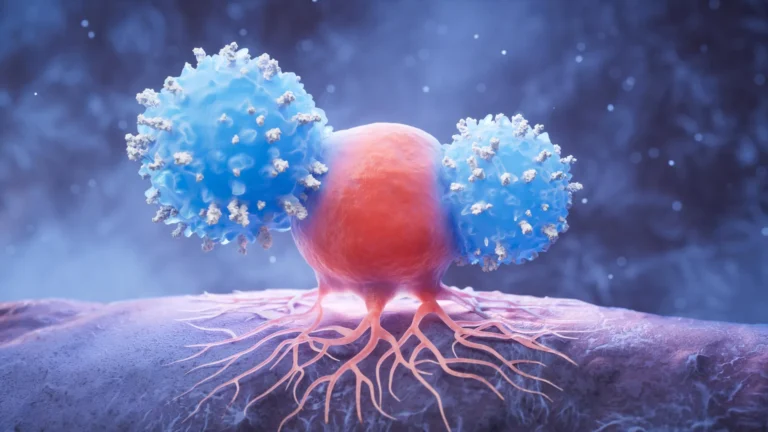
CAR T-cell therapy represents a paradigm shift in modern medicine. Classified as a form of immunotherapy, it does not rely on external chemicals to kill cancer, but rather harnesses the patient’s own immune system.
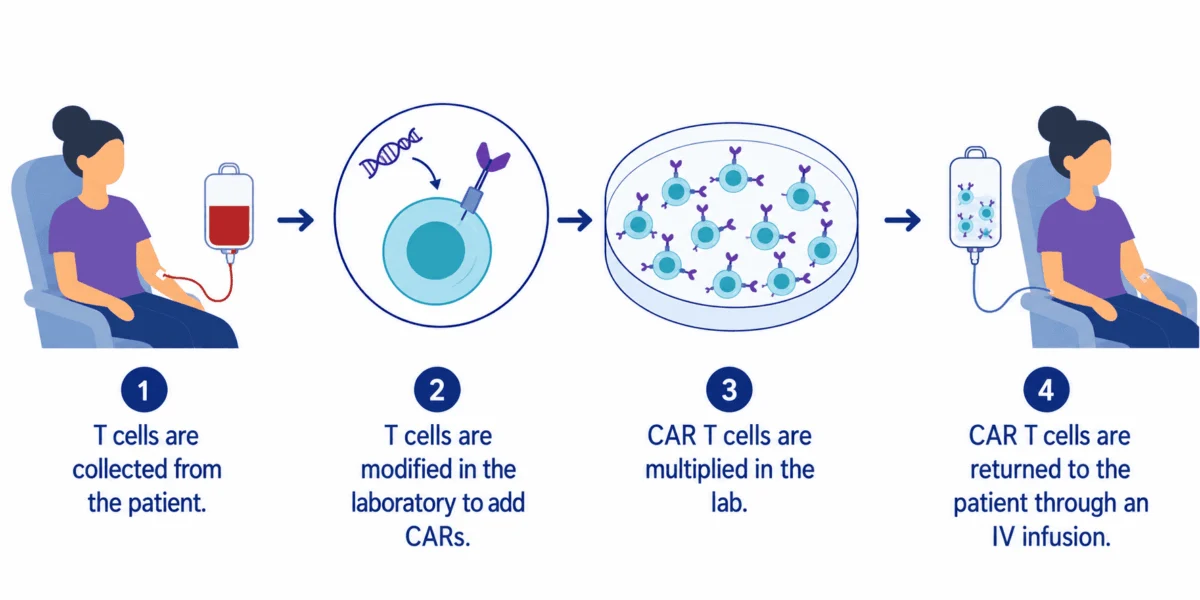
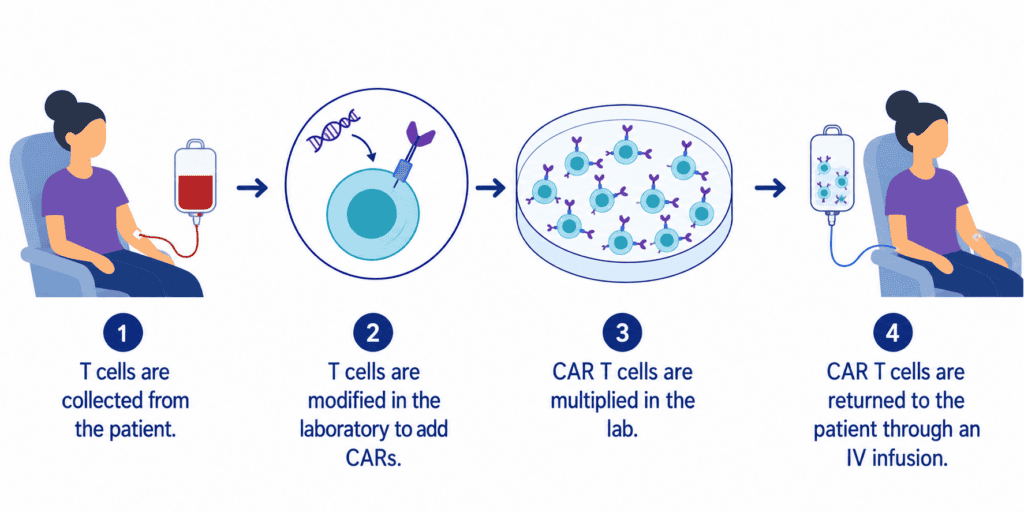
The process begins with the collection of T cells—the "soldiers" of the immune system—from the patient’s bloodstream. In a laboratory setting, these cells are genetically re-engineered to express a Chimeric Antigen Receptor (CAR). This receptor acts as a biological GPS, enabling the T cells to recognize and bind to a specific antigen found exclusively on the surface of the patient’s cancer cells. Once the modified cells are multiplied in the lab and infused back into the patient, they become a precision-guided weapon, capable of hunting down and eliminating malignant cells throughout the body.
The journey to this innovation was paved by decades of rigorous research. A seminal moment occurred in 2010 when Dr. Carl June, a member of the Cancer Research Institute (CRI) Scientific Advisory Board, successfully utilized CAR T cells to achieve remission in patients with refractory leukemia. This milestone led to the FDA’s first approval of a CAR T-cell therapy in 2017. Today, these therapies are standard-of-care options for various leukemias, lymphomas, and multiple myeloma, offering hope where traditional treatments have failed.
The Chronology of Uncertainty: Why the Fertility Gap Exists
Despite the success of CAR T-cell therapy, our clinical understanding of its impact on reproductive health remains in its infancy. To understand why, one must look at the historical context of the patients receiving these treatments.
In the early stages of CAR T development, the therapy was reserved for patients with highly aggressive, refractory blood cancers—individuals who had already exhausted all other options. These patients typically arrived at the CAR T stage having already undergone multiple rounds of intensive chemotherapy, whole-body radiation, and hematopoietic stem cell transplantation.
These prior treatments are well-documented for their potential to damage reproductive organs and impair fertility. Furthermore, before a patient receives their CAR T-cell infusion, they must undergo a "lymphodepletion" regimen—a brief course of chemotherapy designed to clear space in the immune system for the new, engineered T cells to expand.
Because of this "treatment baggage," untangling the effects of CAR T-cell therapy from the legacy of previous therapies, the patient’s age, and the underlying nature of the blood cancer itself presents a formidable statistical challenge. For years, clinicians have been unable to provide definitive guidance because the biological "noise" from previous interventions made it impossible to isolate the specific impact of the T-cell modification process.
Emerging Data: The Patient-Facing Survey
To move past theoretical assumptions, researchers at Blood Cancer United, Moffitt, and the University of Florida launched a patient-facing survey. By soliciting direct feedback from those who have walked the path, the study seeks to build an evidence-based roadmap.
The preliminary results, drawn from 106 respondents, provide a compelling, albeit early, snapshot of post-treatment reproductive life. Of the respondents, 32 individuals expressed a desire to have children following their CAR T-cell therapy, and 12 had actively attempted to conceive.
The findings revealed that six pregnancies occurred—four among female respondents and two among partners of male respondents. Notably, at the time of the data analysis, three of these pregnancies had already resulted in healthy, live births, while three remained ongoing. Perhaps most significantly, none of the participants reported the use of assisted reproductive technology (ART) to achieve these pregnancies.
While this data is too limited to draw broad clinical conclusions—such as the exact statistical risk of infertility or the patient profiles most at risk—it provides a vital proof of concept: pregnancy and live birth are possible after CAR T-cell therapy.
Official Perspectives: A Call for Informed Survivorship
The research team acknowledges that while these early findings are cause for optimism, they are only the beginning of a larger dialogue.
"These early findings are encouraging, but they also highlight how much we still need to learn," explains Nina Logan, MD, Senior Director of Research & Clinical Programs at Blood Cancer United. "Our goal is to give patients and their care teams better information about fertility after CAR T-cell therapy so they can have informed conversations about treatment, survivorship, and their plans for the future."
This sentiment is echoed by the broader medical community. As the field matures, the standard of care is shifting toward early intervention. This includes discussing fertility preservation options—such as egg or sperm banking—long before the first dose of lymphodepletion chemotherapy is administered.
Cross-Disciplinary Insights: Lessons from Autoimmune Research
Interestingly, the most robust data regarding fertility after CAR T-cell therapy may not come from oncology alone. CAR T research is currently expanding into the treatment of severe autoimmune diseases, such as lupus. Because these patients often have different disease histories and may not have undergone the same intensity of prior chemotherapy as cancer patients, their reproductive outcomes offer a unique "cleaner" data set.
A 2026 report detailed 14 pregnancies across 13 patients who had received CAR T-cell therapy for autoimmune conditions. With eight healthy infants born at the time of the report, the findings suggest that the T-cell modification process itself may not be inherently destructive to reproductive function. While these results cannot be directly extrapolated to cancer patients, they provide a valuable piece of the puzzle as researchers work to isolate the variables involved in fertility.
Implications for Future Care
The implications of this research are profound for the next generation of patients. If researchers can definitively clarify the relationship between CAR T-cell therapy and fertility, the clinical impact will be threefold:
- Improved Counseling: Clinicians will be empowered to provide evidence-based risk assessments, moving away from anecdotal caution toward data-driven discussions.
- Proactive Preservation: Patients will have a clearer timeline for when to pursue fertility preservation, ensuring that they do not miss the window for action during the critical period before treatment begins.
- Survivorship Planning: For many, the ability to plan for a family is a core component of "life after cancer." Providing clear, accurate information is a vital part of psychological recovery and long-term well-being.
How to Participate
The effort to build this evidence base is ongoing. The CAR T-Cell Therapy and Fertility Survey remains open to adults aged 18 and older who have received CAR T-cell therapy for blood cancer. By participating, patients contribute to a growing body of knowledge that will directly influence the quality of life for those who follow in their footsteps.
If you are a patient who has received CAR T-cell therapy, you can learn more about participating in the CAR-T Fertility Survey here.
As the field of immunotherapy continues to evolve, the definition of success must continue to evolve with it. Beyond the clearance of malignant cells, the ultimate success of these therapies is the return of the patient to a full, vibrant, and future-oriented life. Through rigorous research and patient partnership, the medical community is moving one step closer to ensuring that fertility concerns are no longer a source of ambiguity, but a manageable part of the cancer journey.
Sources and Further Reading
- "Pediatric cancer immunotherapy and potential for impact on fertility: A need for evidence-based guidance," Transplant Cell Ther, 2024.
- "Fertility outcomes following CAR T-cell therapy: Results from a patient-facing survey," Tandem Meetings | Transplantation & Cellular Therapy Meetings of ASTCT and CIBMTR, 2026.
- "Pregnancies in patients with autoimmune disease receiving CAR T-cell therapy," N Engl J Med, 2026.
- "Approved Cellular and Gene Therapy Products," U.S. Food and Drug Administration, 2026.
Disclaimer: This article is provided for informational purposes only. The Cancer Research Institute (CRI) does not endorse or recommend specific studies or their sponsors. Individuals interested in participating in research should consult their own clinical care team.