For decades, the standard prescription for arm strength has been the humble bicep curl. Whether performed with a pair of light dumbbells or a heavy barbell, the movement has become synonymous with "arm day." However, as we cross the threshold into our 60s and beyond, our fitness priorities often shift from sheer hypertrophy to functional strength, skin elasticity, and the reduction of the common aesthetic concern often referred to as "arm jiggle."
According to fitness experts, the traditional bicep curl—while effective for specific muscle groups—is an incomplete solution for those looking to firm and tone the entire arm. To understand why, we must look at the anatomy of the arm and how age-related changes necessitate a more comprehensive approach to movement.
The Anatomy of Aging Arms: Why Bicep Curls Fall Short
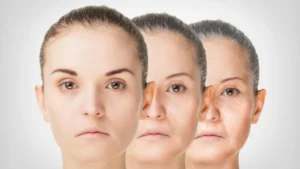
As we age, two primary factors contribute to the loss of firmness in the upper arms. First, the skin loses natural collagen and elastin, leading to a reduction in firmness. Second, and perhaps more importantly, the underlying muscles—specifically the triceps—often undergo atrophy due to chronic disuse.
"Arm jiggle happens after 60 because the skin loses elasticity and the underlying muscle weakens—mainly the triceps—gets weakened from disuse," explains Meera Watts, founder and CEO of Siddhi Yoga. "It gets disused because, let’s admit it: many people that age don’t exercise or move at all."
Watts notes that the bicep curl is structurally limited. "Bicep curls, while good, only address half of the problem. That’s because you only bend your elbow to lift the weight. Bending the elbow is what your bicep does—but your tricep just relaxes and stretches while this happens. So, it does almost no work during a curl."
To combat arm jiggle effectively, one must engage the triceps—the muscles located on the back of the upper arm—which are responsible for straightening the arm. The following three standing exercises offer a superior alternative to the curl by prioritizing tricep activation and constant tension.
1. Urdhva Hastasana (Upward Salute)
While often categorized simply as a "warm-up" move in yoga, Urdhva Hastasana is, in fact, a powerhouse for shoulder and arm stabilization. By transitioning from a simple overhead reach to an active engagement exercise, practitioners can significantly improve muscle tone.
The Mechanics of the Move
Unlike the bicep curl, which relies on the hinge of the elbow, Urdhva Hastasana requires full extension. "Urdhva Hastasana is a much more effective exercise because instead of bending your elbow, you push your arm all the way straight overhead," Watts explains.
Why It Works
Straightening the elbow is the primary function of the triceps. When you push your arms fully toward the ceiling and hold that position, the triceps move from a state of rest to active engagement. "Maintaining that straight position for a few breaths gives your triceps constant engagement, unlike a curl where it barely works at all," says Watts.
By holding this posture, you are fighting gravity, forcing the triceps to maintain the arm’s position against the natural pull toward the floor, which builds endurance and definition over time.
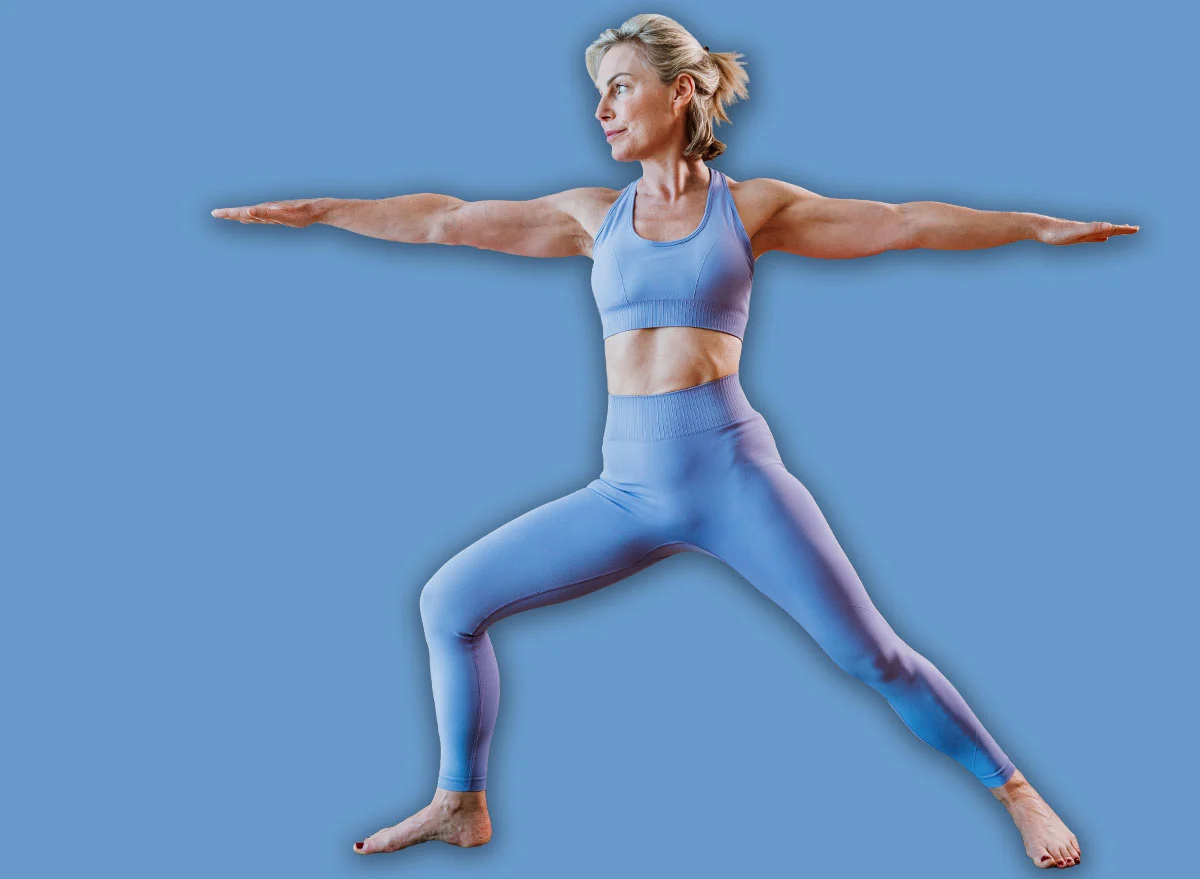
2. Warrior II (Virabhadrasana II)
Warrior II is a foundational standing yoga pose that demands a high level of physical stamina. For the upper body, it serves as an isometric hold that keeps the arms perfectly parallel to the floor.
The Chronology of the Hold
To derive the maximum benefit, one should hold the pose for 30 to 60 seconds per side. During this time, the arms remain extended, creating a long lever that puts significant demand on the stabilizer muscles of the shoulders and the entirety of the triceps.
The Science of Isometric Engagement
"Warrior II keeps the arms straight, not bent," Watts notes. "Because your elbows stay straight the entire time you hold the pose, your triceps have to keep firing continuously just to stop your arms from drooping down from gravity."
This constant, sustained tension is highly effective for "toning" because it keeps the muscle fiber active without the need for external weight. It teaches the arms to support their own mass, which is a vital skill for maintaining independence and range of motion as we age.
3. Standing Gomukhasana Arms (Cow Face Pose)
The third exercise on our list is arguably the most complex, but it offers the most unique benefit: dual-direction resistance.
Achieving the "Squeeze"
In Standing Gomukhasana, one arm reaches behind the head (bent at the elbow), while the other reaches up the back from the lower lumbar region. The goal is to reach for the fingers of the opposite hand.
The Physiological Implications
"Here, your right arm is bent up behind your head, while your left arm reaches up your back from underneath, so that both arms are pulling toward each other at the same time," Watts explains.
Because of this specific pull, the triceps on both arms are simultaneously stretched and squeezed. This provides a level of muscle fiber recruitment that a standard curl simply cannot replicate. By working the muscle in two directions at once, the movement promotes both length and tension, helping to tighten the appearance of the skin and the underlying tissue.
Supporting Data and Wellness Implications
The shift toward bodyweight and yoga-based resistance training for those over 60 is supported by a growing body of geriatric fitness research. Studies suggest that while traditional weightlifting is excellent for bone density, isometric and resistance-based yoga moves are superior for functional longevity and joint health.
The Role of Consistency
The effectiveness of these three moves relies on the frequency of practice. Unlike bicep curls, which can lead to joint strain if over-practiced with heavy weights, these standing poses can be performed daily. Because they rely on body weight and gravity, the risk of injury is significantly lower, making them an ideal "low-impact, high-reward" regimen.
Beyond Aesthetics: Functional Benefits
While the primary goal of many who seek these exercises is to reduce arm jiggle, the implications for daily life are significant. Strong triceps are essential for pushing yourself up from a chair, reaching for items on high shelves, and maintaining proper posture. By focusing on these three movements, individuals are not just improving their appearance; they are enhancing their physical autonomy.
Official Perspective: A Holistic Approach
When asked for a final word on integrating these moves into a daily routine, experts emphasize that fitness after 60 should be viewed through the lens of movement quality rather than quantity.
"The goal is to keep the muscles ‘awake’ throughout the day," says Watts. "When you integrate Urdhva Hastasana, Warrior II, and Gomukhasana into your morning routine, you are effectively waking up your triceps before you even head to the kitchen for coffee."
How to Build Your Routine:
- Start with Urdhva Hastasana: Perform 5 repetitions, holding the final reach for 30 seconds to wake up the upper body.
- Move into Warrior II: Hold for 30 seconds on each side, ensuring your arms are at shoulder height and the triceps are fully engaged.
- Finish with Gomukhasana: Spend 45 seconds on each side to stretch the muscles and promote flexibility.
By moving away from the narrow focus of the bicep curl and embracing these three standing exercises, individuals can achieve a more balanced, toned, and functional upper body. This holistic approach ensures that the arms remain strong, firm, and capable—no matter what the age.
As we look toward the future of healthy aging, the consensus remains clear: move with intention, prioritize the triceps, and utilize the power of your own body to maintain the strength and vitality you deserve.