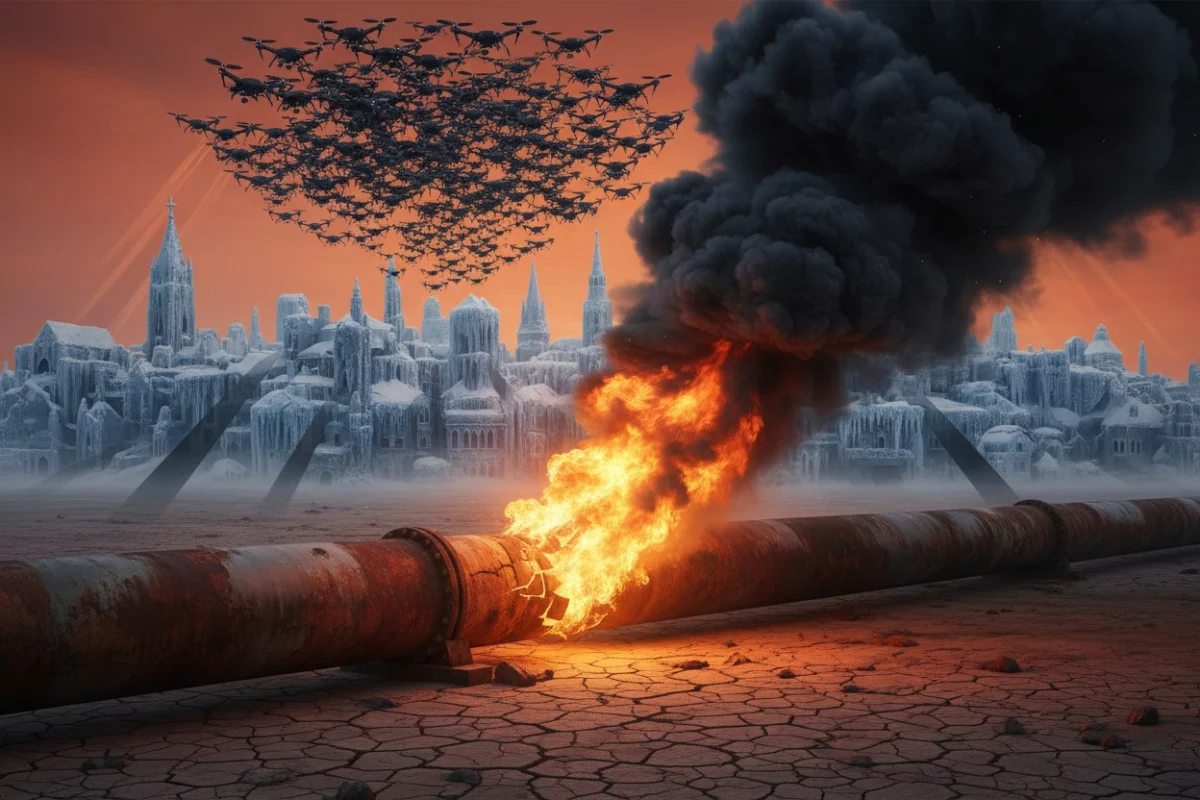
Introduction: The Architecture of a Continental Crisis
Western Europe, a region once defined by its industrial might and relative energy stability, is currently staring into the abyss of its most severe energy crisis since the conclusion of the Second World War. On September 11, 2026, the fragility of the global energy architecture was laid bare when Saudi Arabia officially confirmed the shutdown of its East-West Pipeline following a series of coordinated, high-impact drone and missile strikes.
This is not merely a temporary logistical disruption; it is the final severing of a lifeline. For years, European energy policy has been characterized by a paradoxical strategy: distancing the continent from Russian natural gas, dismantling domestic fossil fuel infrastructure in favor of intermittent renewables, and tethering the remaining industrial capacity to long-distance, high-risk supply chains traversing the Arabian Peninsula. As those supply routes now fail, the bill for a decade of ideological energy policy is coming due, and the price will be paid in rationed fuel, systemic power failures, and a looming socioeconomic winter.
Chronology of the Collapse: From Sabotage to Stagnation
The descent into this crisis did not occur in a vacuum; it followed a predictable, albeit ignored, trajectory of escalation.
- September 8, 2026: Houthi forces execute a precision strike on the Saudi Aramco refinery at Jazan. The attack results in 73 civilian casualties and signals a significant increase in the sophistication of regional insurgent capabilities.
- September 10-11, 2026: Drones launched from Iraq’s Maysan province target key pumping stations near Riyadh and Medina. Satellite imagery from Vantor confirms catastrophic damage at the al-Mesabaah facility.
- September 11, 2026: The Saudi government announces the suspension of operations on the East-West Pipeline. Simultaneously, the Houthis seize Perim Island and the strategic port of al-Makha, effectively tightening a noose around the Bab al-Mandeb Strait.
- Mid-September 2026: Reuters reports that Riyadh has begun the formal cancellation of crude cargoes destined for European ports, signaling a total cessation of loadings at the Red Sea terminal of Yanbu.
With the Strait of Hormuz effectively neutralized by regional tension, the East-West Pipeline had become the primary artery for Saudi crude. Its removal has created an immediate vacuum that global markets are currently unable to fill.
The Technical Reality: Why the Lights Are Flickering
The severity of this crisis is rooted in the "petroleum engineering reality" that many policy analysts have failed to account for. According to intelligence shared with BBC Verify, the damage to the pipeline’s pumping stations is not a simple fix. Reconstruction is estimated to take upwards of a month, assuming no further strikes occur. The loss of 3.6 million barrels per day (bpd) is a shock to the global system that analysts at Bernstein warn could push crude prices toward the $150-per-barrel threshold.
Beyond the immediate loss of volume, there is the risk of permanent asset degradation. When oil flow is halted, crude sitting in pipelines and wells does not remain static. It begins to suffer from paraffin buildup and water intrusion. If the system remains idle for too long, the wells "seize," potentially impacting output well into 2027.
Official Responses and the Failure of Alliances
The geopolitical response to the collapse of Saudi infrastructure has been marked by a stunning lack of cohesion. The much-hyped "Mecca Defense Pact"—a security arrangement between Riyadh, Ankara, and Islamabad—has failed to produce a unified military response. Pakistan has explicitly signaled its reluctance to engage in military escalation, while Ankara remains internally preoccupied.
Furthermore, the United States, under the current administration, has adopted a policy of strategic restraint. While the White House has agreed to provide intelligence and targeting data, President Trump has declined to authorize direct U.S. strikes against the perpetrators, citing the overextension of American munitions and the lack of a clear mandate for intervention. This has left the Kingdom of Saudi Arabia isolated, forcing Riyadh to prioritize its own survival over its obligations to European clients.
Supporting Data: The Anatomy of Shortage
The European energy situation is characterized by a "perfect storm" of low supply and high structural dependency.
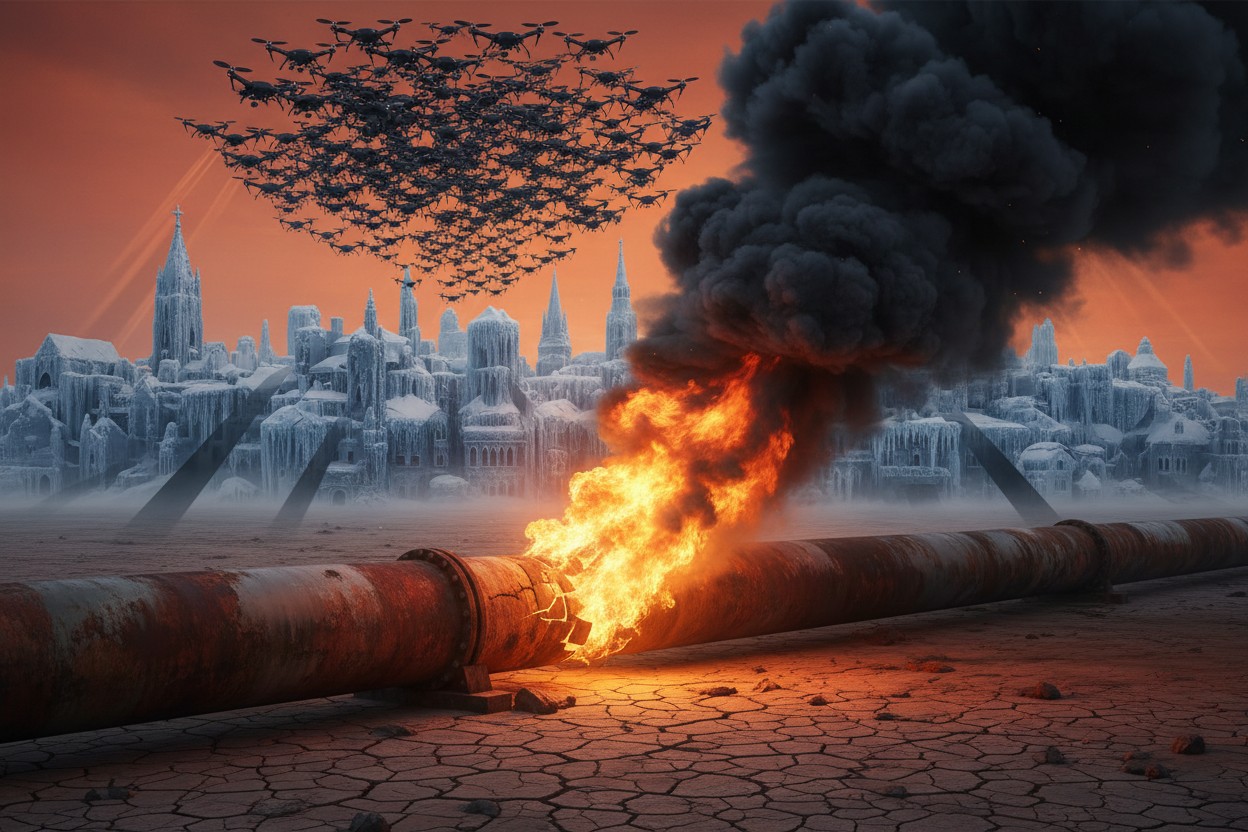
- Diesel Scarcity: As of mid-September, diesel—the lifeblood of European trucking, farming, and construction—is already trading at record prices. Consumers in major hubs are facing costs between $9 and $11 per gallon.
- LNG Deficit: The previous collapse of Qatari shipments through the Red Sea and the forced idling of the Ras Laffan and Mesaieed facilities have removed the "swing supplier" from the global natural gas market.
- Storage Levels: Despite efforts to stockpile ahead of the winter, European natural gas storage levels remain near record lows for the seasonal window.
Energy analysts at the IEA and other independent institutions are now moving away from short-term forecasts, instead describing the current shortages as "structurally embedded." Regardless of a diplomatic resolution, the hardware required to move energy to Europe has been fundamentally degraded.
Implications: A Continent at the Crossroads
The implications for the European Union are existential. As diesel supplies dry up, the cascading effect on the food supply chain is already becoming apparent. Approximately 70% of India’s consumer packaging—which heavily influences the global food market—relies on petrochemical feedstocks that are now increasingly scarce. As the cost of shipping, manufacturing, and heating rises, the social contract in Europe faces a radical transformation.
The Political Earthquake
The political stability of major European powers is being tested by the rise of populist movements, such as the AfD in Germany, which are capitalizing on the public’s perception that their leaders have prioritized climate ideology over national sovereignty. The question that remains unasked in the halls of Brussels is: How cold must it get before the political appetite for self-sanctioning wanes?
While Moscow has successfully redirected its energy exports to Asian markets—with two-thirds of its seaborne oil now flowing eastward—Europe finds itself with no equivalent alternative. The continent has moved from a position of relative comfort to one of absolute desperation.
The American Asymmetry: A Different Kind of Crisis
The United States, by contrast, sits in a position of greater, though not absolute, resilience. Possessing significant domestic energy reserves and a robust, if strained, refining capacity, the U.S. is insulated from the immediate threat of total scarcity. However, the risk of "price-induced rationing" remains high.
American consumers are likely to face gasoline and diesel prices that could climb to $12–$15 per gallon. While this does not imply the "freezing" of the populace, it does indicate a massive erosion of disposable income and a severe contraction in economic activity. The message for the individual is clear: dependency on government-managed energy distribution is a failing strategy. Preparedness—ranging from food and fuel storage to financial hedging with precious metals—has transitioned from a "prepper" niche to a necessary survival strategy for the average household.
Conclusion: The Mandate for Peace
As the global community faces the prospect of an energy-starved winter, the path forward appears increasingly narrow. The era of ideological crusades as a substitute for energy policy has reached its logical conclusion: a systemic failure that threatens to unravel the modern industrial state.
Without a rapid pivot toward a pragmatic, peace-oriented foreign policy that prioritizes the restoration of global supply chains and energy security, Europe is heading toward a period of profound civilizational instability. The warning signs are not merely in the financial reports or the geopolitical analysis—they are in the empty pumps and the darkening power grids. For those living through this transition, the focus must shift to individual preparedness, community resilience, and a demand for leadership that recognizes the fundamental requirement of energy to maintain the peace. The lights are not just flickering; they are being extinguished by the decisions of the past, and only a radical shift in the present can prevent the darkness from becoming permanent.