





In the landscape of modern medicine, the progress made against childhood cancer over the last four decades is often cited as one of the greatest triumphs of clinical research. Mortality rates have plummeted, and survival, once a rarity, has become the expectation for many pediatric patients. However, beneath these encouraging statistics lies a more complex reality: for a significant subset of children, cancer remains a formidable, often insurmountable, adversary. Furthermore, the aggressive nature of current curative treatments—chemotherapy, radiation, and surgery—often leaves survivors to navigate long-term, debilitating health complications for the remainder of their lives.
To address this "hidden" crisis, researchers are shifting their focus away from simply modifying adult cancer treatments and toward a fundamental redesign of therapeutic strategy. At the heart of this movement is Dr. Robbie Majzner, a pediatric oncologist and physician-scientist supported by the Cancer Research Institute (CRI). His work, emblematic of a new generation of cancer research, seeks to leverage the unique biological landscape of pediatric tumors to create targeted, less toxic immunotherapies.
The Biological Disconnect: Why Pediatric Cancers Are Unique
The common misconception in oncology is that childhood cancer is simply "adult cancer in miniature." Dr. Majzner and his colleagues have spent years dismantling this narrative, demonstrating that the underlying pathology of pediatric malignancy is fundamentally distinct.
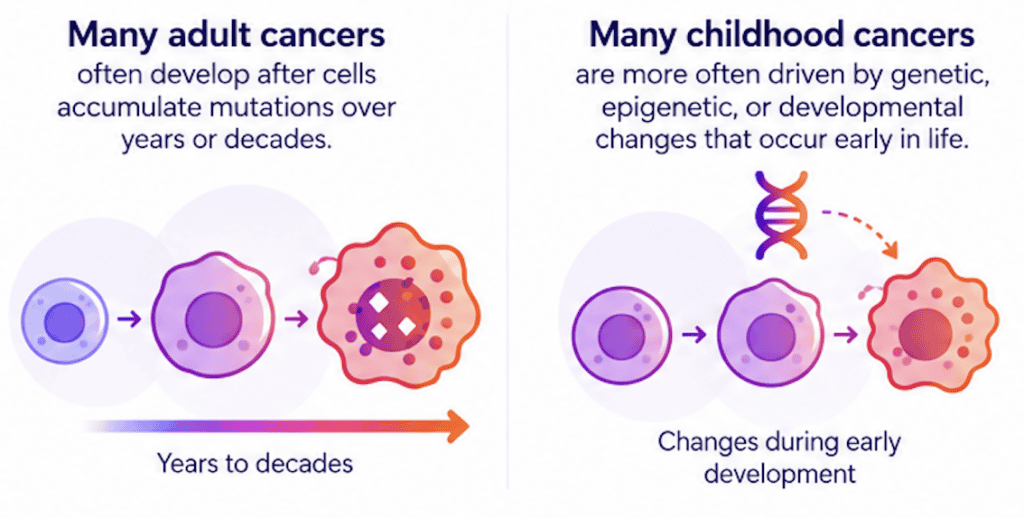
Adult cancers are predominantly "mutational diseases." They arise over years or decades as cells accumulate environmental damage, DNA errors, and lifestyle-related mutations. In contrast, childhood cancers are typically the result of developmental errors. They are, as Dr. Majzner describes, "a product of aberrant development." Because these cancers emerge while the child is still growing, they are often linked to genetic or epigenetic glitches that occur as cells navigate their natural developmental pathways.
This distinction is critical for treatment. Because pediatric tumors often possess fewer mutations than adult tumors, they are less "visible" to the human immune system. This biological invisibility renders many of the breakthrough immunotherapies that have revolutionized adult care—such as immune checkpoint inhibitors—largely ineffective in children.
A Chronology of Progress: From Lab Bench to Clinical Hope
The journey to current immunotherapeutic approaches for children has been a slow but deliberate accumulation of knowledge.
- 1970s–1990s (The Era of Intensification): Medicine focused on intensifying systemic chemotherapy and radiation. While this saved lives, it established the "late effects" crisis, where survivors later suffered from secondary cancers, cardiac issues, and developmental delays.
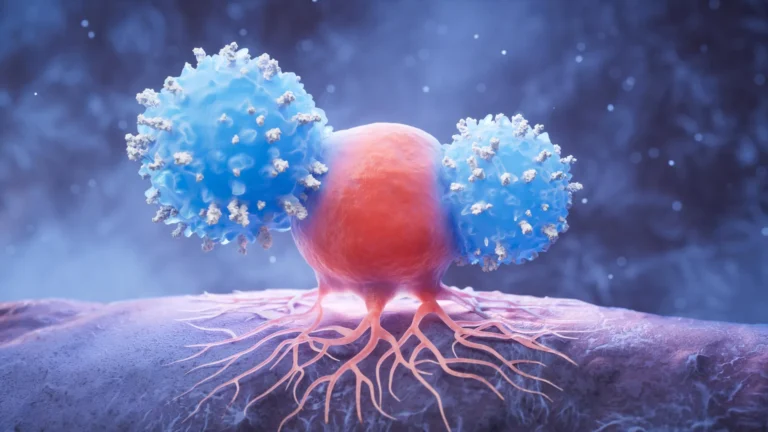
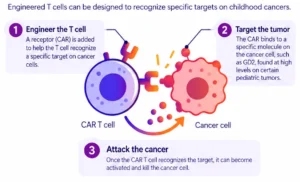
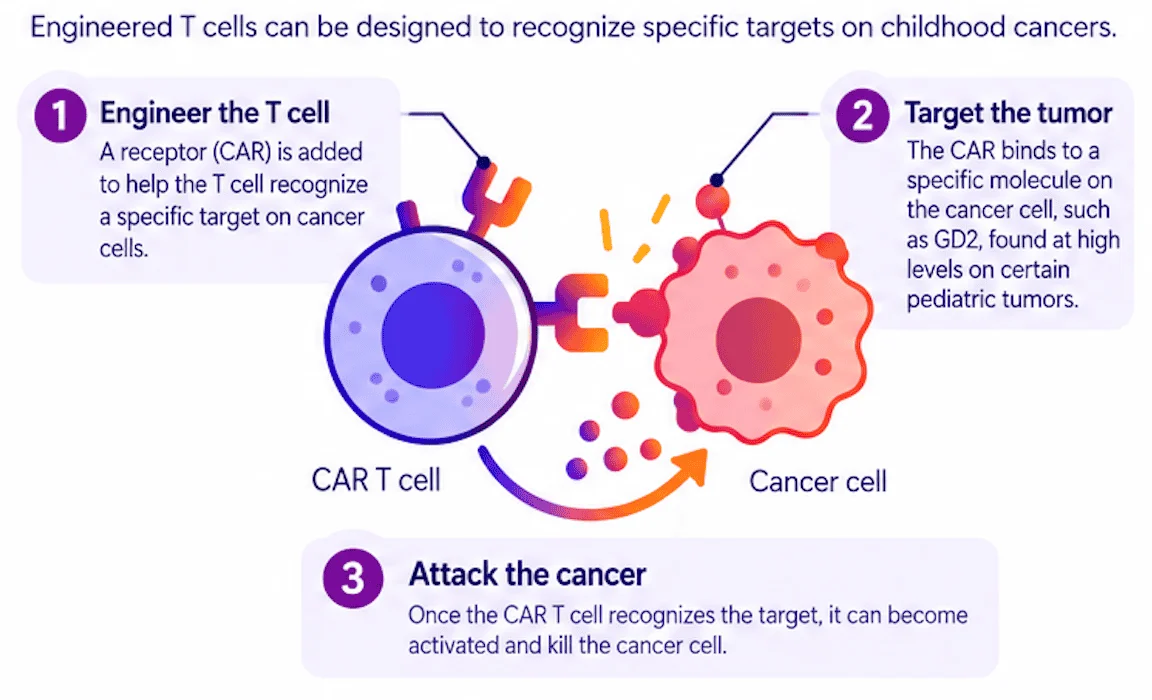
- 2010s (The CAR T-Cell Dawn): The emergence of Chimeric Antigen Receptor (CAR) T-cell therapy changed the conversation. By engineering a patient’s own immune cells to recognize specific markers on leukemia cells, researchers achieved unprecedented success in refractory cases.
- 2020–2025 (The Solid Tumor Challenge): As the field matured, the focus expanded from liquid cancers (leukemia) to solid tumors (sarcomas, brain tumors, neuroblastoma). Researchers began identifying surface molecules like GD2, which are highly expressed on certain pediatric solid tumors.
- 2026 (The Current Frontier): Current research, including Dr. Majzner’s work at Stanford and beyond, is now integrating synthetic biology. Scientists are no longer just looking at existing immune responses; they are engineering "synthetic" responses designed specifically for the hostile microenvironments of pediatric brain tumors.
Data-Driven Hurdles: The Challenge of Diversity
One of the most persistent obstacles in pediatric oncology is the sheer heterogeneity of the disease. While "cancer" is a broad term, pediatric oncology encompasses an incredibly diverse array of conditions—leukemias, sarcomas, kidney tumors, and various brain malignancies.
Supporting data suggests that the small patient population for each individual type of cancer creates a logistical "bottleneck." Unlike common adult cancers, where thousands of patients can be enrolled in a single study to demonstrate efficacy, pediatric trials often struggle with low enrollment numbers. This makes the high-risk, high-reward nature of research—such as developing custom-engineered CAR T cells—economically and logistically difficult.
However, recent studies have shown that when researchers target specific markers like GD2, the potential for success increases. Early clinical indicators show that by focusing on these highly specific biological signatures, physicians can achieve sustained, long-term responses in patients for whom all other options have been exhausted.
Official Perspectives: Dr. Robbie Majzner on "High-Risk" Innovation
As a CRI Lloyd J. Old STAR, Dr. Majzner has been granted the rare luxury of "flexible funding." In an academic climate where researchers are often forced to secure grants based on guaranteed outcomes, this support allows for the exploration of fundamental questions that may not yield immediate clinical results but are essential for long-term discovery.
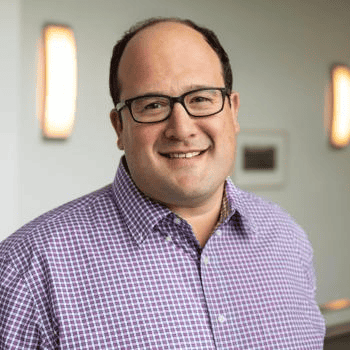
"If you just shut down all high-risk ideas, we will never get new technologies," Dr. Majzner notes. He emphasizes that the cutting-edge CAR T-cell therapies of today are built on the back of basic science discoveries made decades ago—research that, at the time, had no clear "product" in mind.
His laboratory is currently exploring the mechanics of T-cell signaling—how these cells communicate, how they distinguish "self" from "tumor," and why they sometimes "tire out" within a solid tumor. By understanding the granular "wiring" of these cells, the team aims to build a new generation of receptors that are more resilient, more precise, and less likely to attack healthy, non-cancerous tissue.
Implications: The Next Chapter of Survivorship
The shift toward pediatric-specific immunotherapy holds profound implications for the future of oncology. The goal is no longer just "survival at all costs," but the promotion of "thriving."
1. In Vivo Engineering
The next phase of innovation, already in early stages, is the move toward in vivo CAR T-cell therapy. Instead of the current, arduous process of extracting a child’s cells, sending them to a lab to be genetically modified, and re-infusing them, researchers are working on technologies that could program these immune cells directly inside the body. This would drastically reduce the cost and wait time for families.
2. The End of "Trickle-Down" Medicine
The medical community is increasingly acknowledging that "trickle-down" oncology—taking an adult drug and hoping it works for a child—is ethically and scientifically insufficient. The future lies in therapies designed from the ground up to address the unique developmental biology of the child.
3. Improving Quality of Life
By utilizing the precision of the immune system, researchers hope to replace blunt-force chemotherapies with targeted biological "missiles." The long-term implication is a cohort of survivors who enter adulthood without the chronic health burdens that currently plague childhood cancer survivors.
Conclusion: A New Standard of Care
The research being spearheaded by leaders like Dr. Majzner represents more than just a scientific advancement; it is a moral imperative. By focusing on the unique immunobiology of childhood cancer, the medical community is moving toward a future where the word "survivor" carries fewer caveats.
While the road ahead remains steep—marked by the need for better funding for rare diseases, increased collaborative efforts between institutions, and a deeper understanding of tumor microenvironments—the trajectory is clear. We are moving away from the era of brute-force medicine and into an era of biological precision. For the children currently fighting these battles, and for those who will be diagnosed in the years to come, this shift in strategy is the most significant promise of the modern era. The mission of childhood cancer research has evolved: we are no longer just fighting to save lives; we are fighting to secure the quality of the decades that follow.