For individuals living with Ehlers-Danlos Syndrome (EDS), the body is often a landscape of paradoxes: joints that are simultaneously hypermobile and unstable, and tissues that are both resilient and fragile. Among the many secondary health challenges associated with these connective tissue disorders, scoliosis—an abnormal, lateral curvature of the spine—emerges as a frequent and often misunderstood companion.
As researchers delve deeper into the intersection of genetics and orthopedics, a specialized, evidence-based approach known as the Schroth Method is gaining traction. Unlike generalized physical therapy, this highly tailored, three-dimensional system is proving to be a lifeline for those seeking to stabilize their spines without the need for invasive surgical intervention. To explore this approach, we spoke with Caroline Campesi, DPT, a leading Schroth-certified physical therapist, to understand how hypermobile bodies can reclaim stability through targeted movement.
The Essentials: Understanding Scoliosis
Scoliosis is defined as an atypical, lateral curvature of the spine. While often associated with the rapid growth spurts of adolescence, it is a progressive condition that can evolve throughout an individual’s lifespan. The severity of this curvature is quantified by the Cobb angle, a radiological measurement that determines the degree of spinal deviation from the vertical axis.
While many associate scoliosis with visible postural changes—such as uneven shoulders or a protruding hip—the condition is often asymptomatic in its early stages. For the general population, it may go unnoticed until back pain, muscle spasms, or breathing difficulties prompt a clinical evaluation. However, for those with underlying connective tissue disorders, the implications of these spinal shifts are far more complex.
The EDS Connection: A Chronology of Instability
Ehlers-Danlos Syndrome encompasses a group of genetic disorders characterized by defects in the structure or processing of collagen. This systemic tissue laxity creates a baseline of joint instability that makes maintaining a neutral spine inherently difficult.
The Prevalence of Scoliosis in EDS
Research indicates that scoliosis is significantly more prevalent in the EDS community than in the general population. Data shows that approximately 29% of individuals with EDS present with some form of scoliosis. Of this group:
- 87.5% are classified as having "mild" scoliosis, with a Cobb angle between 10° and 24°.
- 12.5% fall into the "moderate" category, with a Cobb angle between 25° and 40°.
While kyphoscoliotic EDS (kEDS) represents a rarer, more severe subtype often associated with profound spinal curvature, the majority of the EDS population deals with mild to moderate curves. Because these individuals already struggle with proprioception and muscular support, even a mild curvature can lead to chronic pain, compensatory movement patterns, and long-term functional decline.
The Schroth Method: A Specialized Intervention
For decades, the standard of care for scoliosis was limited to "watchful waiting" for mild cases or spinal fusion surgery for severe ones. The Schroth Method disrupts this binary by offering a conservative, non-surgical pathway to stabilization.
How It Differs from Traditional PT
Traditional physical therapy often focuses on generalized core strengthening—exercises like "bird dogs," "dead bugs," and planks. While these are beneficial for the average person, they often fail to address the specific 3D rotation of a scoliosis curve.
The Schroth Method is a calibration-based approach. It seeks to:
- Elongate the spine: Using active muscle engagement to decompress the vertebrae.
- De-rotate: Addressing the rotational component of the spinal curve.
- Correct Asymmetry: Targeting specific muscle groups to balance the torso.
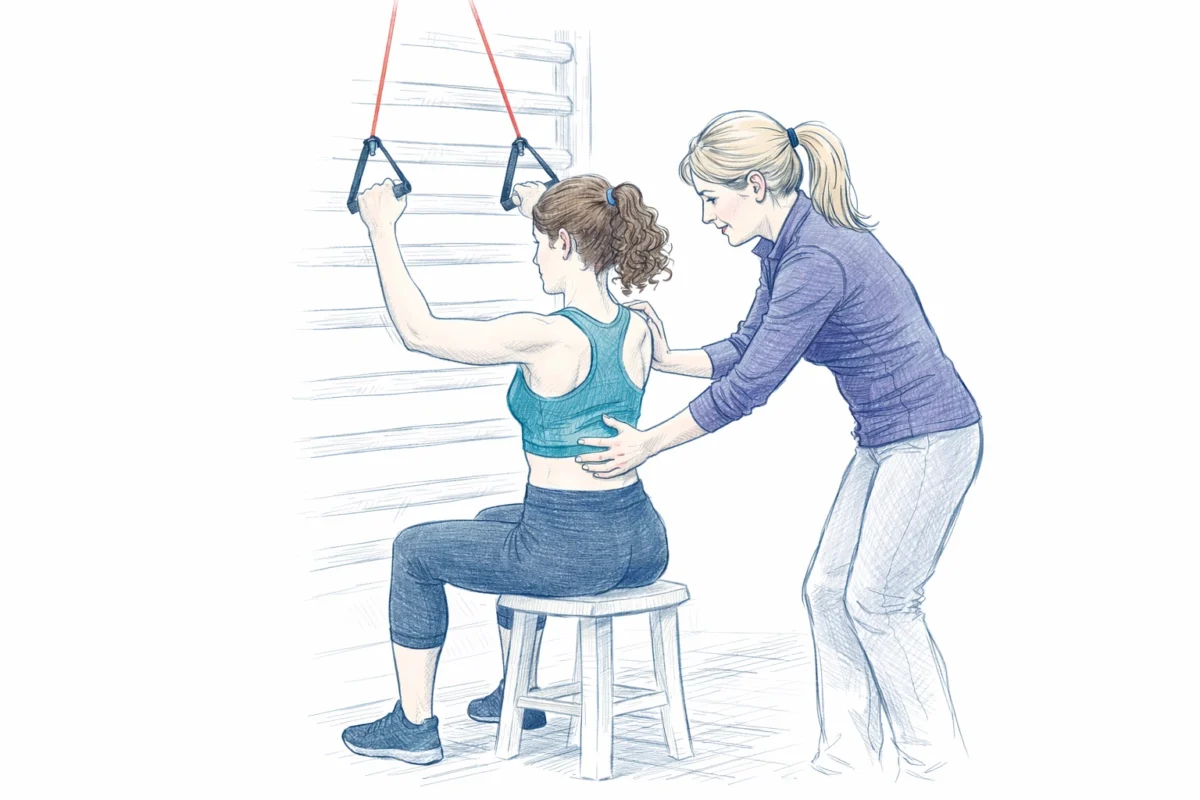
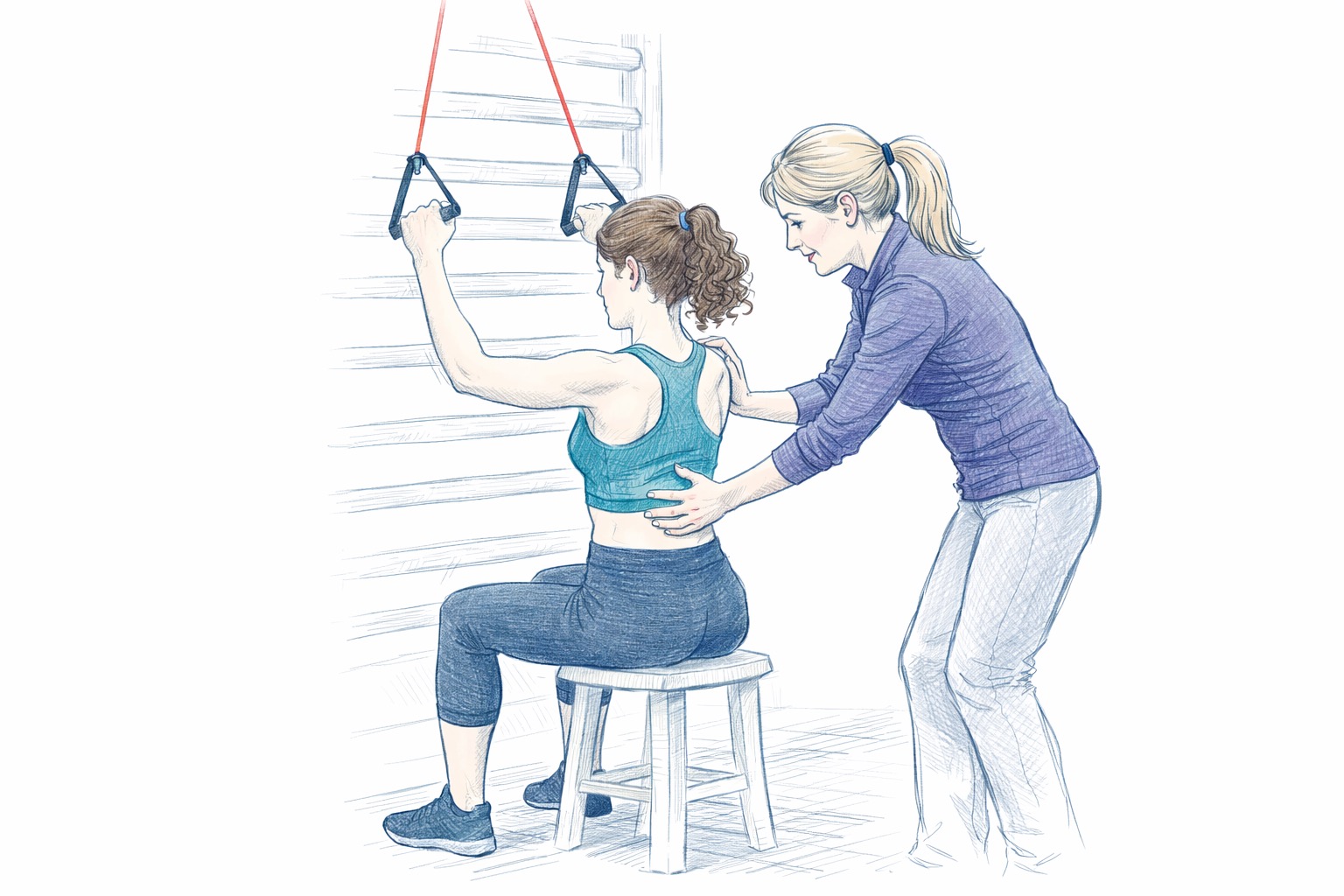
For the hypermobile patient, the method is modified to avoid "end-of-range" stretching, which can exacerbate instability. Instead, Schroth emphasizes active muscular engagement, teaching the patient how to hold their spine in a corrected position through internal strength rather than passive structural support.
Expert Insights: A Q&A with Caroline Campesi, DPT
To understand how these principles apply to the unique needs of the EDS population, we consulted Caroline Campesi, a physical therapist who has dedicated her career to the intersection of scoliosis and connective tissue disorders.
Q: What led you to specialize in the Schroth Method?
Campesi: "I started my career in general orthopedics, but I found myself frustrated. I would look at patients with chronic neck and back pain and realize that something was ‘off’ with their torsos, but I lacked the diagnostic tools to assess spinal asymmetry. Scoliosis essentially ‘found me.’ Once I completed my first training in 2019, I was hooked. The level of detail in the Schroth assessment is unmatched, and I’ve seen patients achieve clinical gains within just a few visits."
Q: How frequently do you see patients with EDS in your clinic?
Campesi: "It is a huge percentage. In any given week, I am often surprised when a new patient doesn’t have hypermobility. I recently evaluated a group of 22 patients, and 13 scored higher than 5/9 on the Beighton scale. I estimate that roughly 75% of my current caseload has some form of connective tissue disorder."
Q: Is scoliosis in EDS different from typical Adolescent Idiopathic Scoliosis (AIS)?
Campesi: "It is, but not always in the way people expect. While most of my teenage patients are hypermobile, some are not. Interestingly, we are finding that movement is the key differentiator. Data suggests that active teens—those who move frequently throughout the day—show less progression than their sedentary counterparts. For the EDS population, the goal is to manage the ‘systemic’ nature of the condition while stabilizing the spine."
Q: How do you handle comorbidities like POTS (Postural Orthostatic Tachycardia Syndrome)?
Campesi: "POTS is a frequent companion to EDS. If a patient’s heart rate spikes every time they stand, they cannot perform traditional exercises safely. My motto is ‘first things first.’ We prioritize POTS stability, often by adapting exercise positions—sometimes working in supine or seated positions—to ensure the patient is safe and comfortable. We make the exercise fit the person, not the other way around."
Implications for the Patient: Building a Toolkit
For the patient, the implications of adopting the Schroth Method are profound. It shifts the narrative from one of "being broken" to one of "active management."
The Long-Term Benefits
- Joint Stability: Through the activation of deep stabilizing muscles, patients often report a decrease in the "noisy joints" and subluxations that define daily life with EDS.
- Postural Awareness: Patients learn to recognize their own spinal curves and apply self-correction strategies in real-time, whether sitting at a desk or standing in line.
- The Empowerment Mindset: Perhaps most importantly, Schroth provides a psychological framework. It proves that individuals with EDS can and should exercise, provided they have the guidance to do so in a way that respects their unique anatomy.
Selecting the Right Therapist
If you are considering the Schroth Method, it is vital to vet your provider. Not every therapist who claims to treat scoliosis is equipped to handle the complexities of EDS.
When searching for a practitioner, Campesi suggests asking one critical question: "What percentage of your patients have both scoliosis and EDS or HSD?"
A therapist who works primarily with post-surgical joint replacements may not be the best fit for the nuanced, systemic needs of a hypermobile patient. Seek out those who specialize in spinal asymmetry and have a demonstrated track record of working with connective tissue disorders.
Conclusion
Scoliosis in the context of Ehlers-Danlos Syndrome is not merely a structural anomaly—it is a functional challenge that requires a specialized, multidisciplinary approach. Through the Schroth Method, patients are discovering that they are not powerless against their spinal curves. By shifting from passive bracing or generalized exercise to active, informed, and tailored movement, the EDS community is proving that stability is not just a goal, but a reachable destination.
Disclaimer: This article is for informational purposes only and does not constitute medical advice. Always consult with your primary care physician or a specialized physical therapist before beginning any new exercise program, especially if you have been diagnosed with a connective tissue disorder.