From the viral corridors of TikTok to the top-selling charts on Amazon, the debate surrounding vegetable oils—often disparagingly labeled "seed oils"—has reached a fever pitch. To the casual observer, the discourse can feel like a minefield of conflicting advice. On one side, proponents of the "carnivore" and ancestral health movements describe these oils as "toxic sludge" and "motor oil," claiming they are the hidden culprits behind a global epidemic of chronic disease. On the other, many mainstream nutritionists and public health organizations maintain that these oils are harmless, or even beneficial, alternatives to saturated fats like butter.
The truth, as is often the case in the complex world of nutritional science, is far more nuanced than a 30-second social media clip can convey. To move past the memes and the alarmism, we must examine the history, the chemistry, and the clinical data surrounding the oils in your pantry.
The Origins: A Century of Industrial Evolution
To understand the current hostility toward seed oils, one must look at their chronology. For thousands of years, human diets relied primarily on animal fats—lard, tallow, and butter—alongside traditional plant fats like olive and coconut oil. The industrialization of vegetable oils is a relatively recent phenomenon, accelerating rapidly in the early 20th century.
As food manufacturing companies sought to scale production and lower costs, they turned to crops like corn, soy, canola, and cottonseed. Unlike olives, which are naturally brimming with oil that can be extracted via simple mechanical pressure, these crops contain a relatively low lipid content. A cup of green olives contains roughly 20 grams of fat, while a cup of raw corn contains only about 2 grams.
To bridge this gap, the industry developed an aggressive, multi-step refining process involving chemical solvents (such as hexane), high-heat deodorization, and bleaching. This industrial "birth" of seed oils is the primary focus of the critics. They argue that these oils are "ultra-processed" products that the human body—having evolved on traditional fats—is ill-equipped to handle.
The Science of Processing: Oxidation and Stability
The fundamental concern regarding refined seed oils centers on the integrity of the fatty acids. During the intense heat and chemical processing required to extract oil from seeds, sensitive polyunsaturated fats can be damaged.

The Trans Fat Connection
Historically, the hydrogenation process—used to turn liquid vegetable oils into solid fats like margarine—created trans fatty acids. We now know that trans fats are unequivocally harmful, contributing to heart disease and systemic inflammation. While the FDA officially banned the addition of partially hydrogenated oils in 2018, critics argue that the refining process still leaves these oils vulnerable to oxidation, a chemical process that can create harmful free radicals.
The Problem with "Omega-6"
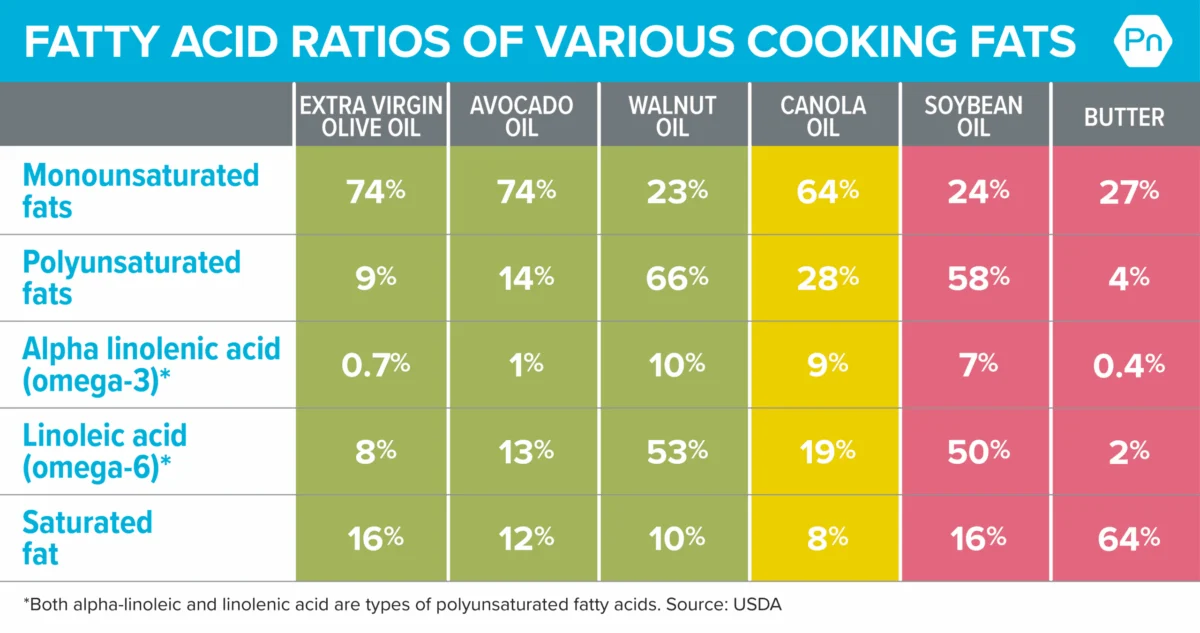
Much of the anti-seed oil sentiment revolves around the ratio of Omega-6 to Omega-3 fatty acids. The typical Western diet is heavily skewed toward Omega-6s, found in abundance in soy, corn, and sunflower oils. Some researchers hypothesize that this imbalance triggers chronic, low-grade inflammation, potentially increasing the risk of obesity, depression, and autoimmune conditions.
However, the scientific consensus is not as settled as the internet might suggest. Many studies indicate that Omega-6 fatty acids are essential and, when consumed as part of a whole-food matrix (like walnuts or flaxseeds), are associated with improved cardiovascular health rather than inflammation. The critical distinction lies between the source of the fat: a whole food contains fiber, polyphenols, and vitamins that buffer the impact of fatty acids, whereas refined oil is a "naked" calorie source stripped of these protective compounds.
Head-to-Head: The Battle of the Fats
When comparing cooking oils, the "winner" usually depends on its stability, nutrient profile, and degree of processing.
Extra Virgin Olive Oil (EVOO) vs. Canola Oil
EVOO is widely regarded as the gold standard. It is mechanically pressed without heat, preserving its potent polyphenols—antioxidants known for their anti-inflammatory properties. Large-scale studies in Southern Italy have consistently linked high EVOO consumption to lower mortality rates and a reduced risk of heart disease. Contrary to outdated advice, modern research shows that EVOO is remarkably stable at high temperatures, outperforming most other oils in long-duration heat tests.
Canola oil, while often unfairly maligned, occupies a middle ground. It is relatively high in monounsaturated fats and contains alpha-linolenic acid (a plant-based Omega-3). When "expeller-pressed" (mechanically squeezed without chemical solvents), it retains more of its natural benefits. While it lacks the dense polyphenol content of high-quality EVOO, it is a budget-friendly option that is, at the very least, health-neutral.

Refined Vegetable Oil vs. Butter
This is the most contentious matchup. Butter is a natural, whole food, yet it is high in saturated fat. While the "saturated fat is evil" narrative of the 1990s has been largely debunked, excessive intake (beyond 10% of total daily calories) is still linked to elevated LDL cholesterol.
Refined vegetable oils, conversely, are often stripped of protective compounds, making them more prone to oxidation. However, the most significant issue isn’t the oil itself in a home kitchen; it is the prevalence of these oils in ultra-processed foods. When vegetable oils are used in industrial settings—repeatedly heated and combined with refined sugars and sodium—they contribute to a "toxic" dietary environment.
Implications for Your Diet
If you are looking to optimize your health, the following takeaways can help you navigate the oil aisle:
- Prioritize Whole Foods: The best fats come inside the package nature provided. Eat the olives, the avocados, the nuts, and the fatty fish. These contain a complex matrix of nutrients that refined oils simply cannot replicate.
- The 80/20 Rule: You do not need to purge your pantry of every bottle of soybean oil. The primary danger of vegetable oils is their ubiquity in ultra-processed snacks. If you limit ultra-processed food intake to 20 percent of your diet, your consumption of refined oils will naturally fall to a safer, manageable level.
- Choose Quality Over Quantity: If you can afford it, make Extra Virgin Olive Oil your primary cooking fat. It is the most well-researched, stable, and health-promoting option available.
- Avoid Deep-Fried Foods: Regardless of the oil used, deep-frying alters the chemical structure of fats, often leading to oxidation and the creation of inflammatory compounds. These are "eat less" foods, regardless of whether they were fried in canola or beef tallow.
Conclusion: Complexity Over Controversy
The narrative that all seed oils are "toxic" is an oversimplification that ignores the nuance of processing, sourcing, and consumption patterns. While there is valid scientific concern regarding the refining process and the potential for oxidation in industrial oils, demonizing them as the singular cause of all modern disease is scientifically inaccurate.
The reality is that our health is determined by the total pattern of our diet. A diet centered on whole, minimally processed foods—rich in vegetables, fiber, and high-quality fats like EVOO—will naturally mitigate the risks associated with the occasional consumption of refined oils. Instead of hunting for a "villain" ingredient to banish, focus on the big picture: consume high-quality, minimally processed ingredients, and limit the industrial ultra-processed foods that define the modern, standard diet.
In nutrition, as in life, the dose and the context determine the poison. By shifting your focus from fear-based avoidance to positive, nutrient-dense inclusion, you can make informed decisions that support your long-term health goals without the anxiety of the "toxic" label.