












When patients receive a diagnosis of Ehlers-Danlos Syndrome (EDS)—a group of multisystemic, hereditary connective tissue disorders—they are often provided with a comprehensive list of symptoms to monitor: joint hypermobility, skin elasticity, and cardiovascular fragility. Yet, one of the most intimate and vital aspects of the human experience—the voice—is frequently absent from these clinical discussions.
For years, individuals with EDS have reported experiencing inexplicable hoarseness, vocal fatigue, and even periods of aphonia (loss of voice). These symptoms were often dismissed as secondary to common viruses, seasonal allergies, or the natural aging process. However, as medical literature catches up to the anecdotal experiences of the patient community, a new narrative is emerging: the voice box, or larynx, is a structure fundamentally reliant on the integrity of connective tissue. When that tissue is structurally compromised, the voice may be one of the first things to falter.
Main Facts: The Anatomy of the Voice in EDS
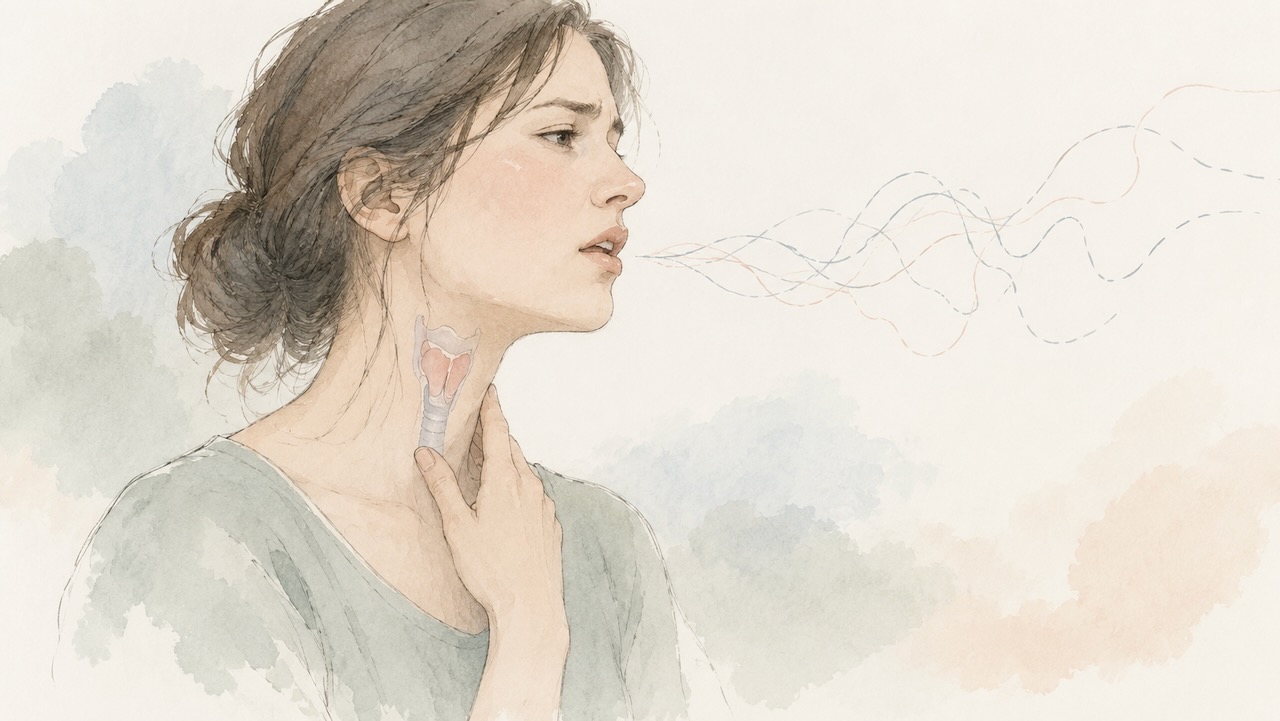
At the heart of vocal production is the larynx, a complex cartilaginous structure that houses the vocal folds. These folds are not merely skin; they are layered, intricate structures composed of epithelium, lamina propria (connective tissue), and muscle. For sound to be produced, the vocal folds must achieve precise, synchronized contact.
In a healthy system, connective tissue provides the necessary tension and elasticity to allow these folds to vibrate millions of times per hour. In individuals with EDS, where collagen—the body’s primary structural protein—is defective or deficient, the architecture of the larynx is inherently different. If the vocal folds are too lax, or if the surrounding cartilages lack the structural support to maintain proper alignment, the "instrument" of the voice becomes inefficient.
The physiological impact is not limited to the folds themselves. The larynx is supported by a network of ligaments and extrinsic muscles that rely on stable connective tissue to maintain their position. When this support system exhibits hypermobility or weakness, the effort required to speak increases, leading to the clinical phenomenon known as vocal fatigue.
Chronology: The Evolution of Research (2025–2026)
The scientific community’s recognition of this issue has accelerated rapidly over the last 24 months, moving from sporadic case reports to structured, peer-reviewed data.
- 2025: A pivotal survey study led by Venkatraman, Schenck, and Thibeault was published in the American Journal of Speech-Language Pathology. This study provided the first large-scale quantitative data on the prevalence of vocal symptoms within the EDS community. By surveying 437 adults with confirmed EDS, the researchers identified that over 90% of respondents had experienced significant vocal symptoms within the previous year.
- Early 2026: Researchers began a retrospective analysis of clinical literature spanning from 2009 to 2025. This scoping review, published in the journal Biology, synthesized findings from 13 independent studies. The review confirmed that vocal pathology in EDS is not a localized anomaly but a systemic outcome of connective tissue dysfunction.
- Late 2026: Clinical guidelines are currently being re-evaluated to incorporate vocal health screenings into the standard care protocols for EDS patients. This shift marks a departure from the "wait-and-see" approach, favoring early intervention for those reporting subtle changes in their vocal quality.
Supporting Data: Understanding the Scope
The data collected by Venkatraman et al. (2025) provides a stark look at the lived experience of patients. Of the 400 respondents who reported symptoms, the most frequently cited concerns included:
- Vocal Fatigue: A sensation of tiredness or strain after short periods of speaking.
- Persistent Hoarseness: A rough or breathy quality to the voice that does not resolve with standard rest.
- Vocal Instability: Sudden "cracks" or shifts in pitch during conversation.
- Dysphagia: A frequent, though often overlooked, comorbidity involving difficulty swallowing, which shares anatomical pathways with vocal production.
The 2026 scoping review further corroborated these findings by identifying specific structural abnormalities. Using high-resolution imaging, researchers observed:
- Laryngeal Hypermobility: Excessive movement of the cartilages, leading to an unstable sound source.
- Glottal Insufficiency: A failure of the vocal folds to close completely, resulting in air leakage and a breathy voice.
- Tissue Atrophy: A thinning of the connective tissue layers in the vocal folds, reducing their ability to vibrate efficiently.
While these studies are foundational, researchers remain cautious. They acknowledge that participants in such studies are often self-selecting—individuals who already struggle with their voices are more likely to complete a survey. Therefore, while the prevalence is high, the true statistical distribution across the entire EDS population requires further longitudinal study.
Implications for Clinical Practice
The implications of these findings are profound. For too long, clinicians have treated the voice as an isolated entity, separate from the systemic nature of EDS. The recognition that vocal health is a marker of connective tissue integrity means that persistent voice changes should be treated as a clinical "red flag."
The Multi-Factorial Nature of Vocal Decline
It is critical to note that a voice issue in an EDS patient may not be solely due to collagen defects. Clinicians are now being trained to investigate "The Triple Threat" of vocal decline in EDS:
- Structural Issues: Direct degradation of laryngeal collagen.
- Neurological/Autonomic Factors: The role of Dysautonomia (common in EDS) in affecting blood flow and mucus production in the throat.
- Compensatory Strain: The tendency for patients to over-tense other throat muscles to "force" the voice to work, leading to secondary muscular tension dysphonia.
Professional Recommendations: Who Can Help?
If you or a loved one with EDS experiences chronic vocal changes, the "dismissive approach" is no longer medically acceptable. The recommended care path involves a multidisciplinary team:
- Laryngologists: Specialists in the voice box who can perform stroboscopy—a specialized exam that uses a strobe light to see the vocal folds vibrate in slow motion.
- Speech-Language Pathologists (SLPs): Experts who can provide voice therapy to reduce strain, teach proper breathing techniques, and manage vocal fatigue.
- Physiatrists: Doctors specializing in physical medicine and rehabilitation who can address the neck and jaw tension that often exacerbates vocal issues.
When to seek immediate professional help:
- Pain that occurs while speaking or swallowing.
- Episodes of choking or aspiration.
- New, rapid changes in voice pitch or volume.
- Difficulty breathing (dyspnea) associated with speech.
Practical Management: Self-Care and Lifestyle
While clinical intervention is essential, there are evidence-based practices patients can implement at home to protect their vocal health.
- Hydration as Medicine: The vocal folds are covered in a thin layer of mucus that must remain hydrated to vibrate. For EDS patients, whose tissues may already be prone to dehydration, drinking water is not just about thirst; it is a structural necessity for the larynx.
- Strategic Vocal Rest: In a culture that values constant communication, the importance of "vocal silence" is often ignored. If you have had a high-demand day (e.g., long meetings, teaching, or social events), scheduling periods of complete silence allows the muscles of the larynx to reset and the tissues to rehydrate.
- Allergy and Irritant Management: EDS patients often have sensitive mucous membranes. Managing allergies with non-drying antihistamines or environmental controls can prevent the inflammation that forces the vocal folds to work harder than necessary.
- Gentle Muscle Release: Using warm compresses on the neck or engaging in gentle, non-strenuous jaw stretches can prevent the secondary tension that often develops as a reaction to vocal difficulty.
Conclusion: A Call for Comprehensive Care
The emergence of research connecting Ehlers-Danlos Syndrome to vocal dysfunction marks a vital step toward holistic patient care. We are moving away from an era where "the voice" is considered a minor detail, and into one where it is recognized as a key indicator of systemic health.
The primary takeaway for the EDS community is one of validation: your voice changes are not "in your head." They are a reflection of the systemic reality of living with connective tissue dysfunction. By documenting these symptoms, seeking specialized care, and advocating for more research, we can ensure that the "quiet concern" of vocal loss becomes a loud, prioritized focus of modern medicine.
By Melissa McNulty, PhD, Professor of Nursing. Published October 2026.
Disclaimer: This article is for educational purposes only and does not constitute medical advice. Please consult with your primary care physician or a specialized otolaryngologist for any concerns regarding your vocal health.