






By Paul Knoepfler, Ph.D.
September 30, 2026
What happens when the boundary between species begins to blur? For decades, the notion of a creature possessing a brain that is substantially human has been the sole province of science fiction—a trope explored in the tragic arc of Flowers for Algernon or the satirical machinations of Pinky and the Brain. Yet, in the fall of 2026, the scientific community has moved from the realm of speculation into a new, profound, and deeply challenging reality.
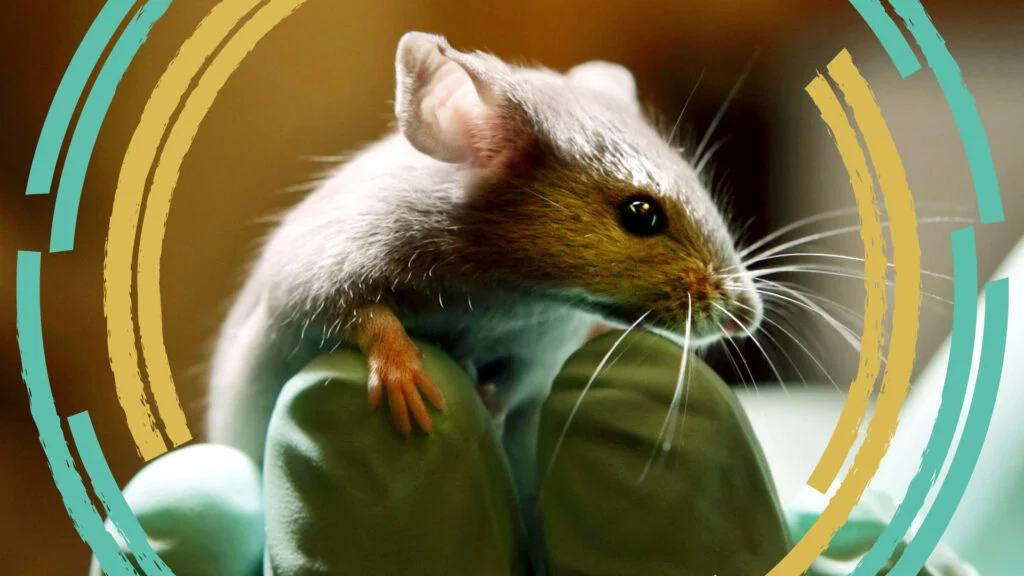
A landmark study led by Stanford University’s Sergiu Pașca, published in the journal Nature, describes the creation of a mouse whose cortex is composed, in significant part, of human brain cells. As a scientist who has spent a career injecting human stem cells into mouse brains, I am accustomed to the complexities of interspecies research. However, this study elicited a visceral reaction: a mixture of professional awe and profound hesitation. By integrating human brain organoids into the developing mouse cortex, we are no longer just looking at biological models; we are looking at a fundamental shift in what it means to study the human mind.
The Evolution of Chimeric Research: A Chronology
The journey to this moment was not sudden. It has been a decades-long progression of incremental breakthroughs in regenerative medicine and neurobiology.
- Early 2000s: Researchers began the first rudimentary experiments in xenotransplantation, proving that human cells could survive within the rodent environment. These early efforts were primarily focused on survival and basic integration rather than functional circuitry.
- 2010s: The rise of Induced Pluripotent Stem Cell (iPSC) technology allowed scientists to derive human neurons from adult skin or blood cells. This eliminated the need for embryonic material and allowed for disease-modeling in petri dishes.
- 2018–2022: The emergence of "brain organoids"—three-dimensional clusters of neural tissue—revolutionized the field. These organoids allowed for the study of complex neural development in vitro, but they lacked the sensory input and systemic integration of a living organism.
- 2026: The Pașca study represents the "neocortex milestone." By transplanting human cortical organoids into neonatal mouse brains, the team successfully demonstrated that these cells could not only survive but also send and receive signals, eventually becoming functional components of the mouse’s sensory processing system.
The Science of the "Humanized" Mouse
To understand the gravity of this research, one must understand the anatomy involved. The cortex is the seat of human cognition, the biological engine of complex thought, language, and self-awareness. When we introduce human cells into this specific region, we are not merely adding "brain mass"; we are creating a hybrid circuit.
The Stanford study utilized human iPSCs to grow organoids that were then integrated into the somatosensory cortex of mice. As the mice matured, the human neurons formed synapses with the surrounding mouse tissue. Researchers used optogenetics—a technique involving light-sensitive proteins—to stimulate these human cells and observe the behavioral response in the mouse.
The data was striking: the mice were able to integrate the human neurons into their sensory processing. When the human cells were activated by light, the mice responded in a manner consistent with sensory perception. This confirms that the human cells were not just "passengers," but active, functional participants in the mouse’s neurological life.
Supporting Data and Technical Nuance
The technical success of the Pașca study hinges on the plasticity of the neonatal mouse brain. By performing the transplant at a precise developmental window, the researchers allowed the human cells to "wire" themselves into the existing architecture.
- Synaptic Integration: The study showed that human neurons extended axons into the mouse thalamus, forming connections that mirrored the pathways found in the human brain.
- Cellular Diversity: Unlike previous iterations that focused on singular neuron types, these organoids displayed a range of cell types, including excitatory and inhibitory neurons, creating a more robust, albeit miniaturized, cortical environment.
- Functional Longevity: The mice were monitored for several months, proving that these human-mouse hybrid circuits could remain stable and functional over a significant portion of the rodent’s lifespan.
The Silence of the Ethicists: Official Responses
The publication of the Nature paper has ignited a firestorm of debate within the bioethics community. While the International Society for Stem Cell Research (ISSCR) guidelines provide a framework for such experiments, the speed of technological advancement is currently outpacing policy.

"We are entering an era where we must define ‘humanity’ not by genetics alone, but by neurological capacity," noted a representative from a leading bioethics institute. Official responses have generally been cautious, emphasizing the necessity of "strict oversight committees" (IACUCs).
The primary concern among institutional review boards is the "threshold of sentience." At what point does a mouse with human neural tissue become something more than a lab subject? While the current study shows no evidence of human-level consciousness or altered behavior beyond sensory processing, the theoretical possibility of such outcomes requires us to reconsider our protocols for animal welfare. We are no longer simply asking if the mouse is healthy; we are asking if the mouse is aware in a way that necessitates a new category of ethical protection.
Ethical and Philosophical Implications
The implications of this research are as vast as they are unsettling. On one hand, the potential for medical advancement is unparalleled. By observing how human brain cells function in a living, breathing, and sensing environment, we can gain unprecedented insights into neurodevelopmental disorders, schizophrenia, autism, and neurodegenerative diseases like Alzheimer’s. A petri dish cannot replicate the complexity of an entire brain; a mouse, however, can.
However, the "whoa" factor I experienced is rooted in the "slippery slope" argument. If we can build a cortex, can we eventually transplant more complex, interconnected systems?
The Question of Consciousness
The most profound philosophical question is whether the integration of human neurons could ever result in a sentient experience that is partially human. While the mouse brain is significantly smaller and less complex than a human brain, the "human-ness" of the transplanted cells introduces a qualitative difference. We must grapple with the possibility that these animals might process pain, stress, or environmental stimuli in ways that are fundamentally different from their non-chimeric counterparts.
The Mirror of Self-Understanding
Beyond the ethics, there is the existential mirror. If we successfully model the human cortex in a rodent, we are essentially digitizing and physicalizing the "ghost in the machine." The research forces us to confront the fact that our own consciousness is a biological construct—one that can be transplanted, grown, and manipulated.
Looking Ahead: Where Do We Go From Here?
As we move forward, the scientific community must adopt a posture of "radical transparency." The research published by the Stanford team is a masterpiece of biological engineering, but it is also a clarion call for a new dialogue.
We need:
- Standardized Behavioral Benchmarks: We must develop batteries of tests specifically designed to detect signs of "human-like" cognitive shifts in chimeric models.
- Public Engagement: This is not a conversation that should happen behind closed laboratory doors. The public, who funds much of this research through federal grants, has a right to participate in the ethical framing of these experiments.
- Refinement of Regulatory Frameworks: Current laws regarding animal research are built on the assumption that a mouse is a mouse. We must update these laws to account for the unique moral status of chimeric organisms.
In conclusion, the work of Sergiu Pașca and his colleagues represents a pinnacle of modern science. It is a brilliant, necessary, and deeply uncomfortable advancement. As we peer into the brain of a mouse that carries a piece of human architecture, we are ultimately peering into our own future. We are standing at the threshold of a new epoch in biology, and it is imperative that our wisdom keeps pace with our ingenuity. The mice may be the subjects, but the questions we are answering are entirely our own.