




For many, the quest for firmer, more resilient inner thighs after the age of 60 is synonymous with the gym’s adductor machine—that familiar seated contraption where you squeeze your knees together against resistance. While that specific movement offers a localized burn, it often fails to translate into the functional strength required for daily life.
True leg health, particularly as we age, requires a more holistic approach. The inner thigh muscles, known collectively as the adductor group, are dynamic stabilizers that dictate how we navigate stairs, maintain balance during a stumble, and shift our weight while walking. Relying solely on a machine ignores the multi-dimensional role these muscles play in our musculoskeletal health.
The Anatomy of Stability: Understanding the Adductors
The inner thigh is not just a cosmetic concern; it is a vital functional engine. The adductor group—comprising the adductor longus, brevis, and magnus, along with the gracilis and pectineus—performs a complex dance. While their primary function is to draw the leg toward the body’s midline, their secondary roles are arguably more important for longevity: they control the hip, guide the femur, and provide critical support to the knee joint during lateral movement.
As we age, these muscles often become underutilized, leading to a loss of tone and, more importantly, a decline in neuromuscular control. When the adductors are weak, the knees become susceptible to instability, and the hips lose their ability to track correctly. By integrating standing, functional movements, we can force these muscles to work in tandem with the glutes, quads, and core, leading to legs that are not only firmer but significantly more capable.
Chronology of Functional Training: Why Movement Patterns Matter
The evolution of fitness for those over 60 has shifted away from isolated, machine-based training toward functional, weight-bearing exercise. This transition is rooted in the understanding that muscles do not work in isolation.
1. The Lateral Lunge: Training the Plane of Motion
The lateral lunge is the gold standard for dynamic adductor engagement. Unlike forward-moving exercises, it forces the inner thigh to lengthen under tension.
- The Science: As you step laterally, the adductors of the extended leg are stretched to their functional limit, while the working leg’s adductors assist in the explosive pull-back to center.
- The Execution: Start with a modest stride. Keep your feet firmly planted. As you bend one knee, ensure your hips move backward rather than just downward.
- Progression: Utilize a supported version—holding onto a sturdy countertop—before attempting unassisted reps. Aim for 3 sets of 8–10 reps per side.
2. The Supported Cossack Squat: Deep-Range Control
The Cossack squat is a sophisticated movement that challenges the adductors through a deeper range of motion. It demands significant hip mobility and core stabilization.
- The Benefit: By keeping one leg fully extended, you force the working side to stabilize the entire body weight. This builds confidence in your range of motion, which is crucial for preventing injuries during unexpected shifts in balance.
- Safety Protocol: Always utilize a railing or chair. Never force the depth; stop where your knee feels stable and your heel remains in contact with the floor. 2–3 sets of 6–8 reps are sufficient to stimulate change without overtaxing the joints.
3. The Box Step-Down: Eccentric Strengthening
Often overlooked, the lowering phase of a step-down—known as the eccentric phase—is where most muscle remodeling occurs.
- The Mechanics: By standing on a low step and lowering one foot toward the floor, you force the adductors of the standing leg to act as a brake. This is essential for navigating stairs safely.
- Form Tip: Ensure your knee tracks in line with your toes. This prevents the "caving in" that can lead to knee discomfort.
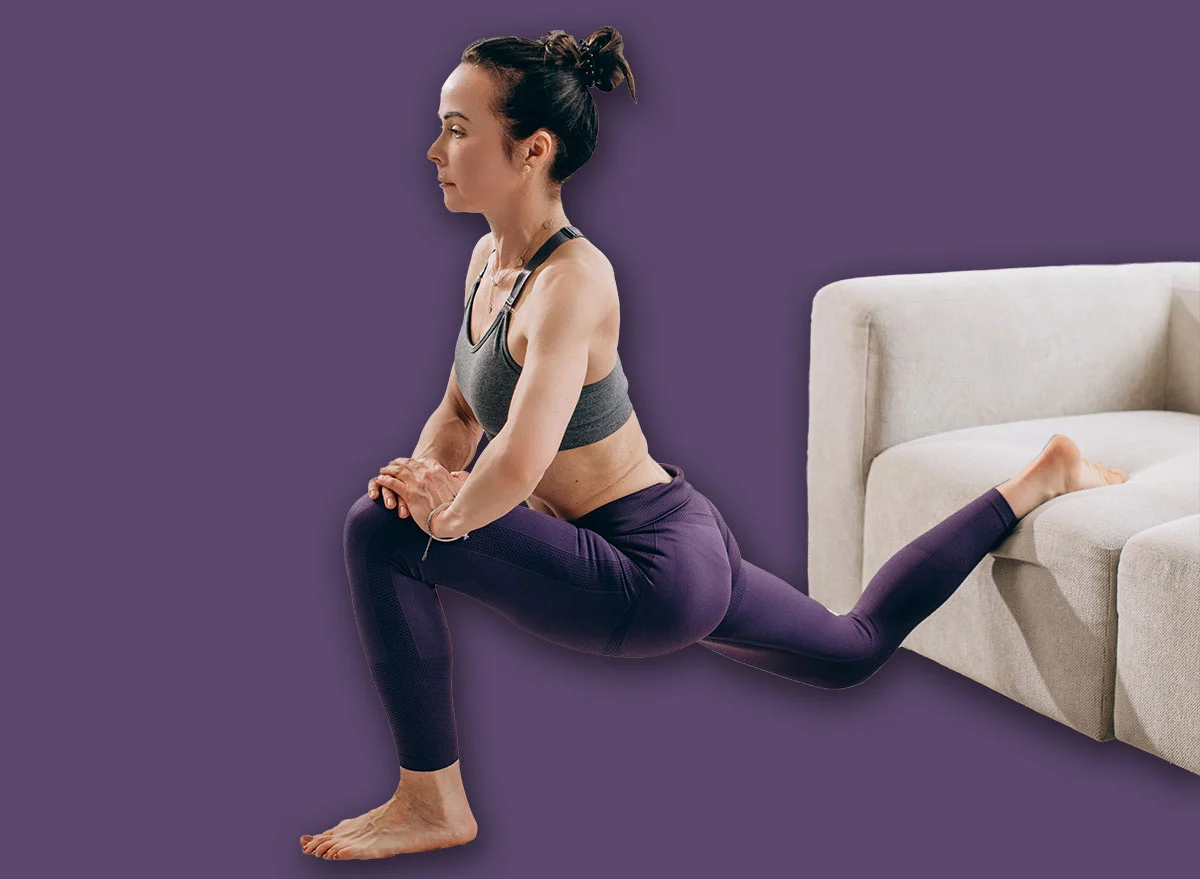
4. The Bulgarian Split Squat: Unilateral Power
Single-leg training is the most effective way to correct muscle imbalances. The Bulgarian split squat, with one foot elevated behind you, forces the front leg to work in isolation.
- The Role of Adductors: Because the base of support is narrowed, the adductors must fire constantly to keep the knee from wobbling. This is perhaps the most effective exercise for "firming up" the thigh while simultaneously improving balance.
- Recommendation: Start with a low rear-foot elevation (or just a lunge position) to master the form before increasing the height of the back foot.
5. The Curtsy Lunge: Cross-Plane Stability
The curtsy lunge introduces a rotational component to the leg work. By stepping diagonally behind the front leg, you engage the adductors and the outer hips simultaneously.
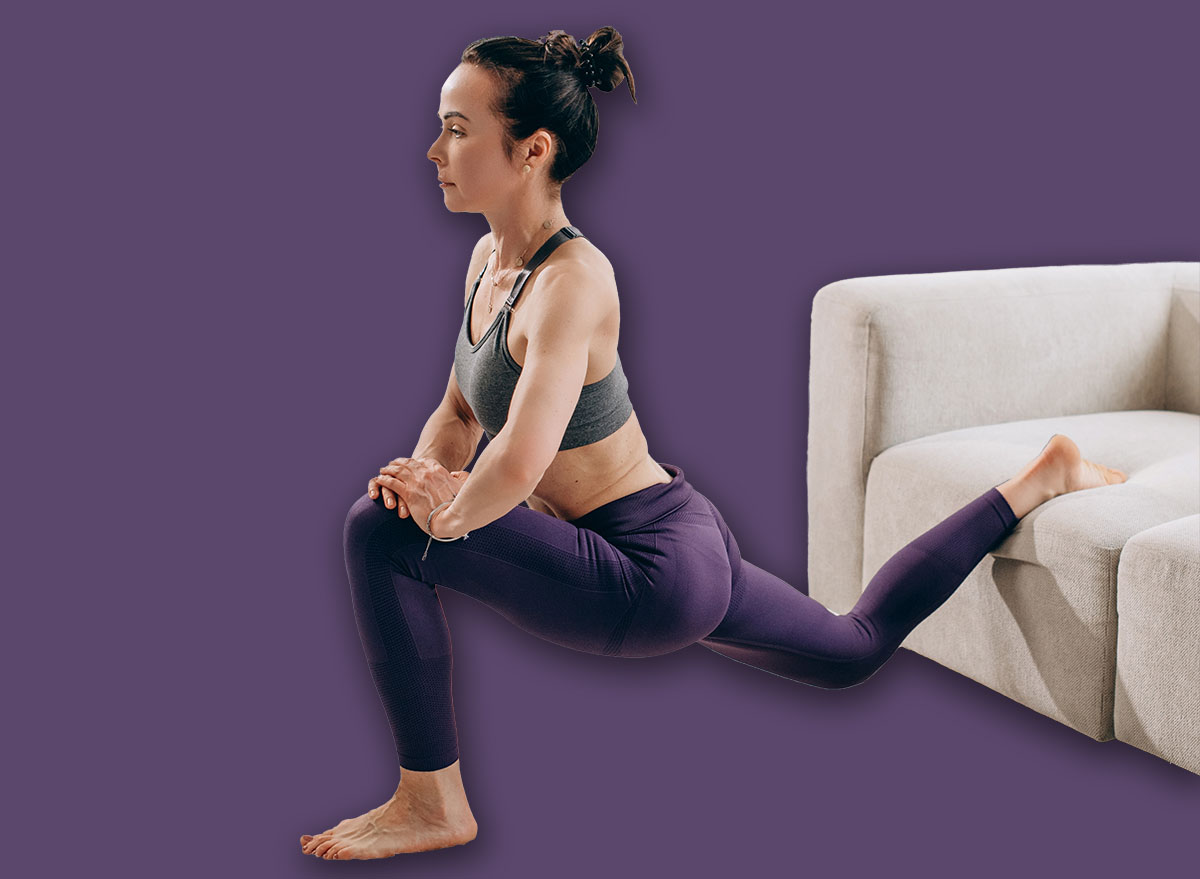
- The Functional Implication: Life rarely happens in a straight line. The ability to control the leg during a diagonal movement is essential for navigating crowded spaces or uneven terrain. Keep the step small and controlled to prioritize stability over range.
Supporting Data: Evidence-Based Longevity
Research consistently underscores the link between lower-body strength and long-term health outcomes in adults over 60. Studies published in the Journal of Aging and Physical Activity indicate that lateral strength training is significantly correlated with a reduction in fall-related injuries.
When the adductors are strong, the kinetic chain of the leg—from the foot, through the knee, to the hip—functions as a cohesive unit. A 2021 study on geriatric mobility found that individuals who engaged in multi-planar exercises (those involving side-to-side and rotational movements) retained better hip stability and balance markers compared to those who focused exclusively on linear exercises like walking or cycling.
Official Perspectives: The Clinical Consensus
Physical therapists and geriatric specialists generally agree that the shift toward "functional, standing-only" routines is a response to the limitations of traditional resistance machines.
"The machine tells your body exactly how to move, which is great for hypertrophy but poor for real-world application," notes Dr. Elena Vance, a specialist in geriatric orthopedics. "When you stand, you are training your brain and your nervous system to communicate with the muscles in a way that protects the joint. For my patients over 60, the goal is to build ‘resilient strength’—strength that you can actually use when you’re carrying groceries or walking on an uneven sidewalk."
Implications for Daily Living: Beyond the Mirror
The primary implication of this training style is a transformation in how you move through the world.
- Reduced Joint Pain: By strengthening the muscles that support the knee, you offload the joint itself, often resulting in reduced chronic aches.
- Increased Confidence: When your hips and thighs are stable, your gait becomes more confident, which reduces the "fear of falling" that often leads to reduced physical activity.
- Improved Functional Independence: Simple tasks like rising from a low chair, stepping out of a bathtub, or getting in and out of a car become effortless.
Implementing Your Routine: A Weekly Blueprint
To see real results, consistency is the ultimate variable. Follow this structure two to three times per week, ensuring at least one day of rest between sessions to allow for muscle recovery.
The Weekly Schedule:
- Warm-up: 5 minutes of light walking or leg swings.
- The Circuit: Perform one set of each of the five exercises (Lateral Lunge, Cossack Squat, Box Step-Down, Bulgarian Split Squat, Curtsy Lunge) in order.
- Rest: Take 60 to 90 seconds between exercises.
- Repetition: Complete two to three full rounds of the circuit.
Final Recommendations:
- Focus on Tempo: Don’t rush. The slower the movement, the more time your muscles spend under tension, and the greater the strength gains.
- Listen to Your Body: If a move causes sharp pain, scale back the range of motion or increase your level of support.
- Hydration and Nutrition: Ensure adequate protein intake to support muscle repair, especially in the 60+ demographic where protein synthesis naturally slows.
By moving away from the machine and embracing the complexity of human movement, you are not just working toward firmer thighs—you are investing in the foundation of your mobility for years to come. Your legs are the primary pillars of your independence; treat them with the multi-dimensional training they deserve.