








In the crowded landscape of personal care, toothpaste has historically been relegated to the category of "transactional hygiene." For decades, the ritual of brushing one’s teeth has remained largely static: a utilitarian, two-minute task performed twice daily with little regard for the body’s internal clock. However, a new market entrant, DAYLY, is challenging this paradigm, attempting to bridge the gap between dental hygiene and holistic wellness. By introducing an oral care system synchronized with the human circadian rhythm, the brand is positioning toothpaste as the latest frontier in lifestyle optimization.
Main Facts: The Circadian Approach to Oral Health
The core premise of DAYLY is the introduction of AM and PM toothpaste formulations designed to work in tandem with the body’s natural biological cycles. Just as the skincare industry moved toward distinct morning serums and evening treatments, DAYLY is applying this logic to oral care.
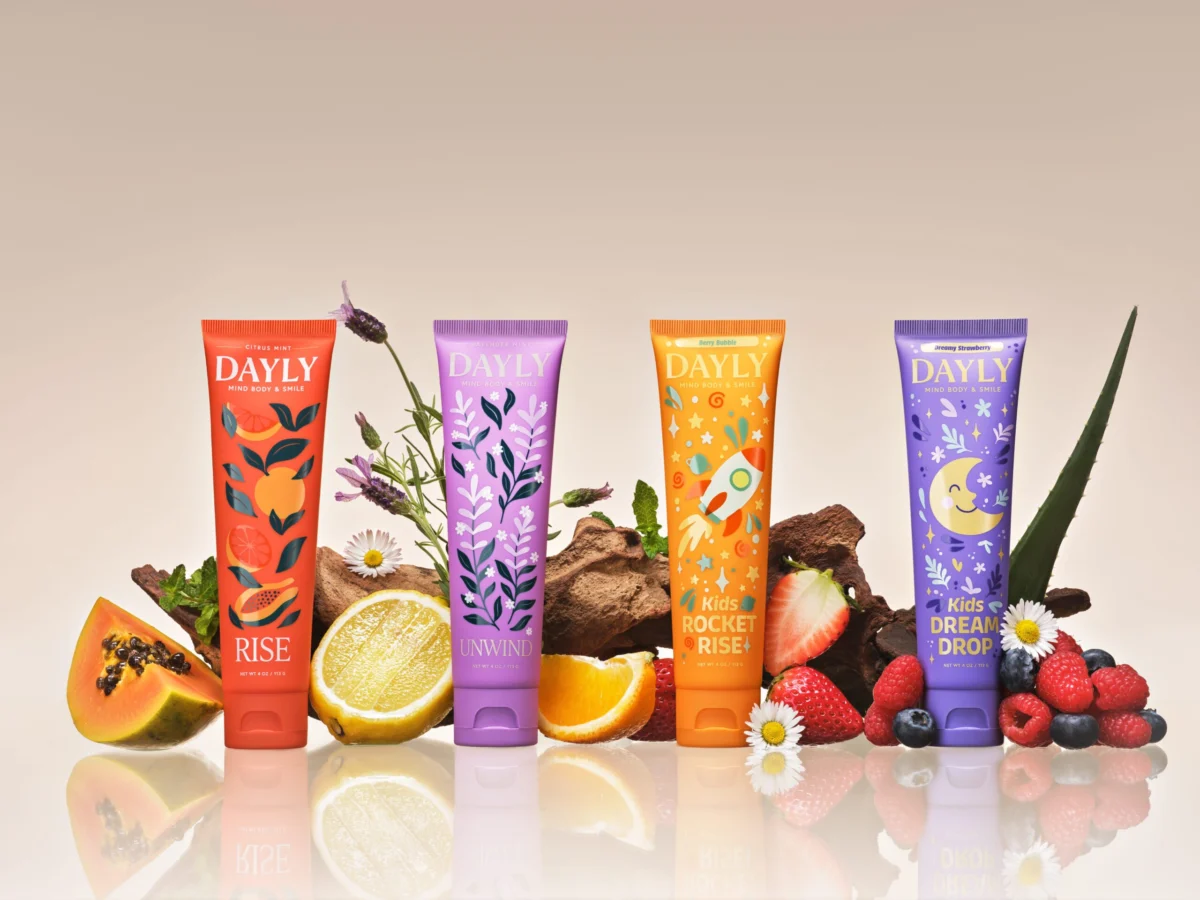
The brand has debuted four distinct products, split between adult and pediatric offerings. The adult line features "Rise," a morning formula intended to provide a gentle boost to the start of the day, and "Unwind," an evening formula infused with calming agents such as magnesium and L-theanine to signal to the body that it is time to transition into sleep. The pediatric line, consisting of "Rocket Rise" and "Dream Drop," similarly adapts these principles for younger users, aiming to cultivate early habits of mindful self-care.
Manufactured in the United States within FDA-registered, cGMP (current Good Manufacturing Practice), and ISO-certified facilities, the products prioritize both quality control and ingredient transparency. With a price point of $20.99 per tube for subscribers, the brand is positioning itself as a premium "wellness staple" rather than a commodity item found in the budget aisles of a pharmacy.
Chronology: From Concept to Consumer Ritual
The journey of DAYLY began not in a laboratory, but as a conceptual critique of modern daily habits. Ananda Saba, the brand’s creative director, identified a dissonance between the intent of personal care and the reality of how we perform it.
- The Conceptual Phase: Saba began questioning why the act of brushing teeth felt rushed and reactive. The goal was to transform the bathroom counter from a "medicine cabinet"—a place associated with illness and emergency—into a "wellness shelf," a space dedicated to proactive health and intentional living.
- The Formulation Phase: Development focused on the integration of vitamins, minerals, and botanicals that could safely be delivered through oral mucosa during the brushing process. The challenge lay in creating formulas that were effective at cleaning teeth while simultaneously providing the subtle, physiological benefits of their added ingredients.
- The Launch: Following rigorous testing and adherence to stringent manufacturing standards, DAYLY officially entered the market. The launch was strategically timed to capture the growing "wellness-first" demographic, emphasizing that consumers do not need to add new habits to their schedules; they simply need to upgrade the ones they already possess.
Supporting Data and The Science of Rhythms
The efficacy of DAYLY rests on the concept of circadian rhythm alignment. Circadian rhythms are the physical, mental, and behavioral changes an organism experiences over a 24-hour cycle, primarily driven by light and dark in the environment. While oral health is often viewed in isolation, the body’s systemic functions—including inflammation levels, salivary flow, and cortisol regulation—fluctuate throughout the day.
By incorporating magnesium and L-theanine into the nighttime formula, DAYLY leans into the body’s evening requirement for nervous system regulation. Magnesium is widely recognized for its role in muscle relaxation and neurotransmitter regulation, while L-theanine, an amino acid found in green tea, is celebrated for its ability to promote relaxation without sedation.
In the morning, the goal is to provide a sense of alertness. While the specific proprietary blends are protected, the inclusion of energy-supporting minerals mirrors the trend seen in "functional toothpaste," a niche market sector projected to see significant growth as consumers demand more from their grooming products. According to recent market analysis, the oral care market is shifting away from "single-benefit" products (like whitening-only or cavity-protection-only) toward "total-body wellness" solutions that integrate oral microbiome support with systemic health benefits.
Official Responses: The Philosophy of "Rhythmic" Living
The leadership at DAYLY views the product not as a disruption of a routine, but as an evolution. Shamir Patel, CEO of DAYLY, emphasizes the "low-friction" nature of the product.
"Instead of asking people to add another habit, we designed DAYLY to upgrade the one they already keep, morning and night," Patel stated in a recent press release. "At the end of the day, DAYLY works because it fits into real life—just two minutes, twice a day with no extra effort required."
Ananda Saba echoes this sentiment, focusing on the generational impact of these rituals. "I wanted my children to grow up seeing self-care as normal," she noted. "Not reactive or rushed—but rhythmic."
This philosophy directly addresses a common critique of modern wellness: that it is too time-consuming. By focusing on the "transactional" moments of the day and infusing them with intent, DAYLY is attempting to reclaim the two minutes spent at the sink as a brief, meditative reset.
Implications: The Future of the Bathroom Counter
The arrival of a brand like DAYLY carries significant implications for the personal care industry. If the system gains traction, it could signal a broader shift in how consumers perceive their bathroom cabinets.
1. The "Wellness-Shelf" Effect
The transition from utilitarian packaging to aesthetically considered, "shelf-worthy" design is not merely cosmetic. It reflects a shift in consumer psychology where products are expected to contribute to the visual and emotional harmony of a home. DAYLY’s emphasis on "considered packaging" suggests that brands must now offer an experience that extends beyond the product itself.
2. The Integration of Oral and Systemic Health
The success of these formulas may encourage further research into the oral-systemic connection. If consumers begin to equate toothpaste with mood regulation (through magnesium or L-theanine), the barrier between dental health and mental wellness will continue to dissolve. This could lead to a wave of "functional" oral care products that address stress, sleep quality, and even immune support.
3. Subscription Models and Long-Term Engagement
By utilizing a subscription-based model, DAYLY is attempting to move toothpaste into the category of "replenishment-led wellness." This creates a recurring relationship between the brand and the consumer, which is essential for building a community around a lifestyle movement. However, it also requires the brand to maintain high levels of trust and efficacy, as consumers are unlikely to remain subscribed to a system that does not yield tangible benefits.
Conclusion
DAYLY stands at the intersection of dentistry, circadian biology, and lifestyle design. By asking consumers to reconsider the most mundane habit of their day, the brand is tapping into a deeper human desire for structure and intentionality. Whether this "rhythmic" approach to oral care will permanently change the way we approach our medicine cabinets remains to be seen, but the intent is clear: to turn the act of brushing one’s teeth from a chore into a catalyst for a more balanced day.
As we continue to navigate a world that feels increasingly fragmented and fast-paced, the appeal of a "two-minute reset" that integrates seamlessly into existing routines may prove to be a compelling proposition for the modern consumer. DAYLY is not just selling toothpaste; they are selling the opportunity to own the morning and reclaim the night, one brush at a time.