










As the world’s eyes turn toward the United States for the 2026 World Cup—a tournament marked by electrifying matches like Argentina’s 2-0 victory over Austria in Dallas—fans are witnessing the pinnacle of modern athletic performance. Yet, the high-octane pace of today’s game owes a silent debt to a man who, long before sports science became a multi-billion-dollar industry, was revolutionizing human endurance.
Dr. Kenneth H. Cooper, often hailed as the "Father of Aerobics," is not merely a name in a medical textbook. He is a living bridge between the early days of space-age physical conditioning and the contemporary fitness movement. His influence spans from the weightless void of NASA’s early missions to the lush grass of Mexico City in 1970, where his training protocols helped the legendary Brazilian national team secure their place in football history.
The Foundation: From NASA to the Pitch
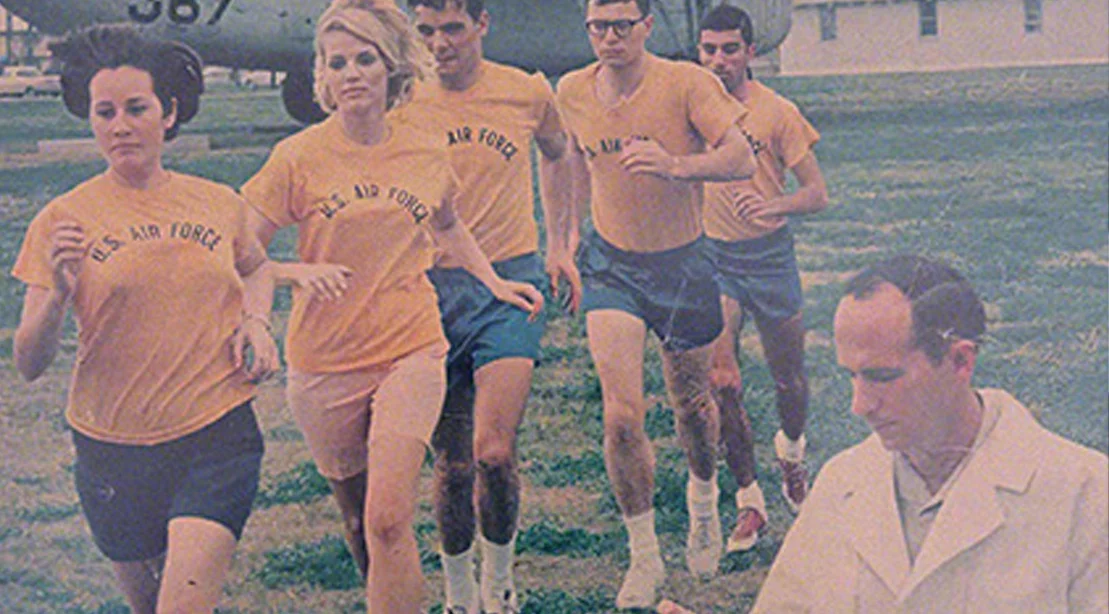
Before he became a global icon in preventative medicine, Kenneth Cooper served 13 years as a Lieutenant Colonel and flight surgeon in the U.S. Air Force. During this period, his work went far beyond standard military medicine; he was tasked with developing the physical conditioning and in-flight anti-deconditioning programs necessary to ensure the survival of American astronauts.
It was during this time that he formulated his world-renowned “12-minute test,” a simple yet rigorous metric designed to gauge cardiorespiratory fitness. This test would eventually find its way onto the global stage in 1970, when a fateful meeting with the Brazilian national team’s trainer changed the trajectory of international football.
The Brazilian squad was in Mexico City, struggling with the physical demands of the tournament. Cooper was invited to present his findings, and the team’s trainer, recognizing the potential, asked him to evaluate the athletes. Cooper’s initial assessment was sobering: the players were covering just 1.86 miles in 12 minutes.
“I had them run 20 miles a week,” Cooper recalls. “They were running at a 7-minute pace, running in fragments of 4 to 5 miles to get that 20 miles a week. By the end of that time, a year later, we retested them at 2.3 miles in 12 minutes.”
A Chronology of Impact: The 1970 Breakthrough
The implementation of Cooper’s conditioning regimen proved to be a masterstroke. Brazil’s 1970 team is widely considered the greatest in history, boasting legends like Pelé. While the sheer talent of the squad was undisputed, it was their unprecedented aerobic capacity that allowed them to dominate opponents.
- 1960s: Dr. Cooper develops the “12-minute test” while working with NASA and the Air Force to optimize human performance.
- 1970: Cooper implements a strict, science-based conditioning program for the Brazilian national football team.
- 1970 World Cup: Brazil wins six straight matches, clinching the title. Observers note that the team consistently outpaced their opponents in the second half of matches.
- Post-1970: Cooper visits Brazil 21 times. The term “doing the Cooper” becomes synonymous with jogging in Brazil, a cultural testament to his influence.
- 1980s–Present: Cooper transitions from military/sports performance into community health, founding the Cooper Aerobics Health and Wellness center in Dallas, Texas.
“They were in outstanding condition—they beat everybody in the second half,” Cooper notes. By focusing on cardiovascular endurance rather than just skill-based training, Cooper ensured that when the fatigue of the tournament set in, Brazil was still firing on all cylinders.
Supporting Data: The Science of "Cooperization"
The efficacy of Cooper’s methods is backed by decades of longitudinal data. After leaving the service, Cooper settled in Dallas and opened his clinic, where he began tracking the long-term health outcomes of his patients. The data is nothing short of extraordinary.
A group of 20 patients who visited his practice for 45 years—a group he affectionately refers to as being “Cooperized”—followed his strict principles regarding exercise, nutrition, and lifestyle. The results were compared against the national average, and the findings were stark.
- Average Age of Men in the group: 86.5 years.
- Average Age of Women in the group: 90.4 years.
- Combined Average: 88.6 years.
This average is nearly a full decade longer than the life expectancy of the average American. Cooper attributes this not to genetic luck, but to a disciplined adherence to 150 minutes of weekly exercise, a diet rich in fruits and vegetables, and a strict avoidance of tobacco and excessive alcohol.
The "Tape Test": A Modern Metric for Health
One of the most persistent misconceptions in health is the over-reliance on the bathroom scale. Dr. Cooper has long argued that your waist size is a far more accurate barometer of health than your total body weight.
“The circumference of your waist should be no more than one-half your height,” Cooper explains. “If you’re 5 feet tall, that’s 60 inches in height; your waist should not exceed 30 inches.”
While some military and governmental bodies have relaxed these standards to 55% of one’s height, Cooper remains steadfast in his 50% rule. He views this as a vital indicator of visceral fat, which is the primary driver of metabolic syndrome and cardiovascular disease. His philosophy is one of objective, measurable metrics—a holdover from his days as a scientist for NASA.
Official Perspectives and Legacy
Now at 95 years old, Dr. Cooper remains an active, vibrant figure in the medical community. He views his own longevity as the ultimate validation of his principles. “My medical school class of 1956, of a hundred students, only five of us are left,” he observes, underscoring the success of his regimen.
His legacy is now being carried forward by the next generation. His son, Tyler Cooper, serves as the President and CEO of Cooper Aerobics, overseeing a sprawling organization of six businesses and one non-profit. The influence of the Cooper brand has gone global, with health professionals in China and beyond seeking to replicate the “Cooper model” of wellness. His daughter, Berkley, continues the family’s athletic tradition, having completed the Boston Marathon, a feat her father accomplished twice in his own life.
Implications for the Future
The lessons provided by Dr. Cooper are perhaps more relevant today than at any point in history. With the rise of sedentary lifestyles and the global obesity epidemic, the "Father of Aerobics" is pushing for a shift in how we view aging.
His latest book, Grow Healthier as You Grow Older, distills over 50 years of clinical observation into actionable advice for the aging population. He emphasizes that "fitness is a journey, not a destination." He challenges seniors to adopt simple, sustainable habits: “I want people 80 years of age to start walking a mile in 17 minutes. Studies show if you can do that, 84% of men and 86% of women will make it to age 90.”
For the modern athlete and the average person alike, the takeaway is clear: physical condition is not a static state. It is a lifelong commitment that evolves as we age. When the legs can no longer run, we walk; when the impact is too great, we cycle or swim.
As we watch the 2026 World Cup and marvel at the speed and endurance of the world’s best soccer players, we should remember that the "beautiful game" is played on a foundation of science. From the dust of Mexico City to the clinics of Dallas, Dr. Kenneth Cooper has spent his life proving that while we cannot stop the clock, we can certainly choose how we run it.