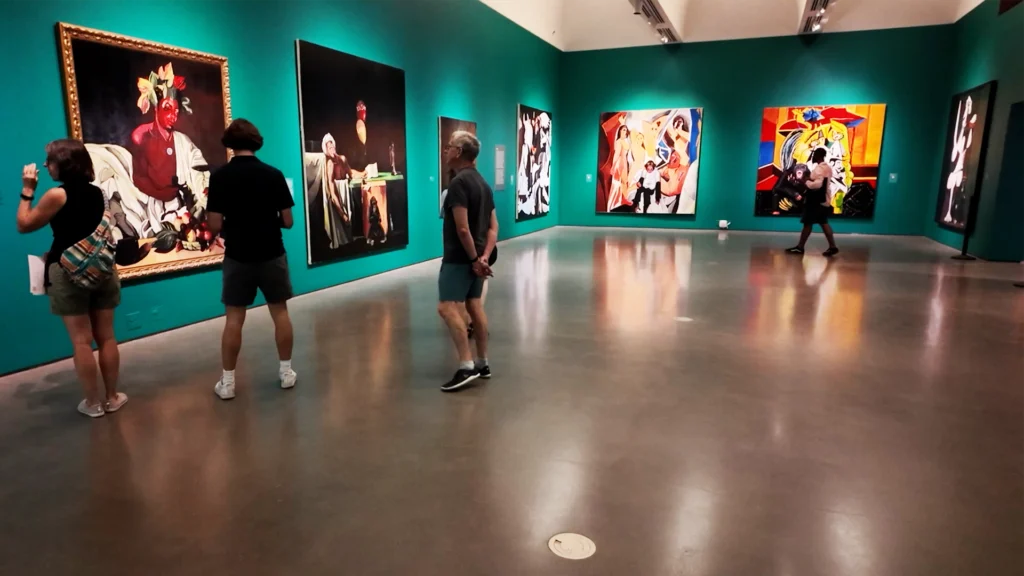
In the quiet, climate-controlled galleries of the Bechtler Museum of Modern Art in Charlotte, North Carolina, a profound transformation is taking place. For many visitors, these halls are more than just a destination for aesthetic appreciation; they are a site of clinical recovery. Under a pioneering initiative known as "Art on Prescription," local healthcare providers are eschewing traditional pill-based remedies in favor of a creative, community-centered alternative to combat one of the most pervasive health crises of the modern era: social isolation.
As the United States grapples with a documented "loneliness epidemic," this program—the first of its kind in the nation—offers a compelling blueprint for how cultural institutions can bridge the gap between clinical healthcare and human connection.
The Genesis of a Movement: Defining the Crisis
The rise of "social prescribing"—a term gaining significant traction in global health circles—is a direct response to the realization that loneliness is not merely a social inconvenience but a significant determinant of health. Research consistently links chronic loneliness to increased risks of heart disease, stroke, depression, and cognitive decline.
The concept, which originated in the United Kingdom, operates on a simple premise: when a patient presents with symptoms of anxiety, depression, or even physical ailments exacerbated by isolation, a doctor can "prescribe" non-clinical interventions. These prescriptions often center on what author Julia Hotz, who wrote The Connection Cure, categorizes as the "five pillars": movement, nature, art, service, and belonging.
"Doctors were recognizing how loneliness was a major social determinant of health," says Hotz. "You had people coming to the emergency room, using medical services more often because they were lonely. Social prescribing is now used to treat a wide variety of afflictions, from ADHD and addiction to dementia."
In Charlotte, a rapidly growing city where the influx of new residents and the lingering effects of the COVID-19 pandemic have frayed community ties, the Bechtler Museum stepped in to fill a void. Todd Smith, the museum’s executive director, saw an opportunity to leverage the power of art to facilitate human interaction. "We are asking participants to start talking about what they see," Smith explains. "What do the colors make you feel? How does it express an emotion to you? It’s just about getting people to talk."
A Story of Resilience: From Tragedy to Connection
The program’s impact is perhaps best illustrated by the journey of Alisha Bigby, a participant whose life was shattered by a catastrophic series of personal tragedies. Within a span of just three weeks, Bigby lost four family members—her mother, her father, and two brothers—to a sequence of sudden, harrowing deaths.
The trauma left Bigby catatonic, both physically and emotionally. She retreated entirely from the world, spending her days in the dark, unable to overcome the panic attacks that paralyzed her whenever she attempted to leave her home. "I wouldn’t go anywhere," she recalls. "I stayed at home. I would get invited to things, and I would say I would go, and then I would kind of get a panic attack and wouldn’t go. I would just sit in the dark."
Her therapist suggested the "Art on Prescription" program as a way to reintegrate into the world. It was a daunting step, but one that ultimately saved her. At the Bechtler, she found herself drawn to David McGee’s Drum Call, a painting that echoed the aesthetic of the African American figurines her mother once collected. This point of connection acted as an anchor, drawing her out of her grief and into a space of shared experience.
Today, Bigby is a regular fixture at museum events, actively participating in pottery classes and public discussions. "Any time I am hesitant about something, [my mom’s] voice is in my ear," she says. "She wants me to live. She doesn’t want me to sit still."
Supporting Data: Measuring the "Prescription"
The efficacy of the Art on Prescription model is not merely anecdotal; the data backing social prescribing is increasingly robust. When researchers began measuring the impact of these schemes, the results were striking. Studies have shown that patients participating in social prescribing programs are up to 50 percent less likely to visit emergency rooms.
In nationalized healthcare systems like that of the United Kingdom, these outcomes translate into massive cost savings for the public sector. However, the benefits extend far beyond fiscal savings. The human impact is measured in the "loneliness scale," a metric used to quantify an individual’s sense of isolation.
Todd Smith reports that approximately 80 percent of the participants at the Bechtler Museum have seen "meaningful change" in how they view their own sense of belonging. The program provides a structured environment where participants attend ballet performances, theater shows, and creative workshops, transforming the museum from a static viewing space into a dynamic community hub.
The "Snowball Effect": Case Study of Julie Wohrer
For participants like Julie Wohrer, the program served as a vital catalyst for rebuilding a life that had been disrupted by relocation and career loss. Wohrer, who moved to Charlotte just as the pandemic forced the world into lockdown, found herself isolated in a new environment, exacerbated by the loss of a 20-year career.
"I had focused so much energy into work," Wohrer explains. "When that was no longer a part of my life, it was, ‘Who am I now?’ So I just kind of secluded myself."
The Art on Prescription program became the "first step" in a broader journey of self-rediscovery. By interacting with peers in the program, Wohrer gained the confidence to manage her multiple sclerosis (MS) more proactively. She began joining MS support groups—an action she admits she would not have taken had the art program not provided the initial momentum.
"It’s kind of like a snowball coming down a hill," Wohrer says. "It allowed me to get momentum." She now feels a renewed sense of purpose, noting that she still has "a mark to make."
Official Perspectives: The Future of Cultural Health
The success of the Charlotte initiative highlights a broader shift in how society views the intersection of art and health. As Todd Smith notes, the last decade has seen a dramatic shift toward digital interaction, which, while convenient, has come at the cost of genuine human connection.
"Many of us don’t know how to deal with it and don’t know how to come back together," Smith says. The program is designed to facilitate that "coming back together." It acknowledges that while doctors can diagnose a physical ailment, they cannot always "cure" the loneliness that often prevents healing.
The implications for public health policy are significant. If cultural institutions are recognized as essential social infrastructure, they could play a central role in alleviating the strain on the healthcare system. By fostering environments that prioritize belonging, museums and galleries are repositioning themselves as vital components of public wellness.
Implications and The Path Forward
As the Bechtler Museum’s wait-list continues to grow, the program serves as a proof-of-concept for cities across the United States. It challenges the traditional boundaries of medical care, suggesting that the "pharmacy" of the future may well be a community center, a theater, or an art gallery.
For individuals like Alisha Bigby and Julie Wohrer, the "prescription" did not come in the form of a pill, but in the form of clay, color, and conversation. In a world increasingly defined by digital distance, the simple act of showing up—of being seen and heard in a room full of others—may be the most potent medicine available.
The Charlotte experiment demonstrates that when we treat loneliness as a public health priority, we open the door to a more holistic approach to well-being. By integrating the arts into the clinical landscape, we are not just curing the symptoms of isolation; we are restoring the fundamental human need for community. As the program continues to expand, it stands as a testament to the idea that, sometimes, the best way to heal the body is to engage the spirit.