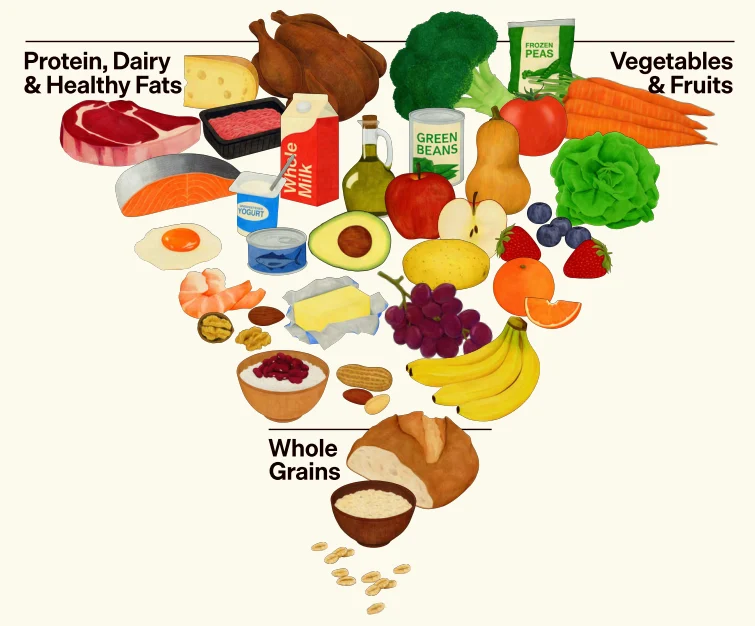
For decades, the dietary consensus across North America has been guided by a singular, rigid mantra: saturated fat is the enemy of heart health. Consequently, nutritional guidelines in Canada and abroad have long urged consumers to reach for skim milk, low-fat yogurt, and fat-free cheese, effectively villainizing the creamy, full-fat versions of these staples.
However, a groundbreaking study led by researchers at the University of Toronto’s Temerty Faculty of Medicine is challenging this long-standing dogma. The findings, published in The Journal of Nutrition, provide robust evidence that full-fat dairy—when consumed as part of a balanced diet—does not pose the metabolic or cardiovascular risks that public health officials have warned against for nearly half a century.
The Study: Challenging Conventional Wisdom
The 12-week clinical trial, led by Professor Harvey Anderson, a distinguished expert in nutritional sciences, involved 74 adults struggling with overweight or obesity. The objective was to observe how different quantities of full-fat dairy intake would affect key physiological markers, including body weight, body composition, lipid profiles, and energy metabolism.
The participants were randomly divided into three distinct dietary cohorts:
- The Control Group: Followed a low-dairy, calorie-restricted diet.
- The Energy-Neutral Group: Followed a diet that maintained weight but included three servings of full-fat dairy daily.
- The Unrestricted Group: Followed an unrestricted diet that also incorporated three servings of full-fat dairy daily.
To ensure consistency, all participants were provided with guidance based on Canada’s Food Guide, and those in the dairy groups were supplied with high-quality, full-fat dairy products for the duration of the study.
The results were striking. After 12 weeks, there were no statistically significant differences in weight gain, body composition, or cholesterol levels between those who avoided dairy and those who consumed it in full-fat form. More importantly, those who consumed the three daily servings of full-fat dairy actually exhibited improvements in blood pressure, alongside higher intakes of essential nutrients like calcium, protein, and vitamin D.
A History of Dietary Caution
To understand why these findings are so provocative, one must look at the history of nutritional science. In the mid-20th century, the correlation between saturated fat intake and elevated blood cholesterol became the cornerstone of cardiovascular health policy. Because dairy products are rich in saturated fats, they were systematically categorized as "heart-unhealthy" foods.
For generations, nutritionists and government agencies advised the public to replace butter with margarine and whole milk with 1% or skim varieties. This "low-fat" revolution was based on the assumption that individual nutrients—like saturated fat—act in isolation within the human body. However, as Professor Anderson notes, human clinical research has frequently failed to align with these theoretical risks.
In recent years, a growing body of peer-reviewed literature has begun to chip away at this narrative. Numerous studies have failed to find a causal link between the consumption of full-fat dairy and adverse health outcomes. Furthermore, research led by colleagues such as Professor Kozeta Milliku has suggested that, in certain populations, dairy consumption might even exert a protective effect against conditions such as childhood obesity.
The "Dairy Matrix" Hypothesis: Why Whole Foods Matter
If saturated fat is supposedly harmful, why doesn’t full-fat dairy cause the expected spikes in cholesterol or weight gain? The answer, according to Anderson and his team, lies in the "dairy matrix hypothesis."
This theory posits that the health impact of a food is not determined by a single nutrient, but by the physical structure and chemical interaction of all the components within that food.
"With dairy products, it’s got two proteins—casein and whey—that are bound together with fat and with nutrients mixed in," Anderson explains. This complex, integrated structure acts as a biological "package." When we consume whole dairy, the nutrients are not released into the bloodstream all at once. Instead, the matrix allows for a gradual, measured delivery of energy and nutrients.
This is fundamentally different from the way the body processes isolated saturated fats or synthetic fats. By focusing solely on "saturated fat content" on a nutrition label, traditional dietary guidelines have ignored the nuance of food chemistry. The matrix hypothesis suggests that the synergy between calcium, protein, and fat in dairy may actually mitigate the negative effects typically attributed to saturated fat alone.
Implications for Public Health and Aging
The implications of this research extend far beyond the laboratory. As the global population ages, the challenge of maintaining muscle mass, bone density, and metabolic health while dealing with a reduced caloric requirement becomes critical.
Older adults often face a "nutritional paradox": they need high-quality protein and vitamins to prevent frailty and osteoporosis, yet they cannot consume as many calories as younger, more active individuals. For this demographic, dairy is an ideal candidate for a nutrient-dense food source. It provides significant protein and energy in a format that is easily consumed and widely enjoyed.
If the fear of full-fat dairy is removed, older adults may be more likely to incorporate these nutrient-dense foods into their daily routines, potentially improving their overall nutritional status without the perceived guilt or risk of metabolic disease.
Shifting the Paradigm: From Nutrients to Foods
The U of T study serves as a call to action for policy makers to reconsider how dietary guidelines are formulated. For decades, the focus has been on "reductionist nutrition"—breaking food down into its smallest parts (saturated fat, sodium, sugar) and advising the public to eliminate them.
Anderson argues for a more holistic approach. "More broadly, the results support an approach to nutrition research and dietary guidance that considers whole foods rather than judging foods primarily by individual nutrients," he says.
When we view food as a "matrix" rather than a list of chemical ingredients, the dietary picture becomes much clearer. A food is more than the sum of its parts. By moving away from restrictive, single-nutrient-focused dieting, public health messaging can become more sustainable, less confusing, and ultimately more effective.
Expert Perspective: Keep It Simple
Despite the complexity of the research, Professor Anderson’s personal advice to the public remains refreshingly uncomplicated. In an era where nutrition trends swing wildly—from low-carb to keto to intermittent fasting—the noise can be deafening.
"Keep it simple, eat a variety of foods, and not too much of anything," Anderson says.
This message resonates with a growing movement in the nutrition community that emphasizes "whole-food diets" over "dieting." The study’s findings do not suggest that people should consume unlimited amounts of butter or cream; rather, they suggest that dairy—including the full-fat versions—can safely be part of a balanced diet.
Conclusion: A Path Toward Better Policy
The research supported by the Dairy Research Cluster 3 under the Canadian Agricultural Partnership AgriScience Program and the Mitacs Accelerate program provides a vital piece of the puzzle in our ongoing quest to understand the link between diet and chronic disease.
As we move forward, the "dairy matrix" concept is likely to gain traction, potentially leading to a revision of dietary guidelines that have long demonized whole foods. By acknowledging that the physical structure of food matters, researchers are opening the door to a more nuanced, evidence-based understanding of human nutrition.
Ultimately, the goal is to empower individuals to make food choices that are not only scientifically sound but also enjoyable and sustainable. If the University of Toronto study is any indication, the future of nutrition is not in the elimination of fats, but in the appreciation of the complex, nutritious, and wholesome foods that have nourished human beings for centuries.