For thousands of years, the Indian subcontinent has nurtured a profound understanding of the human body as a manifestation of cosmic energy. At the heart of this ancient medical system—Ayurveda—lies the sophisticated practice of Ayurvedic massage. Far more than a contemporary spa indulgence, Ayurvedic massage is a clinical, therapeutic discipline rooted in the Vedic tradition. It serves as both a palliative (Shamana) and a purificatory (Shodhana) therapy, designed to harmonize the body and mind into a state of optimal health.
The Foundations: Ancient Wisdom and Philosophical Roots
The methodologies governing Ayurvedic massage are not recent inventions; they are preserved within the brhat trayi, the "Great Three" texts of Ayurveda: the Caraka Samhita, the Sushruta Samhita, and the Astanga Hrdaya of Vagbhata. These texts, alongside foundational works like Bhavaprakasha and Yogaratnakara, detail how intentional touch can be used to treat everything from athletic fatigue to postpartum recovery.
In ancient times, these techniques were essential for maintaining the vitality of warriors, supporting reproductive health (virilization), and providing systemic preventative care. The practice operates on the fundamental principle that the universe—and by extension, the human body—is composed of five elements: space, air, fire, water, and earth. These elements coalesce into three biological forces known as the Doshas:
- Vata (Space and Air): Governs movement and communication.
- Pitta (Fire and Water): Governs metabolism and transformation.
- Kapha (Water and Earth): Governs structure and stability.
The primary objective of any Ayurvedic massage is to identify which of these Doshas has become vitiated (imbalanced) and to restore equilibrium by applying treatments with the "opposite qualities."
Individualized Care: The Science of Customization
Unlike standardized Western massage, which often follows a singular protocol, Ayurvedic massage is strictly individualized. An Ayurvedic practitioner evaluates a client’s unique constitution (Prakruti) alongside their current state of imbalance (Vikruti). Furthermore, the practitioner must assess the client’s digestive fire (Agni) and the presence of metabolic toxins (Ama).
The selection of oil is a critical clinical decision. Because Ayurveda follows the philosophy that "like increases like," the choice of carrier oil and infused herbs is deliberate:
- Vata Imbalance: Requires heavy, warming, and grounding oils, such as sesame oil, applied in generous quantities to calm the nervous system.
- Pitta Imbalance: Calls for cooling, moderate amounts of oil, such as coconut or sunflower, to soothe inflammation and heat.
- Kapha Imbalance: Benefits from light, heating, and stimulating oils, such as mustard, used sparingly to prevent congestion.
When significant Ama (toxins) is present, oil is often contraindicated, as its heavy, unctuous nature can aggravate the congestion. In these instances, practitioners turn to Udvartana—a dry massage using herbal powders—to mobilize and eliminate systemic waste.
Special Considerations: The Mind and the Skin
According to Samkhya philosophy, the sense of touch (Sparshendriya) is directly linked to the air element. Because Vata is composed of space and air, it is uniquely susceptible to the influence of touch. Consequently, Ayurvedic massage is considered one of the most effective interventions for neurological and psychological concerns, providing a profound grounding effect for a restless mind.
Furthermore, the skin (Tvak) is treated as a major organ of digestion. It is governed by Bhrajaka Pitta, which dictates skin complexion and luster. By applying medicinal oils, the practitioner feeds the skin’s Agni, allowing therapeutic substances to penetrate deep into the tissues—muscles, bones, nerves, and internal organs. This process nourishes the body from the outside in, mirroring the way food nourishes the internal digestive tract.
Chronology and Classification of Techniques
The practice of Ayurvedic massage has evolved through several distinct categories, each with a specific therapeutic purpose:
Abhyanga: The Practice of Oleation
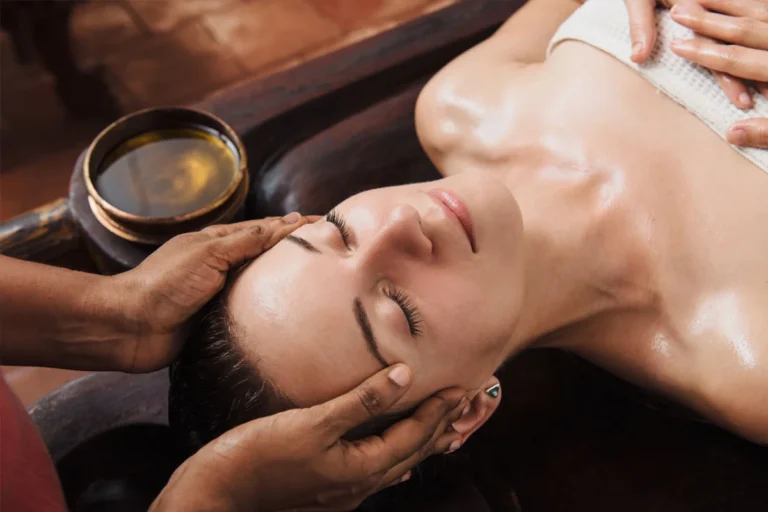
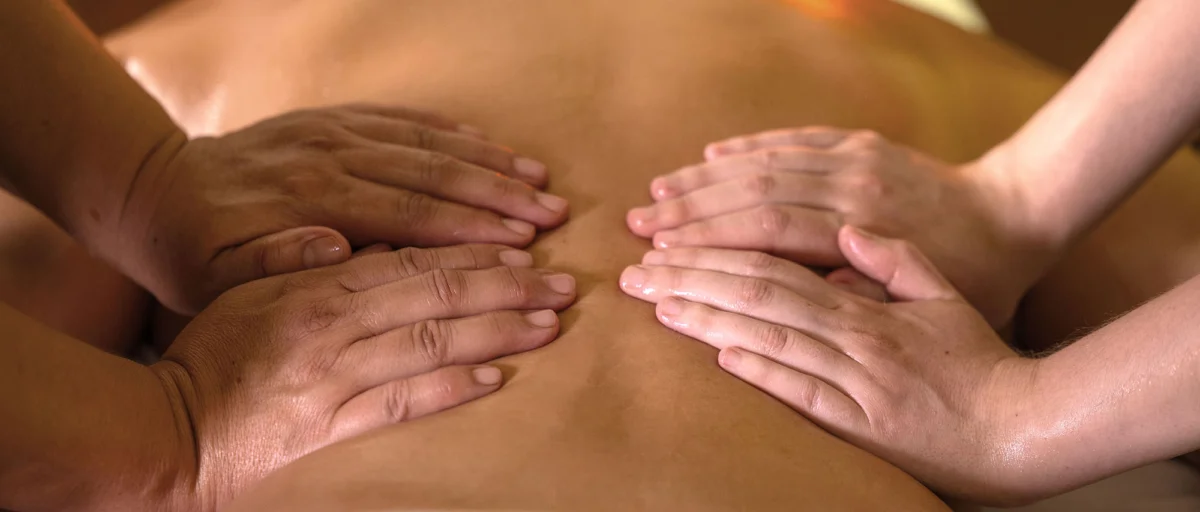
Abhyanga is the most recognized form of Ayurvedic bodywork. It involves the application of warm, herbalized oils. In clinical settings, it can be performed by one practitioner or two, the latter known as a four-handed massage. Snehan, the Sanskrit term for oil, also translates to "love." Thus, the practice is viewed as the physical act of infusing the body with a vibration of radiance and affection. Historically, Abhyanga serves as the vital preparatory step for Panchakarma—the intensive five-fold detoxification process—by loosening toxins from the tissues so they can be flushed from the system.
Udvartana, Udsadana, and Udgarshana
These techniques involve the use of powders and pastes rather than oils. Udvartana utilizes dry, hot herbal powders to stimulate lymphatic flow and address Kapha-related conditions. Udsadana focuses on cosmetic beautification, while Udgarshana uses herbal pastes mixed with water or oil to treat specific dermatological issues.
Regional and Directional Nuances
Massage is further categorized by the area of focus, such as Deha samvahana (whole-body massage) or Kesha mardana (head massage). The direction of strokes is also medically significant:
- Anuloma: Strokes directed away from the heart to calm the mind and ground Vata.
- Pratiloma: Strokes directed toward the heart to stimulate lymph flow and improve circulation in cases of varicosity.
Supporting Data: The Mechanics of the Body
The efficacy of these treatments relies on a variety of specific manual techniques:
- Garshana/Mardana: Friction-based strokes.
- Peedana: Kneading to release muscular tension.
- Udvesthana: Twisting or wringing motions.
- Praharana: Percussion to invigorate tissues.
- Trashana: Rhythmic stroking for nervous system regulation.
- Sandhi Calana: Specialized joint movements to improve range of motion.
The Integration of Marma Therapy
Perhaps the most sophisticated dimension of Ayurvedic massage is Marma Therapy. Marma points are specific energy centers where veins, tendons, muscles, bones, and joints meet. These points serve as gateways to the energetic channels of the body. By stimulating these points, practitioners can manipulate the flow of Prana (life force energy) to heal organs, glands, and emotional states.
While often compared to acupuncture, Marma therapy is distinct in its methodology and the size of the points. Practitioners utilize gentle but precise pressure to "awaken the body’s inner pharmacy," a practice that has been passed down through generations of healers to address deep-seated trauma and chronic physical ailments.
Implications for Modern Wellness
In the modern era, the integration of Ayurvedic massage into health protocols offers a powerful alternative to symptom-based medicine. By focusing on the root cause—the Dosha imbalance—rather than the manifestation, Ayurveda provides a roadmap for sustainable longevity.
As practitioners like Beatrice Voss emphasize, the lineage of these therapies is not merely about physical relaxation; it is a heart-centered approach to wellness. The movement toward Marma education and the revival of ancient oil formulations signify a growing recognition that the body is an interconnected system requiring more than just surface-level maintenance.
For those seeking to incorporate these practices, the journey begins with an understanding of one’s own constitution. Whether through the daily ritual of self-Abhyanga or seeking professional Panchakarma support, the application of Ayurvedic principles remains a timeless bridge between the physical structure of the human form and the subtle, energetic spirit that animates it. As research into the connection between the skin, the nervous system, and the gut continues to grow, the ancient wisdom of the Vedas appears increasingly validated, proving that the most effective medicine is often the most ancient.