For millions of patients and their families, a cancer diagnosis is a life-altering event that triggers a whirlwind of medical terminology, treatment plans, and difficult decisions. Among the most frequent, yet often misunderstood, terms encountered during this journey is the "clinical trial." While many perceive these studies as a last-ditch effort, the reality is far more nuanced. Clinical trials are the engine of medical progress, the gateway to tomorrow’s standard of care, and, for many, a lifeline that offers access to innovative, life-saving therapies today.
The Foundation of Modern Medicine: What Are Clinical Trials?
At their core, cancer clinical trials are rigorous, highly regulated research studies designed to evaluate new ways to prevent, detect, or treat cancer. Every oncology treatment that is currently considered the "standard of care"—from foundational chemotherapy to cutting-edge immunotherapy—began its journey within a clinical trial.
These studies are not monolithic. They serve diverse purposes, ranging from the testing of novel targeted therapies and immunotherapies to studies aimed at improving quality of life, managing debilitating symptoms, or refining diagnostic techniques. By participating in these trials, patients are not merely subjects; they are the essential partners in the scientific endeavor to turn cancer into a manageable, or even curable, condition.
Chronology: The Lifecycle of a Clinical Trial
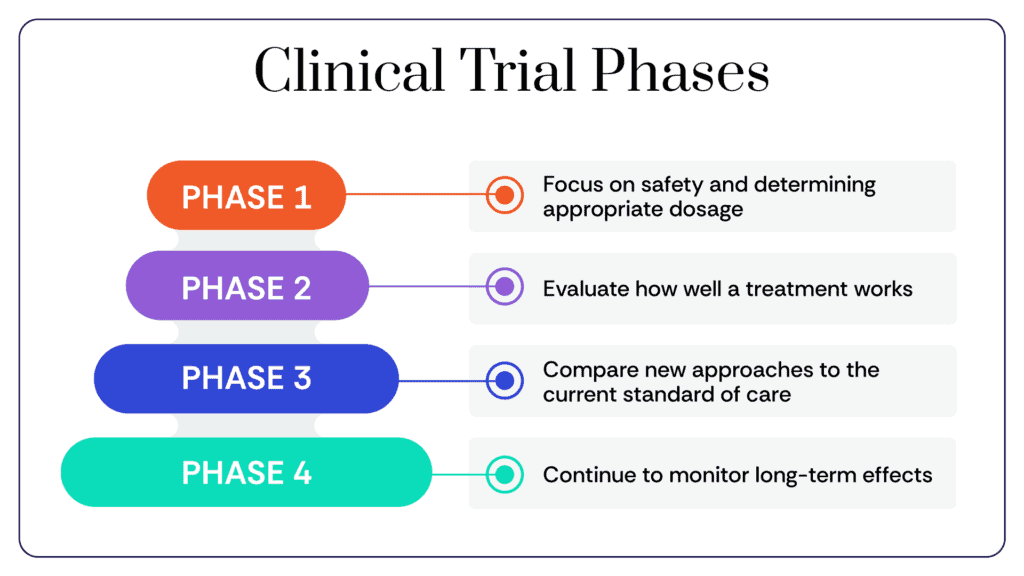
To ensure patient safety and scientific integrity, clinical trials follow a highly structured, phased approach. Understanding this chronology is essential for patients considering their options.

Phase I: Safety and Dosage
These initial trials are typically conducted on a small group of people. The primary objective is to determine the highest dose that can be safely administered without causing unacceptable side effects. Researchers look closely at how the body processes the drug and identify the most promising range for further study.
Phase II: Efficacy and Side Effects
Once a treatment is deemed safe, Phase II trials involve a larger cohort of participants. Here, researchers evaluate how well the drug works against a specific type of cancer. The team continues to monitor for safety and begins to compare the experimental treatment against existing standard treatments.
Phase III: Comparison and Standard of Care
Phase III trials are the "gold standard." These involve large, diverse groups of patients, often randomized into two groups: one receiving the new treatment and the other receiving the standard treatment. The goal is to prove whether the new therapy is as effective as, or superior to, the current standard of care. Successful Phase III results often lead to FDA approval.
Phase IV: Long-term Monitoring
After a drug is approved and available to the public, Phase IV trials monitor its long-term impact. This phase tracks any late-occurring side effects or benefits that may not have been apparent during the shorter duration of previous trials.

Supporting Data: Why Participation Matters
The impact of clinical trials is best understood through the stories of those whose lives were transformed by them. Consider the words of Dr. Joshua Brody of the Icahn School of Medicine at Mount Sinai: "Every miraculous breakthrough has come from clinical trials."
The data supports this sentiment. Patients who enroll in trials often benefit from a "wraparound" care model. Because these studies are highly scrutinized, participants are typically monitored by multidisciplinary teams of specialized oncologists, nurses, and researchers who provide a level of oversight that is often more frequent and comprehensive than in standard clinical practice.
Furthermore, the altruistic aspect cannot be ignored. Kristin Kleinhofer, a Stage 4 Leukemia survivor, reflects: "I began to look at clinical trials, and it wasn’t only that I was fighting for my life, but I really wanted to pay it forward, help cancer research, and help other cancer patients, even if it wasn’t going to work for me."
Overcoming Misconceptions
Despite their critical importance, clinical trials are often shrouded in myths. The most persistent is the "last resort" fallacy—the idea that you only seek a trial when all other options have been exhausted.

In reality, clinical trials are available at almost every stage of the cancer journey. Some trials are designed for newly diagnosed patients to see if an experimental approach can improve initial outcomes. Others are designed for those with recurrent disease. Waiting until the final stages of a disease can sometimes disqualify a patient from a trial due to their physical condition or prior treatment history. Therefore, early and frequent conversations with an oncology team are vital.
The Practicalities: Making Informed Decisions
Deciding to join a trial is a significant commitment. It is not a decision to be made in haste. Patients must weigh several practical factors:
- Eligibility: Each trial has strict inclusion and exclusion criteria—such as genetic biomarkers, stage of disease, or prior health history—which are designed to protect the patient and ensure the data remains accurate.
- Time and Logistics: Participation often involves more frequent hospital visits, extra blood work, and additional imaging tests. Patients must consider the impact of travel and the need for a robust support system.
- Financial Considerations: While trial sponsors typically cover the cost of the experimental drug and study-specific procedures, standard care costs may still be billed to the patient’s insurance. A thorough discussion with a financial counselor or social worker is recommended before enrollment.
Empowering the Patient: Questions to Ask Your Doctor
Empowerment begins with the right questions. When discussing options with your medical team, consider using the following checklist to guide your conversation:
- Are there any clinical trials that might be right for me? Inquire specifically about trials that align with your diagnosis, genetic markers, and treatment history.
- What is the primary goal of this trial? Understand whether it is testing a new drug, a combination of therapies, or a quality-of-life intervention.
- How does this compare to my current options? Ask your doctor for an objective comparison of the potential benefits and drawbacks.
- What are the potential risks? Ensure you are fully informed about both known and potential side effects.
- What phase is the trial in? Understanding the phase provides context on how much is already known about the treatment.
- What is the time commitment? Clarify the frequency of visits, the duration of the trial, and the travel requirements.
- What happens if it doesn’t work? Ask if there are "crossover" options or if you can leave the trial at any time.
- What are the financial implications? Clarify what the sponsor covers versus what your insurance is expected to pay.
- How will this impact my daily quality of life? Discuss the trade-offs between the potential for clinical benefit and the burden of treatment.
Implications for the Future of Oncology
The field of oncology is currently experiencing a renaissance, driven largely by breakthroughs in immunotherapy and precision medicine. These advancements are not happening in isolation; they are the direct result of thousands of patients who have stepped forward to participate in clinical trials.
As Sharon Belvin, a Stage 4 Melanoma survivor, poignantly notes: "Clinical trials are the lifeline for long-term survival rates with cancer. There is no other way to move this field forward… If it wasn’t for clinical trials, I wouldn’t be here."
For the patient, the clinical trial represents a "path toward possibility." It is an opportunity to access the next generation of care today, often in a setting where the patient is the central focus of a dedicated, world-class research team. Whether or not a trial is the right choice for a specific individual, the process of investigating one can provide clarity, hope, and a sense of agency during an incredibly challenging time.
Navigating the Path Together
Patients do not have to navigate this landscape alone. Organizations like the Cancer Research Institute (CRI) provide resources, such as the Clinical Trial Finder, which act as a bridge between complex medical data and patient needs.
If you or a loved one is navigating a cancer diagnosis, start the conversation today. Ask your oncologist about clinical trials early. By arming yourself with information, seeking support from advocates, and understanding the vital role that research plays in the future of medicine, you can make the most informed decision for your health journey. Every question asked is a step toward greater understanding, and every step toward understanding is a step toward hope.