










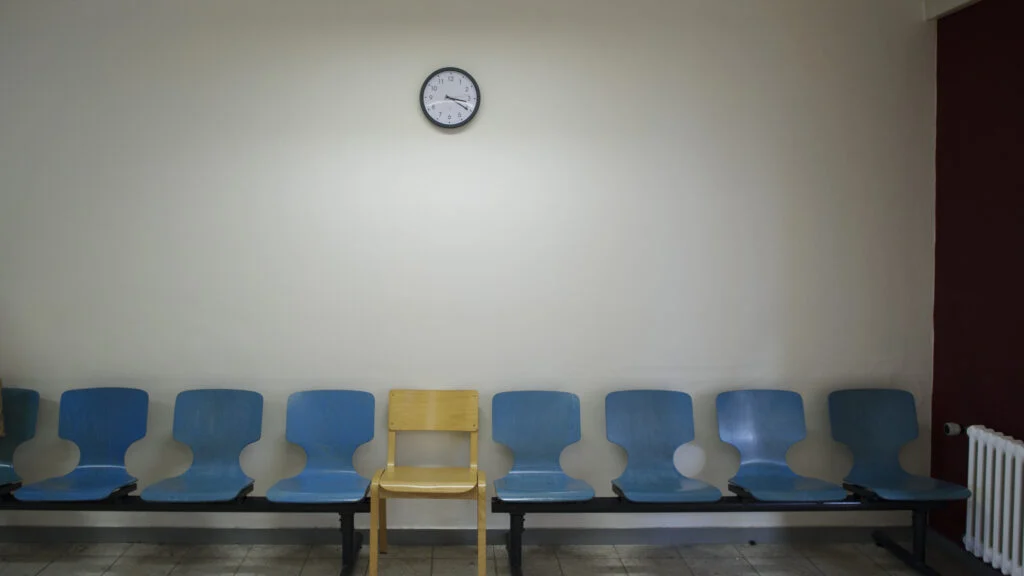
The etymology of the word "patient" is rooted in the Latin patiens—an adjective signifying endurance and suffering. For generations, the medical establishment has implicitly treated these two concepts as synonymous. In the clinical theater, endurance has long been measured in minutes and hours spent in sterile, fluorescent-lit rooms, waiting to be seen, diagnosed, and treated. For Dr. Iyesatta Massaquoi Emeli, an emergency medicine physician at Emory University, the past two decades of her career have been defined by a recurring, somber ritual: walking past a lobby filled with people suspended in the purgatory of the "waiting room."
The waiting room is more than a physical space; it is a manifestation of the culture of medicine. It suggests that delay is an inevitable tax paid by the sick. However, the seismic shift triggered by the COVID-19 pandemic has begun to challenge this foundational assumption. As technology bridges the gap between home and hospital, the medical community is forced to confront a radical question: Is the "waiting room" a relic of an inefficient past, or can it be dismantled entirely?
The Anatomy of the Delay: A Historical Context
To understand why the medical system is currently in a state of flux, one must examine how the "waiting room" became the default architecture of care. Historically, healthcare was a monolithic, in-person encounter. The triage system, while essential for prioritizing the most critical cases, inherently created a tiered queue. The sickest were seen first, while others bore the dual burden of their illness and the structural inefficiencies of the facility they turned to for help.
The Pandemic Catalyst
The trajectory of patient care changed abruptly in early 2020. Faced with the overwhelming crisis of a global pandemic, the regulatory barriers that had long stifled the adoption of telemedicine collapsed. What was previously deemed "experimental" or "logistically impossible" became a necessity overnight.
- 2020: Virtual care usage surged, with telemedicine encounters increasing more than sevenfold. By the end of the year, approximately 1 in 5 medical visits in the United States were conducted virtually.
- 2021: As the immediate intensity of the pandemic ebbed, health systems faced a choice: revert to old models or institutionalize the digital gains.
- 2022: Data confirmed that the virtual shift had staying power. A report published in the National Library of Medicine indicated that 30.1% of U.S. adults had utilized telemedicine services within the preceding 12 months, signaling a permanent change in consumer behavior and clinical operations.
The New Frontier: Virtual Triage and HOV Lanes for Health
Modern healthcare institutions, including Emory, have begun utilizing "nurse call lines" to function as digital gatekeepers. These systems act as a fast-track, directing lower-acuity patients toward same-day virtual visits. Dr. Emeli likens this to an "HOV lane" on a congested highway. By offloading minor concerns to virtual platforms, emergency departments can better allocate physical resources to the patients who truly require them.
Even when the virtual visit is not the final solution—when a patient ultimately requires imaging or physical examination—the digital bridge still provides a "pre-arrival" advantage. In a traditional workflow, a patient encounters a gauntlet of administrative hurdles: a registrar for intake, an administrator for insurance, a triage nurse for vitals, and a technician for labs. Only after this sequence is complete does the patient meet a physician. Virtual care flips this script by moving the administrative and diagnostic preparation to the front of the journey.
Hospitality as a Medical Innovation
Perhaps the most surprising influence on current healthcare reform is not a medical textbook, but a treatise on fine dining: Will Guidara’s Unreasonable Hospitality. In his work, Guidara describes the pursuit of excellence through the elimination of invisible barriers. He poses a provocative question: What would happen if the host podium disappeared? What if, instead of being "processed" by an gatekeeper, a guest were met at the door by someone who already knew their name, their needs, and their history?
Applying this philosophy to medicine, the "waiting room" begins to look like the "host podium"—an archaic ritual that prioritizes the convenience of the system over the experience of the individual.
Rethinking the Patient Journey
In the model envisioned by medical innovators, the patient experience begins not in a crowded lobby, but in the comfort of home.
- Preparation: The patient describes their symptoms digitally.
- Scheduling: A clinician reviews the data, and a connection is made at a precise, scheduled time.
- Resolution or Escalation: If the need is met, the patient avoids the hospital entirely. If the need requires a physical presence, the patient arrives at the clinic not as a "new problem," but as an "expected guest."
Supporting Data and Systemic Implications
Critics of this digital transformation argue that the inherent volatility of emergency medicine—unpredictable surges, staffing shortages, and the constant threat of mass-casualty events—makes the "waiting room" a practical necessity. These critics are not wrong; the physical reality of resource scarcity cannot be coded away.
However, the data suggests that even if we cannot eliminate the queue entirely, we can fundamentally change the nature of the wait.
- Efficiency: Virtual triage reduces the burden on physical waiting areas by 15–20% in high-volume settings, according to pilot studies in various urban health systems.
- Accuracy: Remote monitoring and asynchronous messaging provide clinicians with longitudinal data, meaning that when a patient finally enters the exam room, the doctor already has a historical baseline.
- Patient Satisfaction: Studies consistently show that patients who feel "expected" and "prepared for" report significantly higher satisfaction scores, even when they still face some wait time at the facility.
The Human Element: When the Physician Becomes the Patient
The urgency of this transition is underscored by the personal experiences of providers. Dr. Emeli recounts an episode from her own life where, despite being a medical professional, she found herself trapped in the very system she critiques. After being advised to seek emergency care for an acute issue, she arrived at the hospital only to find that the context of her prior medical advice had vanished. She was, once again, just another anonymous face in the queue.
This "loss of context" is the defining failure of the traditional model. When technology is leveraged correctly, it ensures that "concern, context, and pre-planning" travel ahead of the patient. The goal is not just a faster visit; it is a more cohesive one.
Conclusion: Toward a Future of Being Received
The future of medicine is not merely the digitization of the waiting room, but the eradication of the waiting room as a concept. As we integrate AI, remote monitoring, and asynchronous communication, the posture of the healthcare system is shifting from "Take a seat and wait" to "We knew you were coming; we are ready."
Illness is a condition that already demands immense endurance from the patient. It is time for the systems designed to treat that illness to stop demanding that same endurance as a byproduct of their own structure. By redesigning the patient entry point, we do not just improve efficiency; we restore a sense of dignity to the act of seeking care. We move away from the fragmented, cold process of being "processed" and toward the humanizing experience of being "received."
The infrastructure of the past served a different era; the tools of the future are ready to serve the patients of today. The question remains: is the medical establishment ready to step out from behind the podium?