





Published May 19, 2026
For many, the word "yes" has become a reflex—a social survival mechanism triggered by the fear of being perceived as difficult, selfish, or unaccommodating. People pleasing is often dismissed as a mere personality quirk, but for those caught in its cycle, it is an exhausting, constant negotiation of personal integrity. It is an "open-door policy" applied to one’s life, where the boundaries of the self are perpetually blurred to appease the demands of others.
However, recent shifts in psychological and somatic research suggest that people pleasing is not just a cognitive habit; it is a physical state. The "anxious knot" in the stomach that precedes the act of sacrificing one’s own needs to solve another’s problem is the body’s alarm system. While traditional therapy and self-help literature offer cognitive frameworks for boundary setting, the body often remains trapped in a physiological pattern of compliance. Experts now argue that to truly move past people-pleasing, one must engage in a physical recalibration—a practice of moving through the resistance to say "no."
The Architecture of Boundaries: A Somatic Perspective
The challenge of setting boundaries lies in the disconnect between the mind’s desire for autonomy and the nervous system’s habit of submission. Research into proprioception—the body’s ability to perceive its own position and movement in space—reveals that our psychological sense of "where I end and you begin" is deeply rooted in our physical awareness.

"Part of growing up and developing a sense of self is learning boundaries—specifically, understanding where you end and another person begins," says Sandra L. Caron, Ph.D., LCPC, Professor Emerita of Family Relations and Human Sexuality at the University of Maine. "This awareness helps you hold onto your values and beliefs, or ‘hold your space,’ and makes you significantly less vulnerable to manipulation."
When we lack physical boundaries, we become porous, allowing external pressures to dictate our internal state. By strengthening our proprioception through intentional movement, we essentially signal to the nervous system that we have a defined, protected perimeter. This is where yoga transcends its reputation as a fitness regimen and enters the realm of somatic training.
Chronology of a Shift: From Compliance to Sovereignty
The transition from a people-pleaser to an empowered individual is rarely instantaneous. It typically follows a trajectory of realization, resistance, and integration.
- The Recognition Phase: The individual begins to identify the "ping" of a notification or a request as a physical stressor rather than just a social obligation. This is the moment of conscious awareness.
- The Somatic Disruption: The individual realizes that cognitive "no’s" are ineffective if the body remains in a "freeze" or "fawn" response. They seek out practices that ground them in their physical form.
- The Training Ground: Through consistent yoga practice, the individual uses the mat to experiment with tension, space, and resistance.
- The Integration: The physical lessons of the mat—such as holding a pose or pushing away from the floor—begin to manifest as assertive communication in professional and personal relationships.
The Science of Isometric Assertion
Modern neuroscience supports the use of isometric movement as a tool for behavioral change. Isometric contraction—the act of exerting force against an immovable object or resisting gravity without changing muscle length—engages the motor-patterning centers of the brain.
Recent studies suggest that these movements serve as a rehearsal for assertiveness. When you physically push your hands against the air or engage your core to hold a challenging pose, you are building neural pathways that correlate with the act of saying "no." By physically pushing away from the floor or establishing a firm stance, you provide your brain with tangible data that you are capable of holding your ground. This physical clarity is the prerequisite for the psychological resolve needed to stop apologizing for your own existence.
The Yogic Principle of Asteya: Protecting Your Energy
From a traditional yogic perspective, the act of failing to set boundaries is an exploration of asteya, or non-stealing. While asteya is commonly interpreted as not stealing physical objects, it also applies to time, energy, and integrity.
When you say "yes" to something you do not want to do, you are effectively allowing others to steal your vitality. Conversely, you are stealing from yourself—specifically, the time and focus you owe to your own growth. By viewing boundary-setting as a practice of asteya, the act of saying "no" ceases to be an act of selfishness and becomes an act of stewardship over your own life force.
Implications: The Mat as a Training Ground
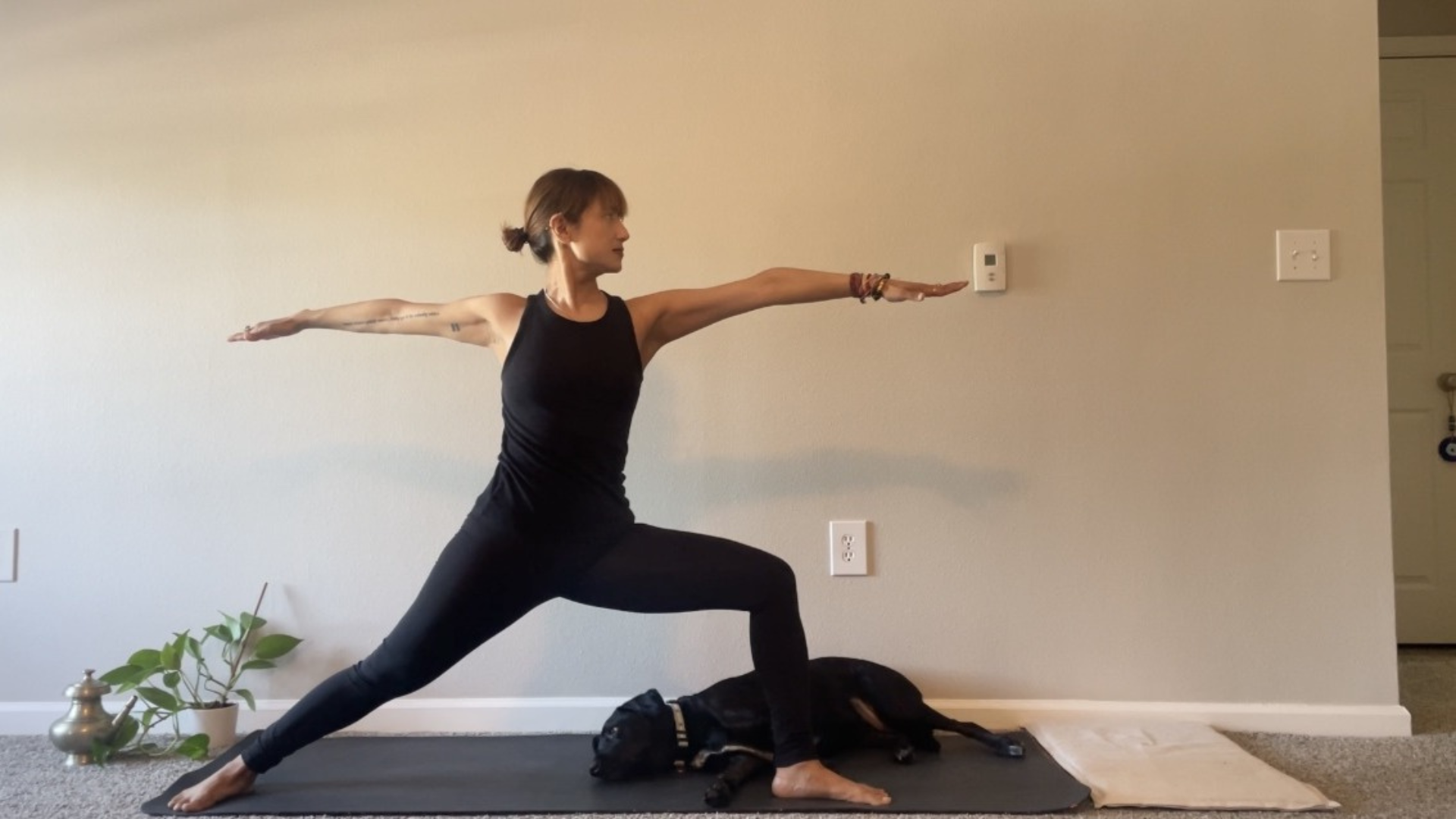
If the yoga mat is a training ground, the poses we select are the drills. Each pose listed below is designed to cultivate the physical sensation of "holding space."
1. Warrior 2 (Virabhadrasana II): The Perimeter
Warrior 2 is the somatic declaration of presence. By reaching your arms in opposing directions, you are physically marking the edges of your personal zone.
- The Practice: Maintain a steady gaze over the front hand. As you hold the pose, visualize the space extending past your fingertips as an impenetrable boundary. Nothing enters this space without your explicit permission.
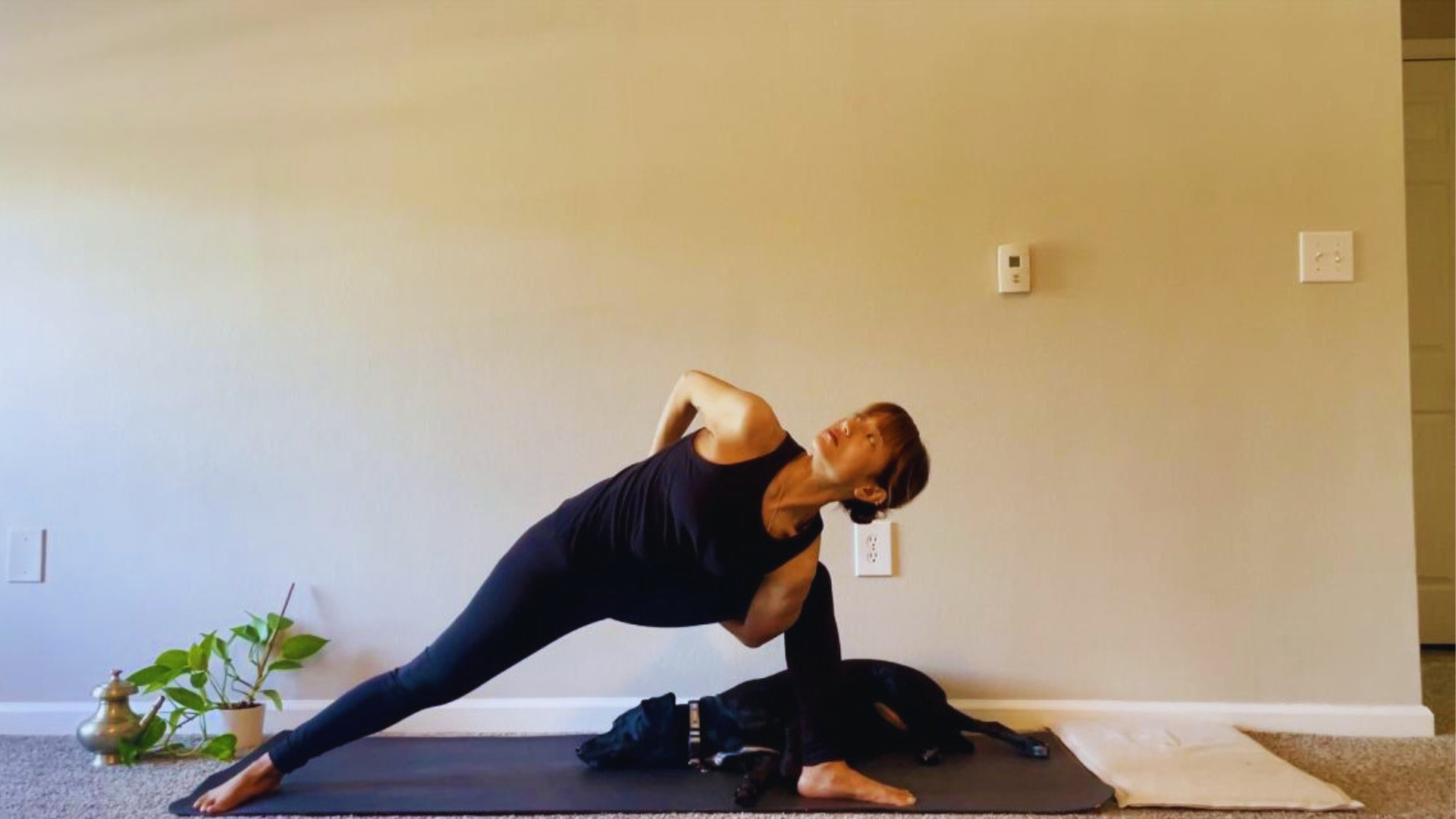
2. Extended Side Angle with a Bind (Baddha Utthita Parsvakonasana): Self-Containment
The bind is a powerful lesson in containment. By looping your arms, you are choosing to conserve your energy within your own physical frame.
- The Practice: As you clasp your hands behind your back, focus on the sensation of being self-sufficient. If the bind feels restrictive, use a strap to maintain the connection. This teaches you that you can remain connected to your own power without being "open" to external depletion.
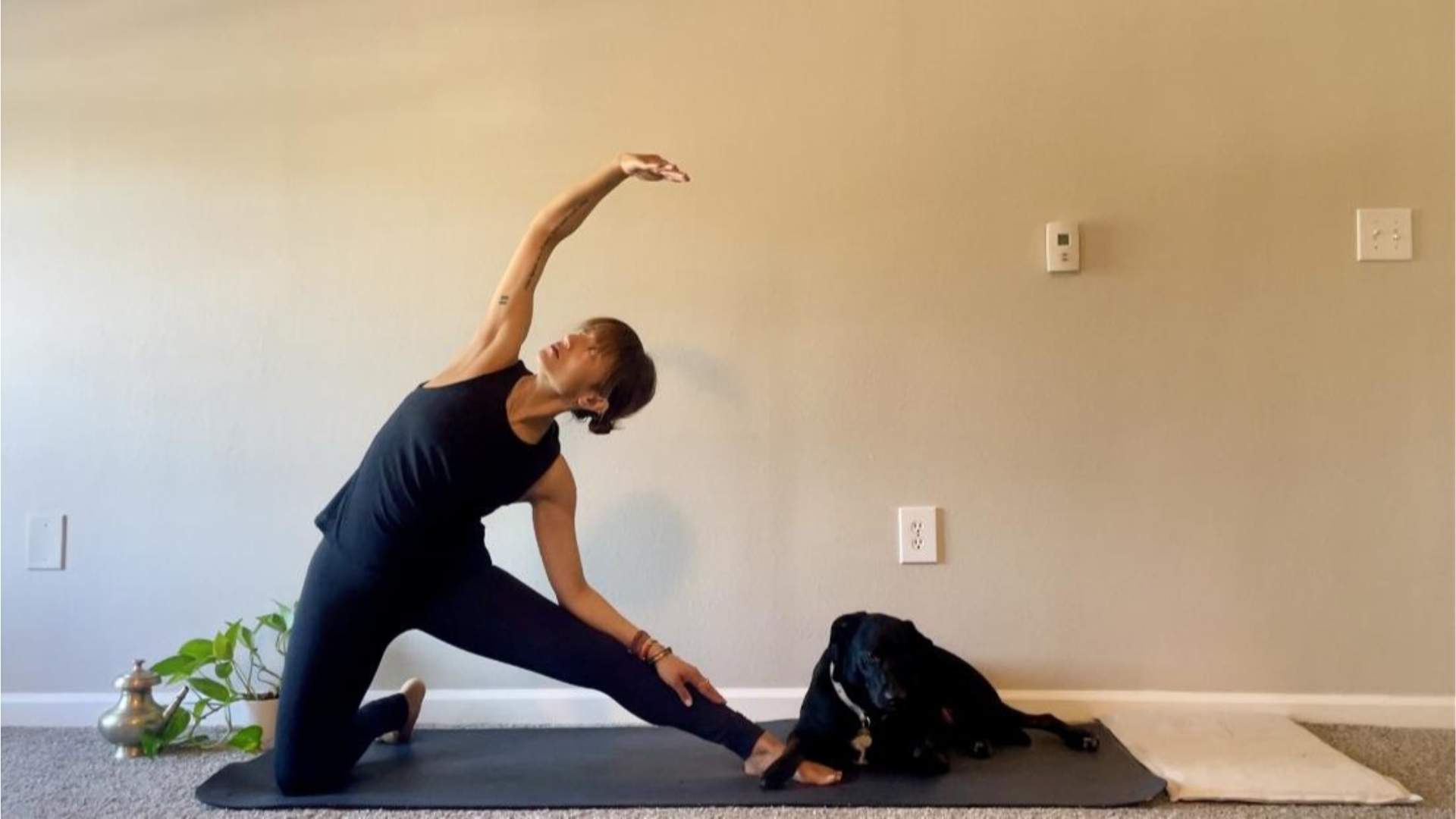
3. Gate Pose (Parighasana): The Flexible Boundary
Boundaries need not be rigid to be effective. Gate Pose teaches the utility of flexibility.
- The Practice: As you lean, focus on the side ribs. Breathe into the space, expanding and contracting. This reminds the nervous system that a boundary can be adaptive—it can flex to meet the situation, but it remains yours to control.
4. Side Plank (Vasisthasana): Resilience Against Gravity
Side Plank targets the side body, an area often weak in those who habitually "collapse" under pressure.
- The Practice: Lift your hips, fighting gravity with every muscle in your side. Imagine this effort as a protective shield. When you feel your core fire up, remind yourself that this resilience is available to you whenever you are challenged by external demands.
5. Goddess Pose (Utkata Konasana): The Physical "No"
This is the ultimate rehearsal for assertiveness. The pushing movement of the palms is a direct somatic translation of the word "no."
- The Practice: With each exhale, push your hands away with force. Feel the movement originate from your center. Do not apologize for the space you occupy or the force you exert. By practicing this motion, you desensitize yourself to the fear of confrontation.
Conclusion: Moving Forward
The path to overcoming people-pleasing is not found solely in a therapist’s office or a self-help manual. It is a lived, physical experience. By treating your body as the primary vessel for your boundaries, you move from a state of passive compliance to one of active agency.
Your yoga mat is more than a piece of rubber; it is a laboratory for your character. Each time you step onto it, you have the opportunity to rehearse who you want to be in the world. By consistently practicing these shapes, you are not just building muscle; you are building the capacity to honor your own needs, preserve your energy, and ultimately, to live a life that is defined by your own terms rather than the requests of others.