





In the landscape of American social justice, New York City has long served as a crucible for change. From the labor movements of the early 20th century to the modern battles for food equity and reproductive rights, the city’s dense, diverse population has consistently demanded more from its political institutions. Yet, while the history of these movements is rich, the strategic mechanics behind their successes—and failures—have often remained opaque.
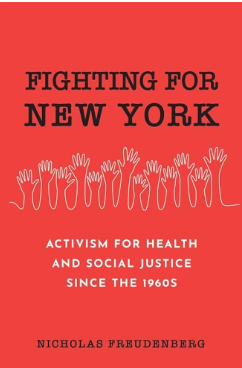
In his forthcoming book, Fighting for New York: Activism for Health and Social Justice (Columbia University Press, 2026), public health expert Nick Freudenberg demystifies the art of the campaign. By analyzing decades of grassroots efforts, Freudenberg provides a comprehensive roadmap for those seeking to bridge the gap between systemic inequality and policy reform. The book, described by advocates as an essential manual for the next generation of organizers, moves beyond mere historical recollection to offer a rigorous framework for modern activism.
The Anatomy of a Campaign: Defining the Unit of Analysis
At the core of Fighting for New York is a fundamental question: what makes a campaign succeed? Freudenberg argues that the "campaign" is the ideal unit of analysis for understanding how power is challenged at the municipal level.
He highlights landmark victories, such as the Lunch for Learning initiative, which secured universal free school meals for New York City public school students, and the efforts of the Committee to End Sterilization Abuse (CESA), which fundamentally altered the regulatory landscape of public hospitals to protect women from systemic medical malpractice.
Freudenberg posits that these victories were not accidental; they were the result of coordinated, sustained activities designed to shift specific policies, programs, and public perceptions. By isolating these efforts, activists and researchers can identify the characteristics that lead to triumph versus those that lead to stagnation.
A Chronology of Advocacy: From Reproductive Justice to Food Security
The evolution of New York’s activist landscape reflects the changing needs of its most vulnerable citizens.
The 1960s and 1970s: Establishing Institutional Accountability
During this period, activism was characterized by a push for bodily autonomy and basic civil rights. The Committee to End Sterilization Abuse (CESA) serves as a primary case study in Freudenberg’s work. By organizing across racial and economic lines, CESA forced the city’s public hospital system to implement stringent guidelines, ending a history of coerced sterilization. This era proved that focused, high-intensity advocacy could curb institutional overreach.
The 2000s and 2010s: The Rise of Food Justice
As the 21st century progressed, the focus shifted toward the social determinants of health, particularly food access. The Lunch for Learning campaign is a definitive example of modern grassroots success.
Chronology of the Lunch for Learning Campaign:
- 2013: Food justice organizations, including the Community Food Advocates (CFA), host a mayoral forum, securing public commitments from candidates regarding universal free lunch.
- 2013–2017: A period of persistent lobbying and community education. Activists build a broad coalition of parents and teachers to keep the issue on the political agenda.
- 2017: Mayor Bill de Blasio expresses hesitation regarding the implementation of the universal program. Activists deploy a "video-reminder" strategy, broadcasting his 2013 endorsement to pressure the administration.
- 2017–2018: The campaign successfully secures universal free school meals, proving that digital transparency can hold political figures accountable to their campaign promises.
Supporting Data: The Cost of Inaction
Freudenberg does not shy away from the harsh economic realities that necessitate activism. A significant portion of his analysis is devoted to how systemic failures—specifically in housing and urban maintenance—directly correlate with public health crises like lead poisoning.
The numbers are staggering. Freudenberg notes that between 2017 and 2022, New York City failed to collect over $1.07 billion in fines from landlords who were in violation of housing laws or had defaulted on property taxes. In his analysis, this uncollected revenue represents a failure of governance that carries a physical price. Had those funds been recovered and redirected into building maintenance, the city could have repaired thousands of apartments, mitigating the risk of lead exposure for countless children.
This data provides a compelling argument for "cross-issue" organizing. By framing housing code enforcement as a public health issue rather than just a bureaucratic one, advocates can expand their base and demand greater accountability from municipal authorities.
Strategic Implications: Lessons for the Modern Movement
As the political climate in the United States continues to polarize, Freudenberg emphasizes that health justice movements must learn from the success of their ideological counterparts on the right.
The Multi-Faced Strategy
Freudenberg suggests that the most successful movements of the future will be those that build coordinated, multi-faced strategies. This involves:
- Rooting campaigns in daily life: Activism must address problems as they are experienced by real people. When a parent fights for lead abatement, they are not just fighting a policy; they are fighting for the safety of their child’s environment.
- Building ideological commonality: Urban justice movements should identify the common beliefs that sustain them across disparate issues—such as the inherent right to safe food, shelter, and medical care—and use these themes to build a unified front.
- Harnessing democratic engagement: As seen in the Lunch for Learning success, petitions, rallies, and digital campaigns serve a dual purpose: they win the specific policy goal and they strengthen the civic muscle of the community.
The Role of Technology and Transparency
The Lunch for Learning example serves as a blueprint for modern accountability. In an age of ubiquitous video and social media, political candidates are increasingly susceptible to the "archival trap"—the ability for activists to store, curate, and re-release past promises to influence present behavior.
Official Responses and Political Realities
The strategies outlined by Freudenberg acknowledge that power rarely concedes anything without a demand. The pushback from municipal governments often involves arguments about budgetary constraints, administrative hurdles, or jurisdictional complexity.
However, Fighting for New York counters these narratives by demonstrating that when the cost of inaction is framed clearly—such as the $1.07 billion in lost housing fines—the "lack of funds" argument loses its moral and practical standing. The book serves as an invitation for activists to step into the role of policy analysts, moving from reactive protest to proactive, evidence-based governance.
Conclusion: A Roadmap for the Future
As the publication date of September 8, 2026, approaches, Fighting for New York arrives at a pivotal moment. The intersection of public health and social justice has never been more relevant, nor the need for effective activism more acute.
Freudenberg’s work is not merely an academic review; it is a call to action. By documenting the victories of the past, he provides a blueprint for the future, proving that change is not only possible but inevitable when communities organize with clarity, persistence, and strategic precision.
For those interested in the mechanisms of municipal change, Fighting for New York is essential reading. It serves as a reminder that while the road to health justice is long and often fraught with obstacles, the tools for success are already in our hands—waiting to be used.
Pre-orders for "Fighting for New York" are available through the UC Press website. Readers can utilize the promo code UCPSAVE30 for a 30% discount on the hardcover edition.