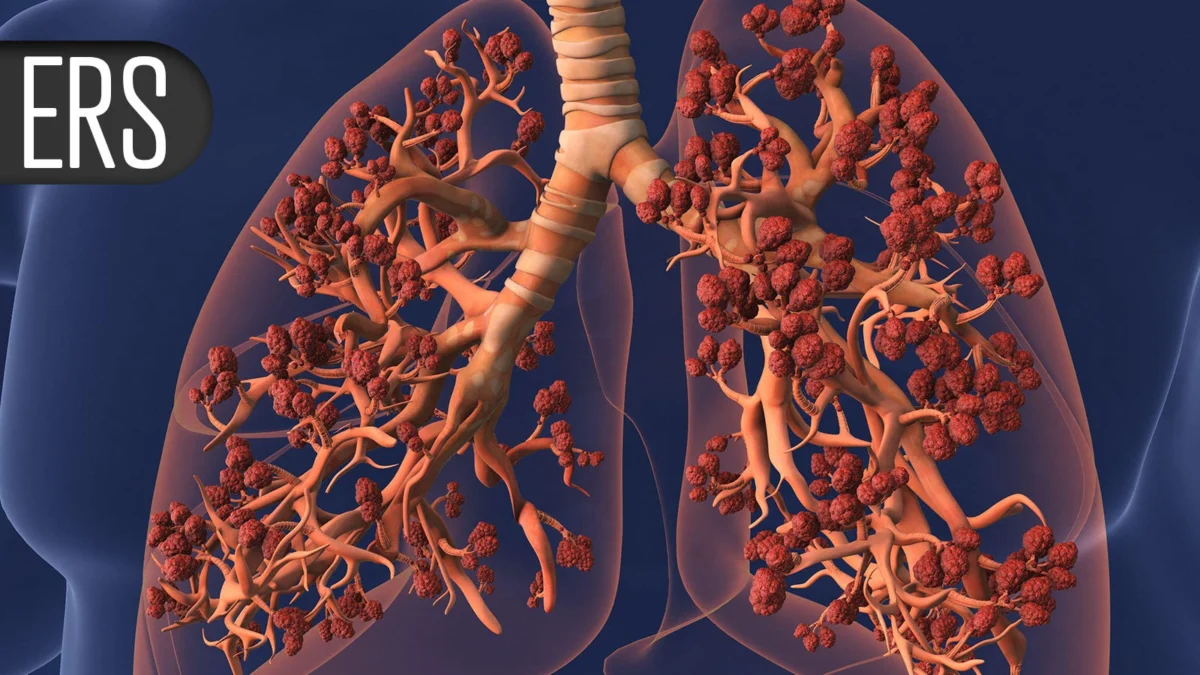
In a significant development for respiratory medicine, a new class of biologic therapy has emerged as a potential game-changer for patients suffering from chronic obstructive pulmonary disease (COPD). Findings from the OBERON and TITANIA trials, presented at the European Respiratory Society (ERS) Congress in Barcelona and simultaneously published in the New England Journal of Medicine, demonstrate that tozorakimab, a first-in-class monoclonal antibody targeting interleukin-33 (IL-33), significantly reduces the frequency of moderate to severe exacerbations in patients who remain symptomatic despite standard maintenance therapy.
This development offers a glimmer of hope for a patient population that has historically faced limited therapeutic options beyond traditional inhaled corticosteroids and bronchodilators. By moving "upstream" in the inflammatory cascade, tozorakimab represents a fundamental shift in how clinicians might manage the complex, multifaceted nature of COPD.
Main Facts: A New Frontier in COPD Management
COPD is characterized by persistent respiratory symptoms and airflow limitation, often triggered by smoking or exposure to noxious particles. For many, the greatest burden is the "exacerbation"—a sudden worsening of symptoms that often requires urgent medical intervention, emergency department visits, or hospitalization.
The OBERON and TITANIA trials were double-blind, randomized phase III studies designed to evaluate the efficacy and safety of tozorakimab as an add-on therapy to standard inhaled maintenance regimens. The results were consistent across both studies: patients receiving a once-monthly subcutaneous injection of tozorakimab (300 mg) experienced a statistically significant reduction in the annualized rate of moderate or severe COPD exacerbations over a 52-week period compared to those receiving a placebo.
Notably, these results held true for both former and current smokers, an inclusive population that broadens the potential clinical application of the drug. Unlike previous biologics approved for respiratory conditions, such as dupilumab or mepolizumab, the OBERON and TITANIA trials did not restrict enrollment based on blood eosinophil counts. This suggests that tozorakimab’s mechanism of action—targeting the IL-33 pathway—may be effective across a wider spectrum of COPD phenotypes than existing T2-inflammation-targeted therapies.
Chronology: The Path to the Phase III Data
The journey toward tozorakimab’s current standing began with extensive preclinical investigations into the role of IL-33. Unlike IL-4, IL-13, or IL-5, which primarily drive specific allergic or eosinophilic pathways, IL-33 acts as an "alarmin." Released by the airway epithelium in response to damage or inhaled irritants, IL-33 acts as a master switch that orchestrates a broad range of inflammatory responses, including bronchial hyperactivity and tissue remodeling.
Preclinical Development and Phase I/II Trials
Early research identified that IL-33 is significantly upregulated in the lungs of patients with COPD. Previous attempts to target this molecule with other biologic agents had yielded mixed or disappointing results, leading to skepticism within the medical community. However, the developers of tozorakimab hypothesized that the failure of earlier molecules was due to their inability to adequately neutralize the specific conformational states of the IL-33 molecule.
The Phase III OBERON and TITANIA Trials
The phase III program, which involved nearly 1,800 participants across two trials, was launched to rigorously test the efficacy of the antibody. Participants were selected based on a history of frequent exacerbations (at least two moderate or one severe in the previous year) while on stable inhaled therapy. The trial design was robust:
- Randomization: Patients were assigned to receive either 300 mg of tozorakimab or a placebo every 4 weeks.
- Primary Endpoint: The count of moderate and severe exacerbations over 52 weeks.
- Secondary Endpoints: Improvements in lung function (FEV1), health-related quality of life (St. George’s Respiratory Questionnaire), and symptom scores.
The data from these trials were presented by Frank Sciurba, MD, of the University of Pittsburgh, at the 2024 ERS Congress, marking the culmination of years of clinical refinement.
Supporting Data: Efficacy and Safety Profiles
The data presented at the ERS Congress provided a compelling case for the drug’s utility. In both trials, the reduction in exacerbation rates was robust, providing relief to a population at high risk of rapid disease progression.
Clinical Improvements
Beyond the reduction in exacerbations, the trialists observed secondary benefits. Patients in the tozorakimab arms showed improvements in pre-bronchodilator forced expiratory volume in 1 second (FEV1), a key metric of lung function. Furthermore, scores on the "Evaluating Respiratory Symptoms in COPD" assessment indicated a tangible improvement in the daily lives of patients. While the improvement in the St. George’s Respiratory Questionnaire scores trended in favor of tozorakimab, it did not reach the threshold for statistical significance, an area that researchers intend to explore in longer-term follow-up studies.
The Safety Landscape
In clinical trials of new biologics, safety is paramount. The safety profile of tozorakimab appeared manageable, with the frequency of adverse events comparable to the placebo groups in both trials.
- OBERON: 70.4% (tozorakimab) vs. 77.2% (placebo).
- TITANIA: 80.1% (tozorakimab) vs. 79.8% (placebo).
However, investigators noted numerical imbalances in certain rare events. Major adverse cardiovascular events (MACE) occurred in 0.4% of patients receiving tozorakimab, compared to 0% in the placebo group. Serious adverse events leading to death were 1.3% in the treatment group versus 1.2% in the placebo group. While these differences are not currently statistically significant, the research team emphasized that the relatively small sample size and limited duration of the study necessitate long-term pharmacovigilance to fully characterize the risk profile.
Official Responses and Expert Commentary
The medical community has greeted the results with cautious optimism. During the ERS Congress, Lena Uller, PhD, MSc, of Lund University, served as the session discussant and provided valuable context on why this specific biologic stands out.
"With tozorakimab, we really move more upstream towards the airway epithelium," Uller noted. She emphasized that the drug’s ability to address innate immune challenges—including particulate damage from smoking and environmental pollutants—is a departure from traditional narrow-target biologics. "If we can block this response, we could have an effect on inflammation, not just T2 inflammation, but bronchial hyperactivity and exacerbation," she added.
Frank Sciurba addressed the lingering questions regarding why previous IL-33-targeting efforts failed. He explained that IL-33 is an exceptionally complex molecule with various conformational states. The success of tozorakimab, he argued, likely stems from the specific site on the molecule where the antibody binds, a "molecular precision" that allows it to effectively neutralize the protein in a way its predecessors could not.
Implications: The Future of Tailored Therapy
The arrival of tozorakimab signals a transition toward "precision medicine" in pulmonology. For decades, the treatment of COPD has been largely "one-size-fits-all," relying on combinations of bronchodilators and steroids. The ability to use a biologic that targets the IL-33 pathway allows clinicians to consider a patient’s biological profile rather than just their clinical symptoms.
The Shift Toward Upstream Intervention
By targeting the airway epithelium, tozorakimab addresses the root cause of inflammation before the cascade of cytokines can trigger a full-blown exacerbation. This could potentially slow the decline in lung function and reduce the cumulative damage caused by frequent flare-ups.
Limitations and Next Steps
Despite the enthusiasm, researchers acknowledge several limitations. The trials did not systematically monitor adherence to inhaled maintenance therapies, leaving some ambiguity about the drug’s performance in real-world settings where inhaler technique and compliance vary. Additionally, the trials excluded patients with comorbid conditions like asthma, and the efficacy in "never-smokers" remains unknown.
As the scientific community looks ahead, further studies will be essential. Researchers are currently working to clarify the exact mechanisms of action and to conduct larger, longer-term trials to monitor rare safety events and evaluate the long-term impact on disease progression.
For the millions of people living with COPD, tozorakimab offers more than just a new prescription; it offers a new way to understand and manage a disease that has long resisted effective intervention. As the data matures, tozorakimab may well become a foundational tool in the modern pulmonologist’s kit, helping to redefine the standard of care for one of the world’s most debilitating respiratory conditions.