







In a significant development for neurocritical care, the U.S. Food and Drug Administration (FDA) has officially granted breakthrough device designation to Aurenar’s V-Link system. This innovative, non-invasive neuromodulation therapy is engineered to address one of the most perilous hurdles in stroke recovery: cerebral vasospasm. As medical professionals grapple with the limitations of current pharmacological and surgical interventions, Aurenar’s device offers a promising, early-intervention alternative that could fundamentally alter the prognosis for patients surviving brain hemorrhages.
The Silent Killer: Understanding Cerebral Vasospasm
To understand the magnitude of Aurenar’s achievement, one must first appreciate the clinical gravity of a brain hemorrhage. When a patient survives the initial insult of an aneurysm or a subarachnoid hemorrhage, the battle is far from over. In the days following the event, the brain’s vascular system enters a state of high vulnerability.
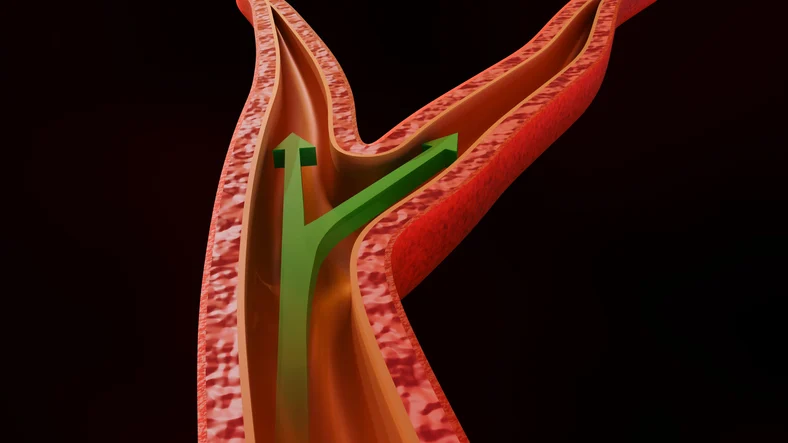
Cerebral vasospasm is a secondary physiological phenomenon where blood vessels in the brain undergo sustained, involuntary constriction. This narrowing effectively chokes off oxygenated blood supply to delicate neural tissue. Often, patients who successfully navigate the initial life-threatening bleed succumb to or suffer permanent disability from these subsequent ischemic events. It is a secondary injury that occurs in a delayed fashion, often when the patient is already at their most fragile state in the intensive care unit (ICU).
Historically, the medical community has been hampered by a lack of preventative tools. The current standard of care—primarily consisting of oral medications and, in extreme cases, invasive rescue procedures such as balloon angioplasty—is reactive rather than proactive. By the time these interventions are deployed, significant vascular damage or tissue ischemia may have already taken root.
Chronology of a Medical Breakthrough
The path to the FDA’s breakthrough designation for V-Link did not happen overnight. It is the culmination of years of research into the intersection of neurobiology and electrical stimulation.
- Early Research Phase: Aurenar’s team, led by CEO Eric Leuthardt, investigated the role of the body’s systemic inflammatory response in post-hemorrhagic brain injury. They hypothesized that the vasospasm was not merely a mechanical issue, but an inflammatory cascade that could be interrupted at the source.
- Proof-of-Concept: Leveraging the science of vagus nerve stimulation—a field long established for its anti-inflammatory properties—the team developed the earbud-style V-Link device.
- Clinical Validation: Aurenar conducted a rigorous, randomized, triple-blinded clinical trial involving 27 patients. The study was designed to ensure the highest level of clinical integrity, keeping patients, physicians, and outcome assessors blinded to the intervention.
- FDA Recognition: Following the submission of the trial data, the FDA reviewed the device’s performance and safety profile, culminating in the granting of the breakthrough device designation this week. This status is reserved for devices that have the potential to provide more effective treatment for life-threatening or irreversibly debilitating conditions.
The V-Link Mechanism: A Paradigm Shift in ICU Care
The V-Link device operates on a simple yet profound premise: quiet the body’s inflammatory response before it can trigger vascular constriction. By delivering gentle, precise electrical pulses to the nerve pathways behind the ear, the V-Link system modulates the autonomic nervous system.
Unlike traditional pharmaceutical approaches that may have systemic side effects or surgical procedures that carry inherent risks of vessel rupture, the V-Link is non-invasive and highly targeted.
"Patients receive the treatment for 20 minutes twice a day during their ICU stay," explains Eric Leuthardt. "The device is designed to fit into existing ICU workflows so that nurses and physicians can use it without much training."
This ease of integration is vital. In the high-pressure environment of a neurological ICU, complex equipment often requires specialized technicians, potentially delaying care. Aurenar has prioritized a design that empowers bedside staff to administer the therapy, ensuring that the critical window for preventing vasospasm is never missed.
Supporting Data: Examining the Trial Results
The data emerging from the 27-patient pilot study provides a compelling case for the efficacy of the V-Link. Despite the small sample size, the results were statistically significant, showing a reduction in moderate-to-severe vasospasm by more than 40%.
Perhaps most encouragingly, there were no reported safety issues. In the world of neuromodulation, safety profiles are often scrutinized for potential adverse reactions such as cardiac arrhythmias or localized nerve irritation. The V-Link’s clean safety record in this initial trial suggests that the specific stimulation parameters are both effective and well-tolerated.
Leuthardt remains steadfast regarding the validity of these findings. "The effect size we saw was substantial and reached statistical significance, and the result was consistent with what we’d expect biologically given how vagus nerve stimulation modulates inflammation," he noted. While the medical community typically waits for larger, multi-center trials to confirm such findings, the triple-blinded nature of this study serves as a strong foundation for future research.
Official Responses and Strategic Humility
Aurenar is approaching the next phase of development with what CEO Eric Leuthardt describes as "the appropriate humility." The company is acutely aware that a 27-patient study, while successful, is merely a precursor to the large-scale, pivotal trials required to gain full regulatory approval for widespread clinical use.
The FDA’s breakthrough designation is not an approval, but rather an accelerated pathway. It provides Aurenar with more frequent interactions with the FDA, allowing for a more streamlined review process as they design and conduct their upcoming pivotal trials. This collaborative approach between the regulator and the manufacturer is designed to bring innovation to the bedside as quickly as safely possible.
"The breakthrough device designation is meant to speed up the path toward larger pivotal trials," Leuthardt stated. "These trials are designed precisely to confirm whether the product’s benefits hold up at scale."
Implications for the Future of Neurocritical Care
The broader implications of the V-Link’s potential success extend far beyond cerebral vasospasm. Aurenar’s foundational belief is that the inflammation-modulating mechanism at the heart of V-Link can be applied to a spectrum of high-acuity ICU conditions.
1. Expanding the Indication Pipeline
If the V-Link proves successful in reducing vasospasm in larger trials, Aurenar plans to explore other conditions where systemic inflammation plays a deleterious role. Potential applications include traumatic brain injury (TBI), severe stroke recovery, and perhaps even post-operative neuro-inflammation. By expanding indication by indication, the company aims to build a robust clinical portfolio that addresses some of the most difficult-to-treat conditions in critical care.
2. Economic and Workflow Benefits
From a hospital administration perspective, the V-Link offers a potentially cost-effective solution. By preventing vasospasm, hospitals may see a reduction in the need for prolonged ICU stays, fewer emergency neurosurgical interventions, and lower rates of long-term disability for survivors. These factors contribute to better patient outcomes and reduced healthcare resource utilization.
3. Advancing Non-Invasive Neuromodulation
The success of the V-Link underscores a growing trend in medicine: the shift toward "bioelectronic medicine." As our understanding of the nervous system’s control over immunity and vascular tone deepens, the reliance on chemical drugs may increasingly be supplemented or replaced by devices that "talk" to the body’s own neural circuitry.
Conclusion
Aurenar’s V-Link system represents a rare intersection of elegant engineering and urgent clinical need. By targeting the inflammatory drivers of cerebral vasospasm, this non-invasive device has the potential to transform a terrifying post-hemorrhagic complication into a manageable, preventable event.
As the company moves toward its pivotal trials, the medical community will be watching closely. Should the results of the 27-patient study be replicated at scale, the V-Link will likely become a cornerstone of neurological ICU protocols, providing clinicians with a powerful, safe, and efficient tool to protect the most vulnerable brains in their care. For now, the FDA breakthrough designation serves as a vital signal: the future of neurocritical care may well be found in the subtle, electrical whispers of the vagus nerve.