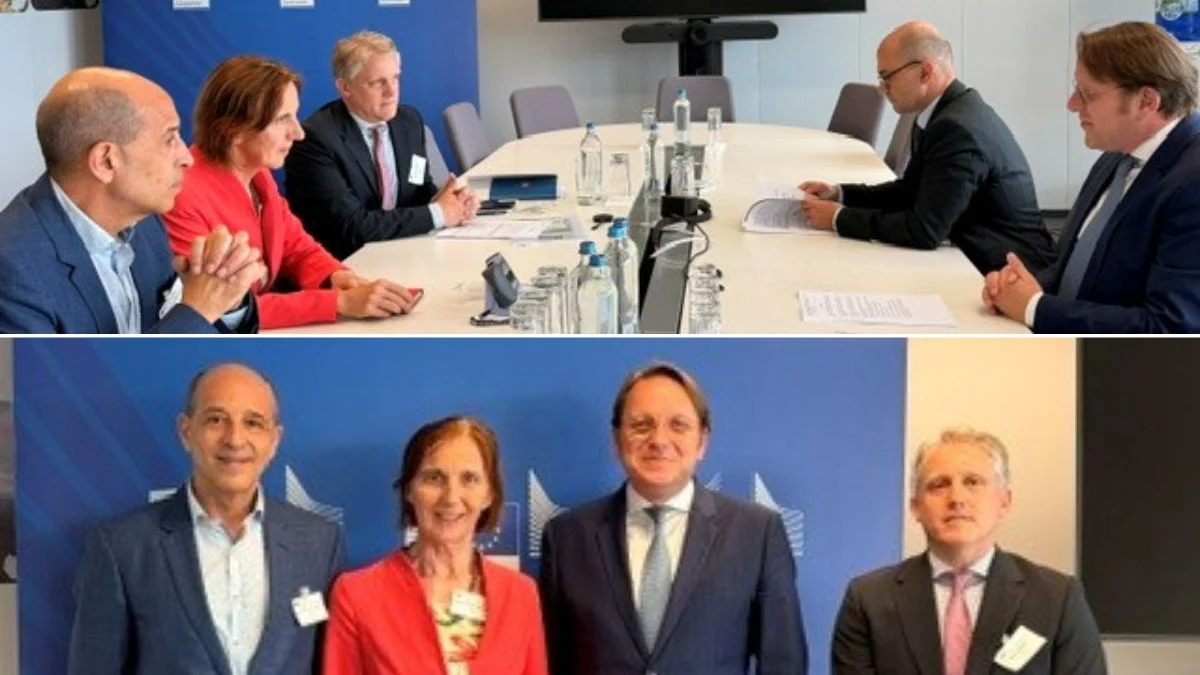
BRUSSELS — In a pivotal moment for European public health, a high-level delegation from the European Respiratory Society (ERS) met this week with Olivér Várhelyi, the European Commissioner for Health and Animal Welfare. The meeting, held in the heart of the European Union’s administrative district, served as a formal appeal to elevate respiratory health from a secondary concern to a central pillar of the European political agenda.
As respiratory conditions continue to impose a staggering burden on the continent’s healthcare systems and economic productivity, the ERS leadership sought to bridge the gap between clinical necessity and legislative action.
The Core Mandate: Why Respiratory Health Must Be a Priority
The primary objective of the ERS delegation—led by Secretary General Prof. Ildikó Horváth, President-Elect Dr. Marc Miravitlles, and Director of Advocacy and European Affairs Brian Ward—was to present a unified scientific front to the European Commission. The delegation argued that the post-pandemic landscape, combined with an aging population and increasing environmental stressors, necessitates a paradigm shift in how Europe manages lung health.
Respiratory diseases, including Chronic Obstructive Pulmonary Disease (COPD), asthma, lung cancer, and interstitial lung diseases, remain among the leading causes of morbidity and mortality across the EU. Despite these stark figures, the ERS contends that respiratory medicine has historically been under-prioritized in EU-wide health strategies compared to other non-communicable disease (NCD) areas, such as cardiovascular health or oncology.
The ERS leaders emphasized that respiratory health is not merely a clinical issue; it is a fundamental determinant of socio-economic stability. By focusing on prevention, early diagnosis, and equitable access to innovative treatments, the EU has the potential to alleviate pressure on national health services and improve the quality of life for millions of citizens.
A Chronology of Engagement: The Path to the Commissioner’s Office
The meeting on July 2, 2026, was not an isolated event but rather the culmination of months of rigorous policy analysis and strategic outreach by the ERS advocacy team.
- Q1 2026: Strategic Alignment: The ERS Advocacy Committee identified key areas of overlap between current EU policy directives—specifically the European Health Union initiative—and the unmet needs of respiratory patients.
- April 2026: The Data Dossier: ERS experts compiled a comprehensive briefing package, synthesizing current epidemiological trends with projected costs to EU healthcare systems over the next decade.
- May 2026: Formal Request for Consultation: Following the appointment of Commissioner Várhelyi, the ERS initiated a formal request to discuss the integration of respiratory health into the broader "Health and Animal Welfare" portfolio.
- June 2026: Pre-meeting Briefings: The delegation held preparatory sessions to ensure that the scientific arguments were tailored to the Commissioner’s specific policy priorities, focusing on sustainability, digital health, and cross-border cooperation.
- July 2, 2026: The High-Level Summit: The meeting in Brussels took place, providing a platform for direct, face-to-face negotiation and the establishment of a working relationship between the Society and the Commission.
Supporting Data: The Case for Urgent Intervention
The urgency of the ERS’s appeal is underscored by a wealth of data that illustrates the scope of the crisis. Respiratory disease is the third leading cause of death in the European Union, yet it remains one of the most under-funded areas of health research and policy.
The Economic Burden
The direct and indirect costs of respiratory diseases to the European economy are estimated to reach hundreds of billions of euros annually. These costs include:
- Direct Healthcare Costs: Hospitalizations for asthma exacerbations and COPD are among the most frequent reasons for emergency department admissions.
- Productivity Loss: Respiratory illness is a primary driver of absenteeism and "presenteeism," where employees remain at work but perform at reduced capacity due to chronic symptoms.
- Long-term Disability: Many respiratory conditions are progressive, leading to early retirement and long-term reliance on social support systems.
The Environmental Link
A significant portion of the ERS discussion centered on the intersection of climate change and lung health. With air pollution cited by the World Health Organization (WHO) as the single biggest environmental health risk in Europe, the ERS urged the Commission to adopt more stringent air quality standards. The data is clear: improvements in air quality directly correlate to lower rates of respiratory infection and chronic lung disease, providing a compelling "co-benefit" argument for the European Green Deal.
Official Responses and Strategic Synergies
The meeting was marked by a constructive exchange of ideas. Commissioner Várhelyi, tasked with overseeing the European Union’s health portfolio, acknowledged the critical role that specialized medical societies play in shaping evidence-based policy.
While the meeting was private, sources close to the delegation indicated that the Commissioner expressed interest in the ERS’s proposal for a "European Strategy for Respiratory Health." This proposed framework would mirror existing strategies for cancer and mental health, providing a structured approach to prevention and care across member states.
The ERS delegation highlighted that the European Health Union must prioritize the harmonization of diagnostic standards. Currently, a patient’s access to state-of-the-art respiratory care often depends on their geography. The ERS is advocating for a digitalized, integrated approach to patient records and cross-border clinical trials, ensuring that advancements in respiratory medicine are shared rapidly across the bloc.
Implications for the Future: A New Era for Lung Health
The meeting with Commissioner Várhelyi represents a watershed moment for the European respiratory community. The implications of this engagement are far-reaching and set the stage for several critical shifts in European policy:
1. Inclusion in Future Health Frameworks
The most immediate implication is the potential for respiratory health to be formally integrated into the EU’s multi-annual financial framework. By securing a seat at the table, the ERS has ensured that respiratory health will be considered in upcoming budgetary cycles and health-related funding calls under the Horizon Europe program.
2. Standardization of Care
The ERS is pushing for a European-wide standard for chronic respiratory care. This would involve the adoption of common clinical guidelines, which would serve to reduce health inequalities between Eastern and Western Europe, ensuring that every citizen has access to the same level of care regardless of their country of residence.
3. Strengthening the "One Health" Approach
Commissioner Várhelyi’s portfolio, which includes Animal Welfare, offers a unique opportunity to emphasize the "One Health" concept—the recognition that human health is inextricably linked to the health of animals and the environment. The ERS plans to leverage this connection to advocate for policies that address zoonotic diseases, antibiotic resistance (which severely impacts respiratory health), and environmental pollutants that affect both humans and the ecosystem.
4. Patient-Centered Policy
Finally, the meeting underscored the necessity of including patient voices in the policy-making process. The ERS has committed to facilitating a dialogue between the Commission and European patient advocacy groups, ensuring that the legislative agenda remains grounded in the lived experience of those suffering from respiratory conditions.
Conclusion: A Call to Continued Advocacy
As the ERS looks toward the remainder of 2026 and beyond, the meeting with Commissioner Várhelyi serves as a catalyst for renewed advocacy efforts. The challenge now lies in translating the goodwill of the meeting into concrete, actionable legislation.
The Society’s leadership remains optimistic. By providing the Commission with the clinical expertise required to navigate complex medical issues, the ERS is positioning itself as an essential partner in the pursuit of a healthier Europe. As Prof. Horváth noted following the meeting, "Our work is far from finished. Today was the first step in ensuring that the lungs of Europe are given the attention they deserve. We are committed to working alongside the Commission to turn our recommendations into policies that will save lives, reduce costs, and ensure a more resilient population."
For the medical community, the message is clear: the era of fragmented advocacy is over. Through strategic engagement with high-level European officials, the ERS is proving that when science speaks with a unified, authoritative voice, the political landscape can be shifted.
For more information on the ERS’s ongoing advocacy initiatives and to see how the society is working to improve respiratory health across the continent, please visit the official ERS advocacy portal. The journey toward a healthier, more breathable Europe is a marathon, not a sprint, but with the support of the European Commission, the finish line is finally coming into view.