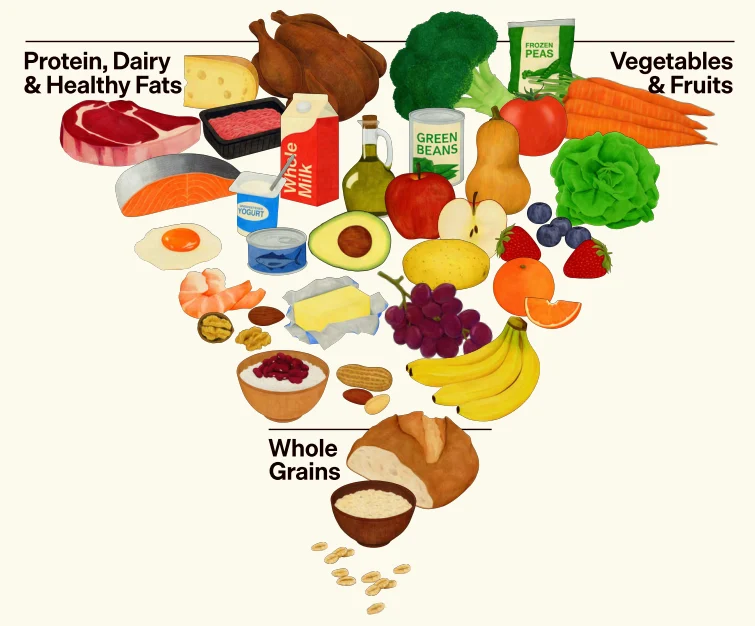







The release of the 9th edition of the Dietary Guidelines for Americans (2020-2025) marked a significant moment for public health policy in the United States. Under the overarching directive to "Make Every Bite Count," this comprehensive 150-page document serves as the cornerstone for federal nutrition programs, healthcare providers, and policy architects. While the guidelines represent a massive effort to provide actionable advice across every stage of the human life cycle, they have also sparked a robust debate regarding the intersection of personal health, cultural accessibility, and environmental stewardship.
Main Facts: A Holistic Approach to Dietary Patterns
The 2020-2025 edition departs from the outdated model of focusing on isolated nutrients—such as the vilification of dietary cholesterol or the singular pursuit of "superfoods." Instead, the guidelines pivot toward the concept of "dietary patterns." This shift acknowledges that health is not the product of a single meal or ingredient, but rather the cumulative effect of what an individual consumes over weeks, months, and years.
By emphasizing variety and nutrient density, the guidelines provide a framework that allows for greater flexibility. This is essential, as the document explicitly recognizes that dietary habits are not formed in a vacuum. Food choices are deeply rooted in a complex matrix of factors: socioeconomic status, geographic access, cultural traditions, personal beliefs, and the ever-present constraint of a household budget. By moving toward patterns, the guidelines aim to be more inclusive of diverse culinary heritages, acknowledging that healthy eating can be achieved through a multitude of food combinations.
A Chronological Perspective: Evolution of Federal Guidance
To understand the current guidelines, one must look at their historical trajectory. The inaugural Dietary Guidelines for Americans, published in 1980, were relatively brief and focused primarily on avoiding chronic diseases through basic intake limitations. Over the ensuing four decades, the guidelines have expanded significantly in both scope and depth.
- 1980-2000: The early years were defined by "negative" messaging—what to cut out (fat, salt, cholesterol).
- 2005-2015: The guidelines began to emphasize the "food group" approach, promoting the intake of fruits, vegetables, and whole grains as a counterpoint to the American diet’s over-reliance on processed calories.
- 2020-2025: The current edition represents the first time the guidelines offer comprehensive recommendations for every age group, including infants and toddlers. This life-cycle approach is designed to foster healthy habits from the very first spoonful of solid food, aiming to curb the onset of metabolic diseases early in life.
Supporting Data: Key Components and Targets
The guidelines maintain the standard "Healthy U.S.-Style Dietary Pattern," which continues to prioritize a base of vegetables, fruits, grains (at least half of which should be whole grains), fat-free or low-fat dairy, and a variety of protein foods.
However, the 2020-2025 edition introduced more granular limits, particularly regarding age-based restrictions. For instance, the guidelines now explicitly advise against added sugars for children under the age of two, reflecting a growing body of evidence linking early-childhood sugar intake to lifelong preferences and metabolic health. Furthermore, the persistent focus on limiting sodium and saturated fats remains, grounded in decades of cardiovascular research indicating that these substances, when consumed in excess, significantly increase the risk of hypertension and heart disease.
Despite these evidence-based targets, the guidelines face scrutiny for their heavy reliance on animal-based proteins. Critics point out that the "Healthy U.S.-Style Pattern" remains relatively high in meat, eggs, and dairy, even as the scientific consensus on the benefits of plant-forward diets grows stronger.
Official Responses and Expert Critique
The academic community, particularly researchers at institutions like the Harvard T.H. Chan School of Public Health, has offered a measured but critical reception of the guidelines. Dr. Walter Willett, a preeminent voice in nutritional epidemiology, has been vocal about the missed opportunities within this edition.
Dr. Willett acknowledges that the document contains several positive, evidence-based suggestions. However, he emphasizes that the guidelines are fundamentally missing two critical components: a focus on the specific quality of protein sources and a formal acknowledgment of the environmental impact of our dietary choices.
"Guidance that considers scientific evidence on specific protein sources and health, and also the environmental consequences of dietary patterns, is needed," Dr. Willett notes. "The current Dietary Guidelines fail to do this."
The silence regarding environmental impact is perhaps the most glaring omission. Other scientific analyses have demonstrated that the current dietary recommendations, if universally adopted, would have a massive footprint on the climate. The production of animal-based foods, particularly red meat and dairy, is a significant driver of greenhouse gas emissions. By failing to integrate sustainability into the core recommendations, the federal government is effectively separating the health of the individual from the health of the planet—a distinction that many experts argue is increasingly untenable.
Implications: The Dairy Dilemma and Protein Quality
A major point of contention within the guidelines is the recommendation of three servings of dairy per day. Dr. Willett argues that this recommendation lacks a robust foundation in clinical evidence regarding health outcomes. Furthermore, the promotion of low-fat and fat-free dairy creates a logistical paradox.
If the American public shifts entirely to low-fat dairy, the discarded dairy fat must go somewhere. "Because the disposal of dairy fat would be hugely wasteful, it would almost certainly remain in the food supply, which makes this recommendation somewhat of a fantasy," Willett explains. To truly move toward a more sustainable and healthy model, he suggests that a significant portion of dairy intake should be replaced by plant-based alternatives like soy milk, which provide essential nutrients without the heavy environmental cost of traditional dairy production.
Similarly, the guidelines’ approach to protein is fraught with ambiguity. While they ostensibly promote "lean meats," they stop short of providing clear, actionable warnings about processed meats—such as ham, sausages, and hot dogs. Although these warnings exist within the deeper chapters of the 150-page document, they are buried. For the average consumer, the summary recommendation of "lean meat" could easily be misinterpreted as a license to consume processed products that are marketed as "low-fat" or "lean," yet remain detrimental to health.
The distinction between high-quality protein (beans, nuts, fish, poultry) and red or processed meat is one of the most critical public health messages of our time. Research has repeatedly shown that replacing red and processed meats with plant-based proteins or poultry significantly lowers the risk of premature death and chronic disease. By burying this distinction, the guidelines potentially dilute the impact of their own advice.
Conclusion: A Roadmap for Future Iterations
The 2020-2025 Dietary Guidelines for Americans are, without question, a sophisticated and well-researched document that provides a vital service to the public. They succeed in shifting the conversation toward life-cycle nutrition and dietary patterns, and they offer a more flexible, culturally aware framework for healthy eating.
However, the path forward requires a more courageous approach. Future editions of the guidelines must bridge the gap between human health and environmental sustainability. They must also be more explicit in their warnings about the types of protein that pose the greatest risks to the American population. As climate change continues to alter our food systems and as the burden of chronic, diet-related diseases continues to rise, the Dietary Guidelines must evolve from a static set of recommendations into a dynamic, forward-looking policy instrument that accounts for the reality of our planet’s limitations and the urgency of our health crises.
Only by addressing these gaps can the government truly help Americans "make every bite count"—not just for their own longevity, but for the resilience of the global food system as well.