









Introduction: The CAR T-Cell Revolution and Its Unmet Challenges
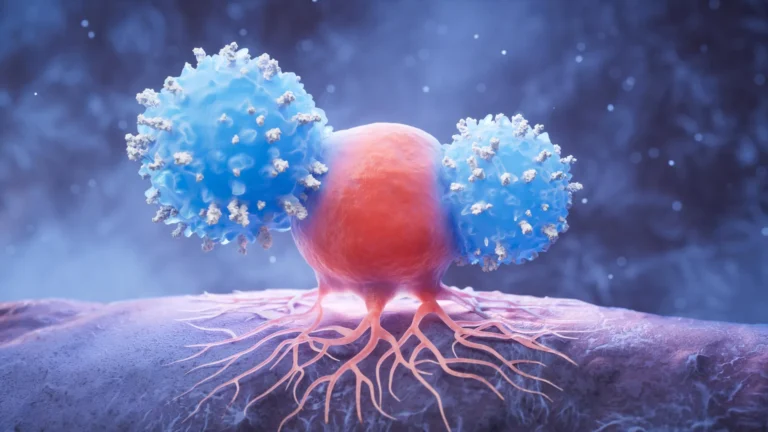
Chimeric antigen receptor (CAR) T-cell therapy has been heralded as one of the most significant breakthroughs in modern oncology. By genetically engineering a patient’s own immune cells to recognize and destroy malignant cells, this "living drug" has provided a lifeline to countless patients with large B-cell lymphoma (LBCL) who had exhausted all other treatment options. Yet, despite the clinical triumphs, a sobering reality persists: the treatment is not a panacea for everyone.
For approximately half of the patients treated with CAR T-cell therapy, the cancer eventually returns. This clinical limitation has become the primary focus of Dr. Sandeep Raj, an esteemed physician-scientist at the Memorial Sloan Kettering Cancer Center (MSKCC). Dr. Raj’s research represents a sophisticated effort to demystify the mechanisms of treatment resistance, aiming to transform CAR T-cell therapy from a high-stakes gamble into a reliably curative intervention.
The Core Objective: Decoding Immune Failure
At the heart of Dr. Raj’s research lies a fundamental question: Why does the immune system, once primed to eradicate cancer, eventually falter?
"Roughly half of patients will see their cancer return, and we do not fully understand why," Dr. Raj explains. His research program is dedicated to deconstructing the complex biological dialogue between CAR T-cells and the tumor microenvironment. He posits that the immune system does not merely stand by during treatment; rather, it may actively—and inadvertently—hinder the efficacy of the therapy.
The Shielding Effect
Dr. Raj’s laboratory is currently investigating how the immune environment might "shield" cancer cells from detection. In many cases, tumors develop intricate mechanisms to suppress the immune system, effectively creating a "cold" environment where CAR T-cells struggle to penetrate or maintain their activity. By identifying these suppressive signals, Dr. Raj hopes to pave the way for interventions that "thaw" the tumor microenvironment, allowing the immune system to regain its lethal precision.
Chronology: From Personal Tragedy to Professional Purpose
The trajectory of a scientist is rarely a straight line; for Dr. Raj, it is deeply rooted in a pivotal moment of human vulnerability.
Early Inspiration
Dr. Raj’s commitment to lymphoma research was not born in a sterile laboratory, but in the waiting room of an oncology clinic. During his formative years, a close family member was diagnosed with lymphoma, an event he describes as an overwhelming experience defined by anxiety and uncertainty.
"At the first consultation, though, their oncologist assuaged our fears with calm confidence filled with compassion and warmth and guided my family member toward a full remission," Dr. Raj recalls. This interaction served as the blueprint for his own career. The transition from a concerned family member to a medical professional was fueled by the desire to pay that same level of compassionate, evidence-based care forward to others facing the same diagnosis.
The Path to MSKCC
Throughout his rigorous medical training, Dr. Raj found himself repeatedly drawn back to the study of hematologic malignancies. His academic journey, characterized by a focus on quantitative biology and cellular immunology, eventually led him to Memorial Sloan Kettering. Today, he operates as a bridge between high-level laboratory research and the day-to-day realities of patient care, embodying the archetype of the modern physician-scientist.
Supporting Data and The "Computer-to-Bedside" Model
Modern oncology is increasingly data-driven, and Dr. Raj is at the forefront of integrating computational biology with clinical practice. His research program is built on a multidisciplinary philosophy that he describes as "the computer to the lab bench to the bedside and back."
Identifying High-Risk Patients
One of the most promising avenues of his research is the development of predictive biomarkers. By analyzing the immune profiles of patients prior to and during CAR T-cell treatment, Dr. Raj aims to identify those at the highest risk for treatment failure before it occurs.
"My work may identify patients with LBCL at highest risk of CAR T-cell treatment failure," he notes. By layering quantitative data over clinical outcomes, he is working to build a model that anticipates resistance mechanisms in real-time.
Targeted Interventions
The goal is not merely to predict failure, but to prevent it. Dr. Raj is exploring the use of prophylactic medications—including anti-inflammatory and antiviral drugs—to modulate the immune system before it can interfere with the therapeutic process. By "reshaping the immune environment" in the patient’s favor, he hopes to create a more hospitable landscape for CAR T-cells to thrive and persist, thereby extending the duration of remission.
Official Perspective: The Intersection of Innovation and Compassion
Dr. Raj’s approach is defined by a unique synthesis of cold, hard data and deep, empathetic care. He views the complexity of lymphoma not just as a set of genetic mutations, but as a challenge to the standard of human health that requires both technological and humanistic solutions.
"It is an absolute privilege to be able to work at the intersection of quantitative biology, cancer immunology, and cellular therapy," Dr. Raj says. This sentiment reflects the broader mission of MSKCC—to accelerate the pace of discovery while maintaining a patient-centric focus. With the support of the Foundation, he is currently scaling his research program to establish a multidisciplinary network that ensures findings are not siloed in academic journals, but are actively translated into actionable clinical protocols.
Implications: The Future of Lymphoma Treatment
The implications of Dr. Raj’s work extend far beyond the walls of his laboratory. If successful, his research could fundamentally alter the standard of care for LBCL patients.
Shift Toward Personalized Medicine
The current "one-size-fits-all" approach to CAR T-cell therapy is rapidly becoming obsolete. Dr. Raj’s research provides the framework for a more personalized strategy, where treatment is tailored to the specific immune landscape of the individual patient. This shift toward precision medicine promises to increase the "durable response rate"—the percentage of patients who remain in remission long-term.
Reducing the Burden of Recurrence
Recurrence is the greatest psychological and physical burden for cancer survivors. By addressing the "why" behind therapy failure, Dr. Raj is attempting to reduce the prevalence of recurrence, thereby lessening the need for salvage therapies, which are often more toxic and less effective than initial treatments.
A Legacy of Care
Ultimately, Dr. Raj’s work is a testament to the idea that science is a human endeavor. By combining advanced genomic research with a commitment to the patient experience, he is working toward a future where a lymphoma diagnosis is no longer a source of lifelong anxiety, but a treatable condition managed with precision and hope.
As he continues to push the boundaries of cellular therapy, Dr. Raj’s focus remains singular: to ensure that every patient receives the same caliber of expert, compassionate care that his family once received. "I’ve always been led back to studying lymphoma, contributing toward finding a cure, and hoping that I can provide the same compassionate and thoughtful care my family once received," he concludes.
In the rapidly evolving field of oncology, Dr. Sandeep Raj stands as a beacon of progress, reminding us that while the science of curing cancer is essential, the heart of the researcher is what drives the discovery forward. Through his dedication, the "computer-to-bedside" loop is closing, promising a new era of efficacy for those who need it most.