At the heart of Nationals Park, the crack of the bat and the roar of the crowd are familiar sounds. Yet, for Sean Hudson, the Director of Military Affairs for the Washington Nationals, the stadium represents something far more profound than a simple venue for America’s Pastime. For Hudson, the ballpark serves as a bridge—a vital, living connection between the professional athletic world and the men and women who serve in the United States Armed Forces.
Hudson’s role is multi-faceted, encompassing logistics, community engagement, and strategic partnerships. However, his mission remains singular and unwavering: to honor, support, and integrate the military community into the fabric of the Washington Nationals organization.
"We do a significant amount for our military service members," Hudson says, reflecting on the scope of his work. "But there is always room to do more. I wake up every day with the hope that we are not just meeting expectations, but genuinely honoring the sacrifice of those who wear the uniform."
A Foundation Built on Service: The Path to the Front Office
To understand Hudson’s deep-seated commitment to the military, one must look at his own history. A New Jersey native who chose to trade a traditional college path for the rigors of military service, Hudson’s early adulthood was defined by the U.S. Air Force.
Working in Public Affairs, Hudson was tasked with a unique and demanding responsibility: telling the stories of the warfighter. His service took him across the globe, with tours of duty in Turkey, Germany—specifically Ramstein Air Force Base—and Italy. In these environments, he learned that communication is not merely about transmitting information; it is about humanizing the mission and ensuring that the narrative of those on the front lines reaches the public.
"People in the military work hard every day to defeat their adversaries across the globe; our baseball team works very hard to defeat the Atlanta Braves," Hudson notes, drawing a parallel between the two worlds. "That storytelling, which I honed from 2016 to 2020, was an incredible time in my life. It really sparked my passion for communications as a profession."
After his honorable discharge, Hudson navigated the civilian transition, eventually finding his way to a position at Disney Animation in California. While the corporate world of entertainment was vastly different from the high-stakes environment of the Air Force, Hudson found that the discipline and communication skills he cultivated in the service remained his greatest assets. When the opportunity to join the Washington Nationals arose, it wasn’t just a career move; it was a homecoming of sorts—a chance to align his professional communication skills with his personal mission to serve the veteran community.
The Three Pillars of Community Engagement
The Washington Nationals’ approach to community relations is built upon a tripartite structure: youth programming, educational support (Nats Prep), and military engagement. Each pillar is designed to create a "fan for life" while providing tangible benefits to the D.C. metropolitan area.
1. Cultivating the Next Generation
The organization’s youth programming is expansive, ranging from the sponsorship of local Little League teams to the hosting of intensive coaching clinics. By bringing professional players into the classroom to read to students, the team fosters an emotional connection between the athletes and the local youth, ensuring the game remains accessible to the next generation.
2. Nats Prep: Bridging Academics and Industry
Nats Prep serves as a vital vocational pipeline for high school students interested in tourism, hospitality, and sports management. By providing students with behind-the-scenes access to various business units—including marketing, guest experience, and stadium operations—the Nationals are helping to translate classroom theory into professional practice.
3. Military Support: A Region of Resilience
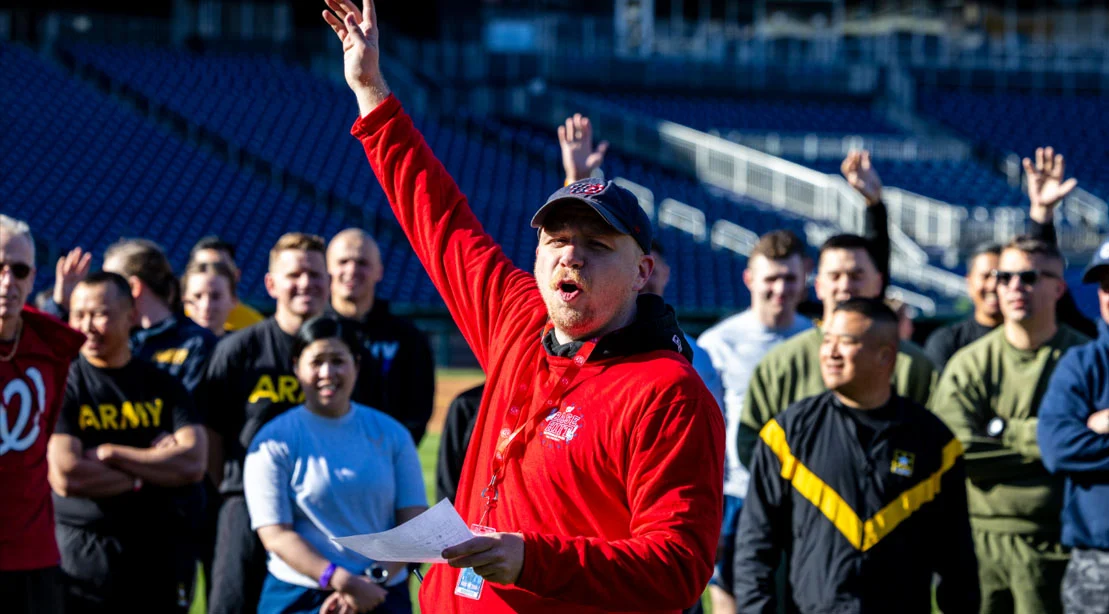
With 16 military bases located within the National Capital Region, the Nationals operate in a unique environment. The team’s commitment to this demographic is perhaps best exemplified by their "Base HIIT" program. A unique, high-intensity interval training session, the program invites 275 service members onto the field at Nationals Park for a full-scale Physical Training (PT) session.
"We are the only team in professional sports that does anything like this," Hudson says with evident pride. "Bringing the military onto the field to utilize the space for their own training is our way of saying that this park belongs to them as much as it does to us."
The impact of these programs is quantifiable. On Military Appreciation Day, April 17th, the team distributed over 4,000 tickets to military ID cardholders, ensuring that those who protect the nation are given a seat at the table.
Implications: The Symbiosis of Support and Sport
The integration of military support into the Nationals’ business model is not merely a philanthropic endeavor; it is a strategic alignment with the values of the fanbase. Hudson believes that the organization acts as a conduit for the fans’ desire to express gratitude.
"The idea behind all of it is that supporting the military is something our fans want us to do," Hudson explains. "We understand that, and we want to do that. It’s about building a community that values service, resilience, and the common goal of excellence. It’s important to us, and it’s important to the fabric of Washington, D.C."
The implications of this work extend beyond the stadium gates. By prioritizing the military community, the Nationals are helping to destigmatize the transition from service to civilian life and providing a space where veterans feel seen and appreciated.
Holistic Wellness: Hudson’s Three Pillars for Life
Hudson’s commitment to service is mirrored in his commitment to his own physical and mental health. He views fitness not as an aesthetic goal, but as a long-term investment in his ability to serve others. His philosophy on wellness is grounded in three simple, yet profound, principles:
I. Nutrition: Fueling the Machine
Hudson emphasizes that proper nutrition is often the most neglected aspect of a healthy lifestyle. Having spent time in the high-performance environment of a professional sports organization, he has adopted a disciplined approach to his eating habits. "If your first meal is at 10:00 or 11:00 AM, you’re doing yourself a disservice," he argues. "Better eating habits have been something I’ve picked up organically by working at a pro sports team."
II. Prioritizing Mental Fitness
"Resolve, the ability to work through adversity—all those things are important," Hudson says. He advocates for treating the mind with the same rigor as the body. Whether one is on the baseball diamond or navigating the pressures of a corporate office, the ability to sharpen mental resilience is a skill that must be practiced daily.
III. The Grace of Imperfection
Perhaps his most vital piece of advice is to "give yourself grace." Hudson acknowledges that not every workout will be optimal and not every day will be a success. He draws a comparison to baseball, a sport famously built on the foundation of failure. "Baseball is the only sport where if you fail seven out of ten times, they’ll put you in the Hall of Fame," he notes. "Allow yourself to be bad at things. Not every day has to be perfect."
Conclusion: A Legacy of Service
Sean Hudson stands as a testament to the idea that one’s professional life can be an extension of one’s personal values. By leveraging his role at the Washington Nationals, he has created a framework for support that is as impactful as it is innovative.
Whether he is coordinating a massive PT session on the field or working behind the scenes to ensure that a veteran’s story is told with dignity, Hudson remains focused on the individual. His message to every service member who enters Nationals Park is clear: your sacrifice is recognized, your service is valued, and you are part of this community.
As he looks to the future, Hudson remains humble, echoing his initial sentiment: "We do a lot for our military service members. We can always do more, but I hope that we’re doing a good job."
For the thousands of service members who have walked through the gates of Nationals Park, the verdict is already in: the job is not just being done—it is being done with heart, honor, and a deep, abiding respect for the uniform.
For those interested in upcoming "Base HIIT" events or further information on the Washington Nationals’ military outreach initiatives, visit Nationals.com.
Contributing reporting for this article was provided by M&F Senior Military Editor Rob Wilkins.