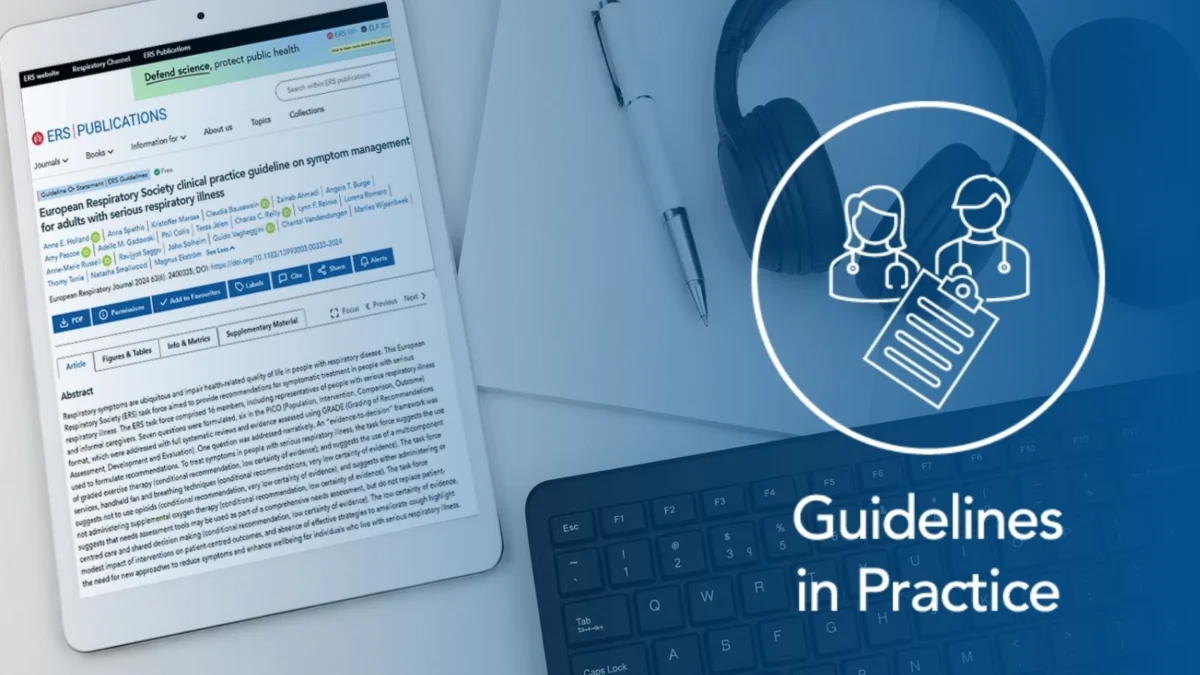
20 May, 2026 – In an era where medical literature grows at an exponential rate, the challenge for clinicians is no longer accessing information, but effectively translating complex clinical practice guidelines (CPGs) into bedside care. Recognizing this critical gap between academic publication and real-world application, the European Respiratory Society (ERS) has officially launched a pioneering podcast series, Guidelines in Practice.
This initiative marks a shift in how professional medical societies communicate evidence-based recommendations, moving away from static documents toward dynamic, conversational, and storytelling-driven knowledge transfer.
Main Facts: A New Era of Medical Communication
The Guidelines in Practice series is designed to serve as a bridge between the rigorous, often dense, world of guideline development and the fast-paced, pragmatic reality of clinical respiratory medicine.
Each episode centers on a specific ERS guideline published at least one year prior. By allowing for this "cooling-off" period, the podcast ensures that the discussion is not merely a summary of the document, but a retrospective analysis of how that document has fared in the wild. Each session features a dialogue between a member of the original task force and an external expert—a clinician or researcher who has observed the guideline’s integration into health systems.
The core objective is to move beyond the technical repetition of data. Instead, the podcast emphasizes:
- Implementation Challenges: Identifying the systemic or resource-based hurdles that prevent guidelines from being fully adopted.
- Clinical Storytelling: Using real-world case studies to demonstrate how evidence-based changes in practice directly impact patient outcomes.
- Iterative Learning: Discussing how current limitations in the guidelines can inform future research agendas and updates.
Chronology: From Concept to Clinical Reality
The launch of the podcast is the culmination of a broader strategic shift within the ERS to modernize its educational outreach.
- Pre-2025: The ERS identifies a need for more "humanized" clinical guidance. Internal reviews indicate that while ERS guidelines are widely cited in literature, the adoption rate in peripheral clinics remains inconsistent.
- Early 2025: The ERS Guidelines Committee begins conceptualizing a multimedia strategy to supplement traditional text-based publications.
- Late 2025: Production begins on the Guidelines in Practice pilot series, focusing on high-impact areas of respiratory medicine.
- 20 May, 2026: The official launch of the series on the ERS Respiratory Channel, featuring the debut episode on symptom management in serious respiratory illness.
The timeline reflects a deliberate approach to medical education: providing the initial guideline to establish the gold standard, followed by this supplemental series to address the "how-to" of implementation.
Supporting Data: Why Implementation Matters
The necessity for this podcast is backed by a growing body of evidence in implementation science. Studies consistently show that the "know-do gap"—the delay between the publication of effective interventions and their routine use in clinical practice—can take upwards of 17 years.
In respiratory medicine, where guidelines cover everything from COPD management to interstitial lung disease, the stakes are high. Incomplete implementation leads to:
- Variability in Care: Disparities between major teaching hospitals and smaller, rural clinics.
- Resource Misallocation: Continued reliance on outdated practices that are more costly or less effective than current evidence-based alternatives.
- Delayed Innovation: A lack of feedback loops between frontline clinicians and guideline developers.
By fostering these expert-to-expert dialogues, the ERS aims to reduce the "know-do" cycle significantly, providing clinicians with the nuance required to apply evidence to diverse, often comorbid, patient populations.
Official Responses: Insights from the Leadership
Prof. Winfried Randerath, ERS Guidelines Director, has been a driving force behind this initiative. During the announcement, he emphasized that the value of a guideline is measured not by its publication metrics, but by the tangible improvements it brings to patient health.
"ERS guidelines are produced by task forces on specific topics in respiratory medicine in order to guide respiratory professionals in their clinical practice," Prof. Randerath stated. "However, the document itself is only the starting point. ERS guidelines have a significant impact on clinical practice, and it will be fascinating to hear first-hand about this impact from the professionals who are actually implementing the guidance they provide. I look forward to listening to, and taking part in, engaging discussions as part of this new series."
His sentiment is echoed by the participants of the inaugural episode. The first installment tackles the sensitive and complex subject of symptom management for adults with serious respiratory illness. This topic is notoriously difficult to standardize, as it requires balancing aggressive medical intervention with palliative care principles.
In this episode, Prof. Natasha Smallwood, Director of Respiratory Medicine at the Alfred Hospital in Melbourne, Australia—and co-chair of the relevant guideline—engages in a profound discussion with Prof. Irene Higginson, a world-renowned palliative care physician from London. Their dialogue highlights the "art" of medicine: how to communicate with patients about the limits of curative treatment while maximizing their quality of life—a balance that rarely survives the translation into a formal, structured document.
Implications: The Future of Respiratory Education
The launch of Guidelines in Practice carries significant implications for the future of continuing medical education (CME).
1. Democratization of Expert Knowledge
By making these conversations available on the ERS Respiratory Channel, the Society is essentially providing a "virtual mentorship" program. Junior clinicians in remote locations now have access to the thought processes of the world’s leading experts, allowing them to hear not just what the guidelines say, but why they were written that way and how to navigate the ambiguities that inevitably arise.
2. A Shift Toward Evidence-Based Storytelling
The emphasis on storytelling over technical repetition is a major pivot. Data alone rarely changes behavior; context does. By framing guidelines within the context of complex cases, the ERS is tapping into the psychological reality that medical practitioners learn best through narratives. This makes the information "sticky" and easier to recall when faced with a similar patient in the clinic.
3. Creating a Feedback Loop
Perhaps the most critical implication is the potential for this podcast to inform future guidelines. By discussing the challenges that remain, the series acts as a "live" monitoring system for the efficacy of ERS guidance. When multiple experts on the podcast highlight the same systemic barrier to implementation, the ERS Guidelines Committee can use that data to refine future updates or develop better implementation tools, such as decision-support algorithms or patient education pamphlets.
4. Globalizing the Perspective
The inaugural episode, featuring a collaboration between an Australian clinician and a British researcher, sets a precedent for the global reach of the ERS. Respiratory illness does not respect national borders, and the challenges of resource-strapped or high-complexity care are universal. By inviting diverse perspectives onto the podcast, the ERS is ensuring that its guidelines are not seen as "Euro-centric" but as globally applicable standards of excellence.
Conclusion: How to Engage
The Guidelines in Practice series is available now, with the first episode on symptom management serving as a blueprint for the high standard of discourse the ERS intends to maintain.
As the medical community continues to navigate the complexities of modern respiratory care, initiatives like this serve as a vital reminder that medicine is a human endeavor. Behind every guideline is a task force of experts, and behind every patient, a clinician seeking the best possible evidence to improve their life. By bridging that space with meaningful conversation, the ERS is not just issuing documents; it is building a community of practice.
Clinicians, researchers, and students interested in staying at the forefront of respiratory medicine are encouraged to:
- Listen to the first episode: Available on the ERS Respiratory Channel.
- Stay tuned for upcoming episodes: The Society plans to release subsequent installments covering a variety of topics, from asthma management in pediatric populations to new therapeutic interventions for pulmonary fibrosis.
- Explore the ERS Library: Visit the ERS Respiratory Channel to view the full library of on-demand content, live events, and the complete archive of current clinical practice guidelines.
In an increasingly noisy information environment, the Guidelines in Practice series stands out as a signal-to-noise filter, offering clarity, context, and a clear path toward the better, more effective treatment of respiratory disease.