









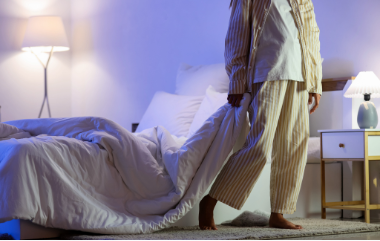
For the vast majority of the population, sleep is a restorative sanctuary—a period of stillness where the body repairs itself and the mind archives the day’s events. However, for a significant subset of individuals, the transition into slumber does not signal a cessation of movement. Instead, it acts as a gateway to "parasomnias"—a group of sleep disorders characterized by abnormal behaviors, movements, and experiences that occur without the individual’s conscious awareness.
While often the subject of cinematic tropes or lighthearted jokes about sleepwalking, the reality of parasomnias is far more sobering. These nocturnal activities can lead to severe injuries, ranging from superficial bruising to life-altering fractures, head trauma, and even harm to bed partners. As awareness of these conditions grows, sleep specialists are urging families to move beyond curiosity and toward proactive home safety and medical intervention.
The Nature of Parasomnias: When the Brain Fails to Rest
At their core, parasomnias represent a failure of the brain to properly transition between sleep stages or to maintain the physiological "paralysis" that normally keeps us stationary while we dream.
The two most common culprits behind nocturnal injuries are sleepwalking (somnambulism) and REM sleep behavior disorder (RBD). Sleepwalking typically occurs during non-REM sleep, the deep stages of the sleep cycle. In contrast, RBD occurs during Rapid Eye Movement (REM) sleep—the stage where vivid dreaming happens. Under normal physiological conditions, the brainstem sends signals to the body’s muscles to remain atonic, or paralyzed, preventing the sleeper from acting out their dreams. In individuals with RBD, this protective mechanism fails, leading to often violent physical manifestations of dreams.
Chronology of Sleep Disorders: A Hidden Evolution
The onset of these disorders often follows a distinct timeline, though the triggers vary significantly by condition.
- Childhood and Adolescence: Sleepwalking is most prevalent in children. It often begins in early childhood and, in many cases, resolves naturally as the nervous system matures during the teenage years. However, when it persists into adulthood, it often becomes a chronic issue requiring lifestyle modifications.
- The Middle-Aged Transition: REM sleep behavior disorder tells a different story. It is most frequently observed in middle-aged and older adults. Researchers have noted a concerning link between RBD and the development of neurodegenerative diseases, such as Parkinson’s disease and Lewy body dementia. For many, a diagnosis of RBD acts as a "prodromal" warning sign, sometimes appearing years before other symptoms of these neurological conditions manifest.
- The Escalation Phase: In almost all parasomnia cases, the "chronology of concern" begins when an injury occurs. Most patients do not seek medical attention for the act of walking or moving; they seek it only after they have fallen down stairs, smashed a window, or, in the case of RBD, struck a spouse during a dream.
Supporting Data: The Scale of the Risk
The clinical literature paints a stark picture of the risks associated with these disorders. A landmark study published in the journal Brain highlighted the potential for violence in RBD cases: 32% of patients reported self-injury, while a staggering 64% of bed partners reported being struck by punches, kicks, or even attempts at strangulation during the patient’s sleep.
Furthermore, research conducted at sleep disorder centers indicates that the injuries are not merely incidental. In a study of 100 adults referred for recurring nighttime injuries, the primary diagnoses were almost exclusively linked to parasomnias. These injuries are diverse:
- Contusions and Lacerations: The most common outcomes from bumping into furniture or tripping.
- Orthopedic Trauma: Fractures resulting from falls, particularly when the sleeper attempts to navigate stairs or navigate out of a window.
- Internal and Chemical Hazards: Related to sleep-eating disorders, where individuals may consume toxic substances or use kitchen appliances while in a semi-conscious state.
Sleep-Related Eating Disorder: An Underrated Threat
While sleepwalking and RBD occupy much of the medical discourse, Sleep-Related Eating Disorder (SRED) presents a unique and often overlooked danger. SRED is a parasomnia where an individual engages in recurrent, involuntary eating while in a state of partial arousal.
The danger here is not just the caloric intake, but the process of food preparation. Patients have been documented using sharp knives, operating stoves, and consuming raw or potentially toxic items. The risk profile for SRED includes severe burns, deep lacerations, and even food poisoning, necessitating a home environment where the kitchen is as secure as the bedroom.
Official Responses and Clinical Guidelines
The American Academy of Sleep Medicine (AASM) and various sleep specialists emphasize that while a "safe bedroom" is essential, it is only one component of a broader treatment plan.
Medical professionals generally advocate for the following approach:
- Clinical Evaluation: A polysomnogram (an overnight sleep study) is the gold standard. Video recording is crucial, as it allows clinicians to distinguish between parasomnias and other conditions, such as nocturnal seizures, which require entirely different treatment protocols.
- Medication Management: For many patients, medications—such as melatonin or clonazepam for RBD—can help manage the frequency and intensity of episodes.
- Environmental Modification: Physicians emphasize that restraints, such as tying a person to a bed, are strictly contraindicated. These can cause life-threatening injuries if the person attempts to move against them during an episode. Instead, the focus should be on "passive safety."
Implications: Building a Secure Nocturnal Environment
For families living with someone prone to parasomnias, the home must be treated as a specialized environment. The implications of these disorders require a shift in household management:
The Bedroom Sanctuary
- Clear the Path: Remove all clutter, area rugs, and loose cords that could cause tripping.
- Padding: For those with forceful RBD, padding the edges of sharp furniture or using floor mats can mitigate the impact of accidental falls or strikes.
- Securing Exits: Install alarms on bedroom doors or windows. In some cases, specialized locks that require a higher level of cognitive function to operate can prevent a sleepwalker from leaving the house.
Beyond the Bedroom
- Kitchen Safety: For those with sleep-eating disorders, securing the kitchen is vital. This may include installing locks on pantries or refrigerators, or unplugging small appliances like toasters and blenders overnight.
- Stairwell Barriers: Installing baby gates at the top and bottom of stairs can prevent dangerous falls.
- Lighting: Motion-activated nightlights can provide enough visual cues to potentially wake the sleeper or help them navigate safely if they are in a state of confusion.
When to Seek Help
The threshold for seeking medical intervention should be low. If an individual is exhibiting behaviors that are frequent, violent, or lead to any form of injury, a consultation with a sleep specialist is mandatory.
"The goal is to bridge the gap between the onset of symptoms and the prevention of catastrophe," says Dr. Margaret Hovda, a lead consultant in sleep medicine. "Patients often dismiss these events as ‘just bad dreams’ or ‘a phase.’ However, when your subconscious behaviors begin to threaten your physical safety or the safety of your loved ones, it is no longer just a sleep issue—it is a public health concern within the home."
Conclusion
Parasomnias serve as a reminder that the brain never truly "turns off." While the transition from wakefulness to sleep is a miracle of biological engineering, the malfunctions of that system demand respect and caution. By understanding the mechanisms behind sleepwalking, RBD, and sleep-related eating, families can move from a state of anxious uncertainty to one of managed safety. Through a combination of environmental design, professional medical diagnosis, and consistent monitoring, it is entirely possible to mitigate these risks, ensuring that the night remains a time for rest rather than a time for danger.