


The human circulatory system is a masterpiece of biological engineering. It is not merely a static plumbing network of uniform pipes, but a dynamic, morphologically diverse landscape of branching arteries, narrowing capillaries, and expanding junctions. Yet, for decades, the gold standard for studying vascular disease in the laboratory has been the "straight-tube" model. While mathematically convenient, these simplified models fail to capture the chaotic, high-stakes environment where life-threatening conditions like aneurysms and stenoses actually manifest.
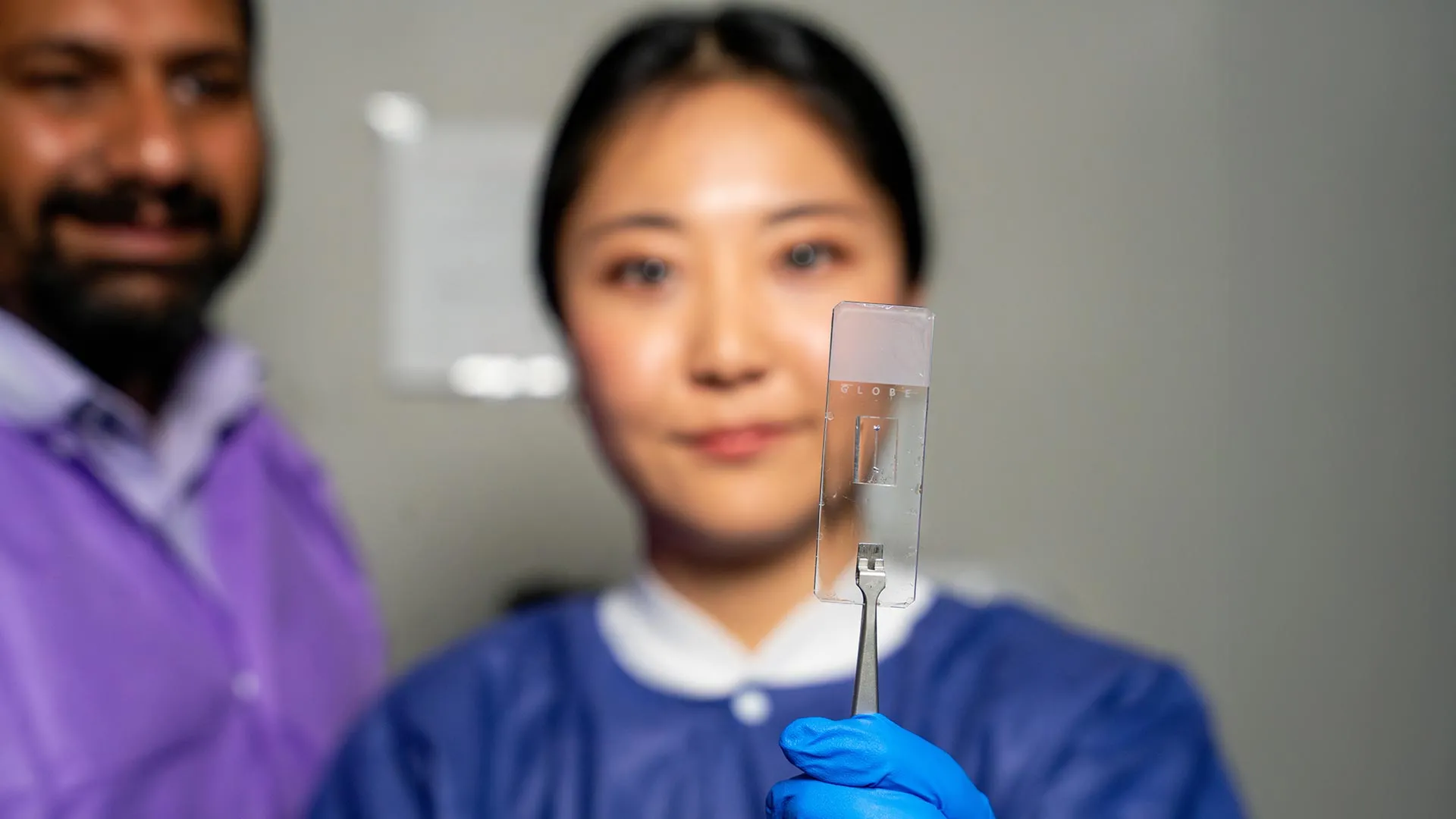
Researchers in the Department of Biomedical Engineering at Texas A&M University have now shattered this paradigm. By developing a highly customizable, microfluidic "vessel-chip" system, they have created a platform that replicates the complex, non-linear architecture of human blood vessels. This breakthrough, led by master’s student Jennifer Lee under the guidance of Dr. Abhishek Jain, promises to transform how we understand vascular pathology and accelerate the development of personalized pharmaceutical treatments.
The Limitation of the Straight-Tube Paradigm
For years, the scientific community has relied on microfluidic channels that are essentially straight, uniform conduits. These models allowed for baseline observations of fluid dynamics but were fundamentally disconnected from the physiological reality of the human body. In a real-world scenario, blood flow is dictated by the geometry of the vessel. When a vessel branches, narrows (stenosis), or balloons outward (aneurysm), the physical forces acting upon the endothelial cells—the delicate inner lining of the vessel—change dramatically.
"There are branched vessels, or aneurysms that have sudden expansion, and then stenosis that restricts the vessel," explains Jennifer Lee. "All these different types of vessels cause the blood flow pattern to be significantly changed, and the inside of the blood vessel is affected by the level of shear stress caused by these flow patterns. That’s what we wanted to model."
By ignoring these architectural complexities, previous laboratory models essentially ignored the mechanical triggers that often lead to the formation of blood clots, plaque buildup, and chronic inflammation. The Texas A&M team’s new approach addresses this deficit, providing a platform where the geometry of the vessel is as central to the experiment as the cells themselves.
Chronology of Innovation: From Basic Research to Publication
The journey to the vessel-chip began years ago in the Bioinspired Translational Microsystems Laboratory, led by Dr. Abhishek Jain, an associate professor and the Barbara and Ralph Cox ’53 faculty fellow in biomedical engineering.
- Initial Foundations: The groundwork was laid by Dr. Tanmay Mathur, a former graduate student in the Jain lab, who successfully pioneered a straight vessel-chip design. This early iteration provided the proof-of-concept necessary to secure funding and prove that organ-on-a-chip technology was viable for vascular studies.
- The Transition to Complexity: Jennifer Lee joined the lab as an undergraduate honors student. With little initial background in microfluidics, she underwent a rapid immersion into the field. Her project was designed to take the existing technology and introduce 3D, non-linear geometries.
- The Breakthrough: Through rigorous trial and error, Lee developed a fabrication process that allowed for the creation of chips with varying diameters, branching points, and irregular shapes.
- Peer Validation: The culmination of this research was recently published in the prestigious journal Lab on a Chip. The significance of the work was underscored by the journal’s decision to feature Lee’s research on the cover of the May 2025 issue.
Advancing the "Fourth Dimension" of Organ-on-a-Chip
The current iteration of the vessel-chip is a marvel of miniaturization. By utilizing microfluidics, the researchers can seed the chips with human endothelial cells, creating a living, breathing model of a vessel wall. However, Dr. Jain envisions a future where these chips transcend their current capabilities.
"We are progressing and creating what we call the fourth dimensionality of organs-on-a-chip," says Dr. Jain. "Where we not only focus on the cells and the flow, but this interaction of cells and flow in more complex architectural states."
Currently, the chips are populated with endothelial cells. The next phase of development involves introducing secondary cell types—such as smooth muscle cells or immune cells—to observe how they interact within the complex, curved environment of the chip. This would enable the study of multi-tissue crosstalk, providing a much deeper look into the pathogenesis of diseases like atherosclerosis or deep vein thrombosis.
Implications for Drug Discovery and Personalized Medicine
The implications for the pharmaceutical industry are profound. Currently, drug development relies heavily on animal testing, which is not only ethically contentious but often produces results that fail to translate to humans due to physiological differences.
The vessel-chip offers a "human-in-the-loop" alternative. Because these chips can be tailored to individual patients using their own cells, researchers can potentially create a "clinical trial on a chip." A pharmaceutical company could test a drug candidate on a chip modeled after a specific patient’s vascular anatomy to determine efficacy and safety before a single dose is administered to a human subject. This approach minimizes risk, lowers costs, and moves the medical community closer to the goal of true personalized medicine.
Cultivating the Next Generation of Biomedical Engineers
Beyond the technical merits, the success of the vessel-chip project highlights the efficacy of the Texas A&M biomedical engineering pedagogy. The lab environment served as a crucible for professional development for Lee and her peers.
"Jennifer demonstrated perseverance, curiosity, and creativity and started taking up research projects very quickly," Dr. Jain noted. "Our fast-track program enables students like Jennifer to take on high-impact, high-risk research and not just do a science project, but take it all the way to its outcome and get it published."
For Lee, the experience provided more than just a publication; it offered a masterclass in the soft skills that define a successful scientist: communication, interdisciplinary collaboration, and problem-solving. "It’s such a good environment to interact with not only peers but also graduate students and postdoctoral researchers," Lee said. "You’re able to learn teamwork and communication, work ethic, and just trying different things out."
Supporting Data and Institutional Backing
The complexity of this research required significant institutional and governmental support. The Bioinspired Translational Microsystems Laboratory has been backed by an impressive roster of organizations, indicating the high-level interest in the potential of this technology.
Funding and support for the project were provided by:
- The U.S. Army Medical Research Program (highlighting the potential for battlefield trauma care)
- NASA (underscoring the importance of understanding vascular health in microgravity environments)
- The Biomedical Advanced Research and Development Authority (BARDA)
- The National Institutes of Health (NIH)
- The U.S. Food and Drug Administration (FDA) (reflecting the agency’s interest in new, non-animal testing platforms)
- The National Science Foundation (NSF)
- Texas A&M University Office of Innovation Translational Investment Funds
Conclusion: A New Horizon for Vascular Science
The transition from simple, straight-tube models to complex, architecture-sensitive vessel-chips represents a pivotal shift in biomedical engineering. By finally embracing the inherent complexity of the human circulatory system, researchers are moving away from theoretical models and toward a more accurate, high-fidelity representation of human biology.
As Jennifer Lee and Dr. Abhishek Jain continue to push the boundaries of what is possible within the "fourth dimension" of organ-on-a-chip technology, the medical community waits with anticipation. If these chips can indeed provide a reliable, scalable, and personalized alternative to current testing methods, they will fundamentally change how we diagnose, treat, and prevent the vascular diseases that remain among the leading causes of death worldwide. The vessel-chip is not just a piece of laboratory equipment; it is a gateway to a more precise, humane, and effective future for medicine.