








For the millions of Americans navigating the complexities of obstructive sleep apnea (OSA), the journey to a restful night’s sleep often begins with a daunting piece of medical equipment: the Continuous Positive Airway Pressure (CPAP) machine. While these devices are medical marvels that effectively prevent airway collapse, the "last mile" of the patient experience—the actual integration of the machine into the bedroom—has long been an afterthought.
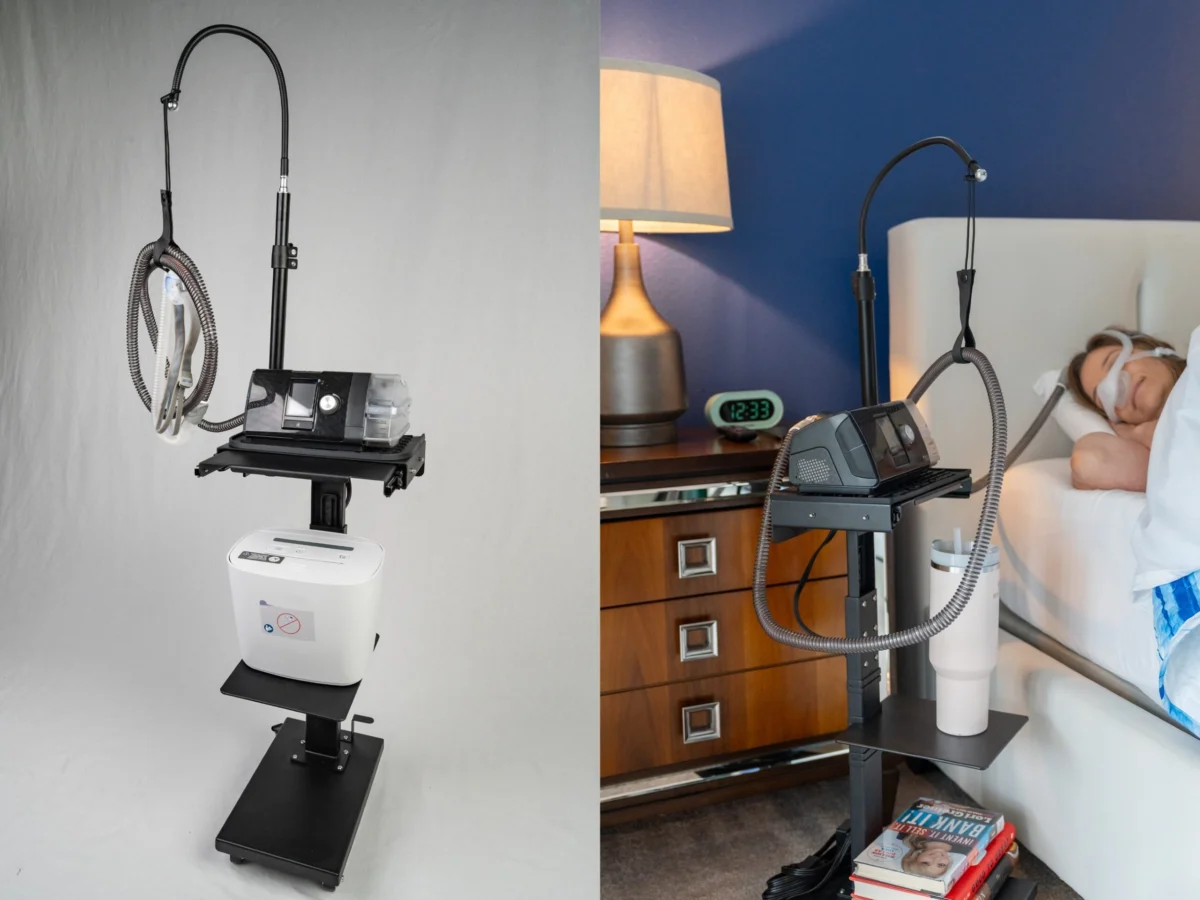
Orlando-based inventor and entrepreneur Eric Jackson is looking to change that narrative. With the launch of his new product, "My CPAP Caddy," Jackson is addressing the practical, daily frustrations that contribute to the staggering attrition rates seen in sleep therapy. By focusing on the ergonomics and organization of the bedside environment, this adjustable stand seeks to transform the CPAP experience from a cumbersome medical requirement into a seamless, manageable part of a patient’s nightly routine.
The Invisible Barrier: Why CPAP Adherence Struggles
The clinical efficacy of CPAP therapy is well-documented; it is the gold standard for treating moderate to severe obstructive sleep apnea. Yet, efficacy in a clinical setting does not always translate to success in the bedroom. Research indicates that approximately 50% of patients who are prescribed CPAP therapy abandon the treatment within the first year.
This high dropout rate is not necessarily a failure of the therapy itself, but rather a reflection of the friction involved in its daily use. Patients frequently report a variety of "micro-frustrations": crowded nightstands that lack sufficient space for bulky machines, tangled hoses that restrict movement, and the dreaded "rainout"—the accumulation of condensation in the tubing that can cause discomfort and wakefulness.
When a life-saving therapy feels like an intrusion into one’s personal sanctuary, the psychological barrier to nightly use grows. The bedroom, meant to be a space of rest and tranquility, becomes a place of medical clutter. This is the gap that Eric Jackson, through his development of My CPAP Caddy, aims to bridge.
A Chronology of Innovation: From Personal Frustration to Market Solution
The genesis of My CPAP Caddy was not born in a sterile laboratory, but in the mundane, late-night realities of a patient’s life. Eric Jackson, who experienced these frustrations firsthand, began by observing a fundamental disconnect in the sleep health industry.
Phase I: The Observation
Jackson noted that while CPAP manufacturers were investing billions into the technological advancement of the machines—making them quieter, smaller, and more data-driven—the furniture used to house these devices remained stagnant. Standard nightstands were never designed to accommodate medical tubing, power cables, and the specific height requirements recommended by manufacturers for optimal airflow and moisture management.
Phase II: Design and Iteration
Jackson began prototyping a solution that would be adjustable, modular, and specifically engineered for medical equipment. The goal was to create a stand that elevated the machine to the correct height, managed the hose to prevent tangling or kinks, and provided a dedicated, stable platform that didn’t clutter the user’s existing furniture.
Phase III: Bringing the Product to Market
After refining the design, Jackson moved from concept to commercial reality. Recognizing that his innovation could serve a massive, underserved segment of the patient population, he sought to move beyond direct-to-consumer sales. By securing partnerships with national healthcare retailers and major distributors of CPAP accessories, Jackson has ensured that My CPAP Caddy is positioned as a legitimate component of the patient’s overall sleep therapy toolkit rather than just a bedroom accessory.
Supporting Data: The Case for Ergonomic Support
The success of any medical intervention relies heavily on "patient compliance." In the context of CPAP therapy, compliance is often dictated by the "Path of Least Resistance." If a machine is difficult to reach, requires frequent adjustment, or creates a mess of wires on a nightstand, the user is statistically more likely to skip a night. Over time, those skipped nights turn into a habit of non-compliance.
The data supports this:
- The 50% Threshold: The fact that half of all new patients discontinue therapy within 12 months is a clarion call for the industry to look beyond the mask and the motor.
- Environmental Factors: Ergonomic studies show that when medical devices are integrated into a home environment in a way that minimizes cognitive and physical load, patient satisfaction scores rise significantly.
- Condensation Management: Proper tube positioning, which My CPAP Caddy facilitates, is a proven method to reduce rainout, a primary complaint that leads to patients prematurely removing their masks during the night.
By optimizing the physical environment, Jackson’s invention directly impacts these data points. It is a proactive, rather than reactive, approach to long-term health management.
Official Perspectives: The Philosophy of Patient-Centered Design
In recent press statements, Eric Jackson has been clear about his motivations. He emphasizes that the patient experience is the missing link in the sleep health conversation.
"After experiencing and observing the same frustrations faced by CPAP users night after night, I realized that manufacturers had focused on improving the machines themselves, but very little attention had been given to where those machines are actually used," Jackson noted. "People invest significant money in sleep therapy equipment, yet they’re often forced to place it wherever they can find room. I wanted to create a solution designed around the patient and the nightly experience."
Jackson’s philosophy challenges the status quo of the durable medical equipment (DME) market. He argues that sleep therapy should not be an "add-on" to a person’s life, but something that fits naturally into their environment. "My CPAP Caddy isn’t just a stand," he explains. "It comes from the belief that sleep therapy should fit naturally into a person’s life and bedroom instead of forcing patients to arrange their surroundings around their equipment."
Implications for the Future of Sleep Health
The implications of My CPAP Caddy extend beyond the convenience of a tidy nightstand. By removing the physical barriers to therapy, the invention has the potential to influence long-term health outcomes for thousands of patients.
1. Improved Long-Term Adherence
If a patient finds the act of preparing their CPAP machine for the night to be frictionless, they are more likely to sustain the habit. This leads to better management of sleep apnea, which in turn reduces the risk of associated comorbidities such as hypertension, heart disease, and stroke.
2. The Shift Toward Home-Based Care
As the healthcare industry continues to shift toward home-based monitoring and care, the "home environment" is becoming the primary clinical setting. Devices like My CPAP Caddy highlight the need for products that bridge the gap between clinical requirements and residential reality.
3. Empowerment and Autonomy
For many patients, being forced to adjust their living space to accommodate bulky medical equipment can lead to feelings of frustration and a loss of autonomy. By providing a product that treats the patient as a consumer with a desire for a beautiful, organized home, Jackson is empowering individuals to take control of their health without sacrificing the comfort of their living space.
Conclusion: A New Standard for Bedroom Therapy
The introduction of My CPAP Caddy serves as a reminder that healthcare innovation is not always about groundbreaking algorithms or surgical robots; often, it is about the simple, practical improvements that make life easier for the patient.
By addressing the specific, often overlooked frustrations of CPAP users, Eric Jackson has created a solution that could significantly influence adherence rates. As the healthcare community continues to seek ways to keep patients engaged with their treatment plans, the "My CPAP Caddy" model—one that prioritizes the intersection of medical necessity and daily human life—offers a compelling blueprint for the future.
As more patients gain access to this tool, the industry will be watching closely to see if this focus on the "bedside environment" can indeed turn the tide on the 50% attrition rate. If it does, the humble nightstand may just become the most important piece of medical equipment in the home.