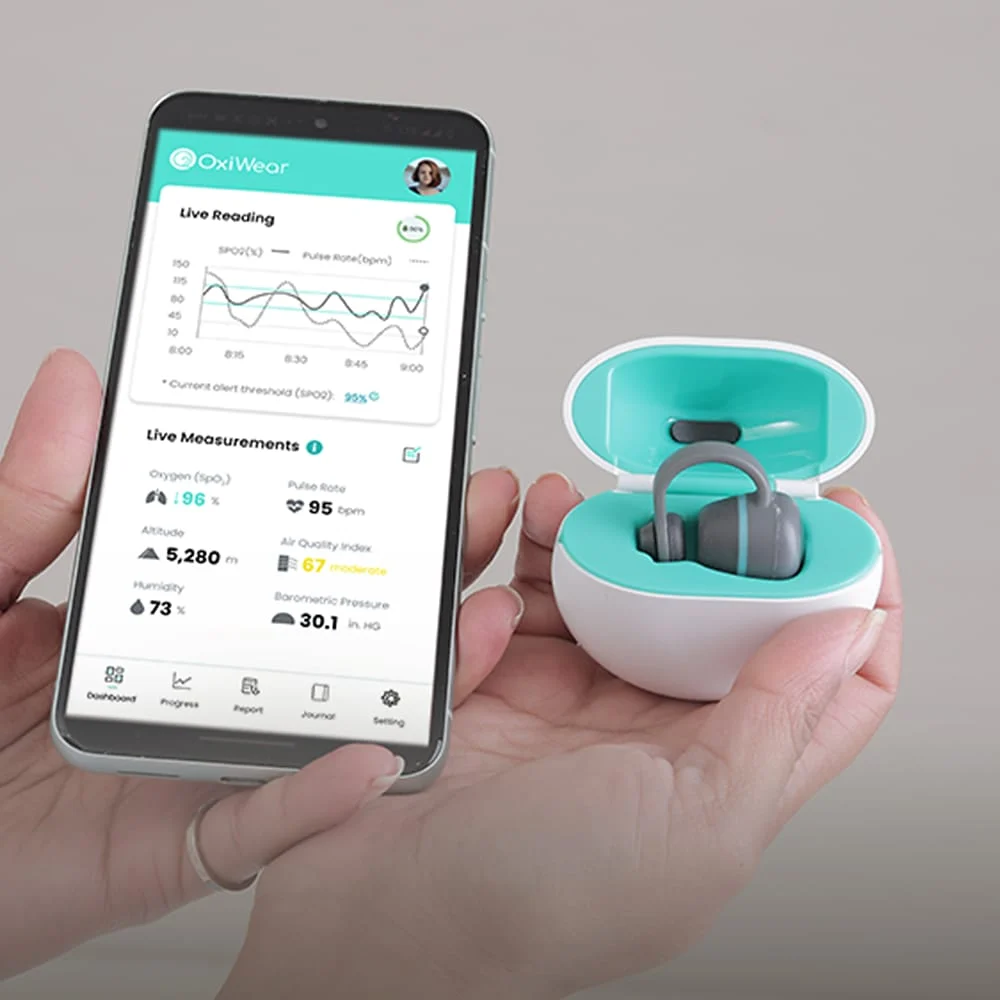
In a significant development for patients living with chronic respiratory and cardiovascular conditions, OxiWear—the developer of an innovative, FDA-cleared ear-worn pulse oximeter—has announced that its device is now eligible for reimbursement through Medicare and a growing network of private insurance providers. This milestone marks a critical transition for the wearable technology sector, moving beyond the "wellness tracker" category into the realm of essential, insurance-covered medical equipment.
For millions of patients suffering from conditions characterized by hypoxia—a state where the body or a region of the body is deprived of adequate oxygen supply—this announcement represents a fundamental shift in how they manage their health. By removing financial barriers, OxiWear aims to provide continuous, real-time physiological data to those who need it most, potentially curbing emergency room visits and improving long-term clinical outcomes.
Main Facts: A New Era for Continuous Oxygen Monitoring
The core of the OxiWear solution is its form factor and its clinical precision. Unlike traditional fingertip pulse oximeters, which are often used as "spot checks," OxiWear is designed to be worn continuously on the ear. This positioning allows for high-fidelity data collection regardless of whether the patient is sleeping, exercising, or performing daily chores.
The expansion of insurance coverage is the cornerstone of the company’s current growth strategy. With Medicare and participating insurers now recognizing the device as a reimbursable medical expense, the out-of-pocket costs that previously acted as a deterrent for many patients are being dismantled.
Key Technical and Operational Features:
- FDA Clearance: The device has undergone rigorous review by the U.S. Food and Drug Administration, ensuring it meets clinical standards for accuracy and safety.
- Real-Time Alerts: The system provides immediate notifications when blood oxygen saturation levels drop below a pre-set threshold, allowing for timely intervention.
- Continuous Monitoring: Unlike spot-check devices, OxiWear provides a longitudinal data stream, which is vital for patients with fluctuating conditions such as COPD, pulmonary hypertension, or complex cardiovascular disorders.
- Broad Compatibility: The device is cleared for use in both professional clinical environments and home settings, creating a continuum of care that follows the patient from the hospital to their living room.
Chronology: From Personal Mission to Clinical Standard
The journey of OxiWear is not merely a tale of technological innovation but one of patient advocacy.
The Genesis
OxiWear was founded by Shavini Fernando, who sought to address her own struggles with living at risk of low oxygen levels. Frustrated by the lack of reliable, non-intrusive, and portable monitoring tools, Fernando transitioned from a tech innovator to a CEO with a singular mission: to provide patients with the same level of security she sought for herself.
The FDA Milestone
The path to market was paved with extensive clinical validation. During the FDA review process (K233827), OxiWear was required to demonstrate not only its diagnostic accuracy but also its performance across a spectrum of skin tones. This was a critical juncture, as the medical community has long grappled with the inherent biases in traditional pulse oximetry, which often demonstrate decreased accuracy on darker skin pigmentation. By successfully clearing these hurdles, OxiWear positioned itself as a leader in equitable health technology.
The Reimbursement Breakthrough
Following FDA clearance, the company pivoted to the complex landscape of medical billing. The process of securing coverage—navigating the bureaucracy of Medicare codes and the varying policies of private insurers—is the final gatekeeper for medical technology. The recent announcement that the device is now reimbursable signifies that the company has successfully satisfied the rigorous evidentiary requirements set forth by insurance payers, who demand proof of both clinical efficacy and cost-effectiveness.
Supporting Data: Why Accuracy and Equity Matter
The clinical necessity for continuous monitoring is supported by an overwhelming body of medical evidence. Hypoxia is often silent, particularly in patients with chronic obstructive pulmonary disease (COPD) or post-COVID-19 respiratory complications. By the time a patient feels the symptoms of oxygen deprivation, their condition may have already reached a critical state.
Addressing the "Pulse Oximetry Gap"
A 2022 study highlighted the systemic issue of racial bias in pulse oximeters, noting that traditional devices often overestimated oxygen levels in patients with darker skin tones, leading to delayed treatment and increased mortality rates. OxiWear’s performance data during the FDA review indicates that their ear-worn technology effectively mitigates these disparities. By measuring oxygen levels in the ear—where tissue is thinner and blood flow is distinct—the device offers a more consistent reading across diverse demographics.
Reducing Healthcare Costs
The economic argument for reimbursement is equally compelling. Unplanned hospitalizations for hypoxic events are a significant burden on the healthcare system. A patient who receives a real-time alert via OxiWear can take preemptive measures—such as adjusting their supplemental oxygen flow or contacting their physician—before a situation necessitates an ambulance or an ICU admission. The data suggests that continuous monitoring serves as a "preventative gatekeeper," saving costs for both the patient and the insurance provider.
Official Responses: A Vision for Patient Empowerment
In a recent press release, CEO Shavini Fernando articulated the significance of this expansion. "I started OxiWear as a personal mission to help people like me live life to the fullest despite the challenges of living with conditions that put us at risk of low oxygen levels," Fernando noted.
Her statement reflects the internal culture of the company, which views the reimbursement milestone not as a financial win, but as a victory for patient autonomy. "Since receiving FDA clearance, one of our biggest priorities has been solving the reimbursement challenge and ensuring patients can access this technology without creating an additional financial burden. I’m incredibly proud that we’ve been able to work through those barriers and make OxiWear available through insurance coverage. Now, more patients can access the continuous oxygen data they need with greater affordability and peace of mind."
Industry analysts observe that this move by OxiWear puts pressure on other wearable medical device companies to follow suit. When a startup successfully secures Medicare reimbursement, it sets a precedent that wearable devices are no longer just "nice-to-have" accessories, but fundamental tools for chronic disease management.
Implications: The Future of Connected Care
The implications of OxiWear’s expanded reimbursement go far beyond the balance sheet. This development signals a structural change in how we define "medical care" in the 21st century.
1. The Shift to Home-Based Monitoring
Healthcare is rapidly moving away from the hospital-centric model. As providers seek to manage more patients remotely, the availability of insurance-covered, accurate wearables is essential. OxiWear enables "hospital-at-home" programs to monitor oxygen levels with clinical-grade accuracy, allowing physicians to make data-driven decisions without requiring the patient to visit a clinic.
2. Longitudinal Data for Chronic Disease
Traditional medicine relies on "snapshots"—a blood pressure check here, an oxygen test there. These snapshots are often insufficient for chronic diseases that evolve throughout the day. Continuous data provides a longitudinal view of a patient’s health, allowing for the detection of subtle trends that could indicate an impending flare-up or the degradation of a condition.
3. Patient Peace of Mind
Perhaps the most intangible but significant implication is the psychological benefit. Patients living with chronic respiratory failure often live in a state of hyper-vigilance, constantly worrying about their oxygen levels. A wearable device that alerts them only when necessary allows them to move through their daily lives with a sense of security. It acts as a silent guardian, providing peace of mind to both the patient and their caregivers.
4. Future Policy and Research
As more patients use OxiWear and the data accumulates, researchers will have a massive, anonymized pool of information to better understand the patterns of hypoxia in various conditions. This data will likely drive the next generation of algorithms for predictive healthcare, where AI might eventually be used to predict an oxygen drop before it even occurs.
Conclusion: A New Standard for Accessibility
The integration of OxiWear into insurance-covered care is a landmark moment for health equity and technological progress. By prioritizing both clinical accuracy and financial accessibility, the company has provided a roadmap for how medical technology should evolve to meet the needs of a diverse and aging population.
As the healthcare industry continues to grapple with the rising costs of chronic care and the persistent need for more efficient patient management, innovations like OxiWear demonstrate that the path forward lies in the convergence of wearable tech and established clinical protocols. For the patients, the caregivers, and the physicians tasked with keeping them healthy, this development is more than a policy update; it is a vital new lifeline.
With reimbursement now established, the focus shifts to adoption. As more clinicians become aware of the efficacy and accessibility of OxiWear, the expectation is that continuous oxygen monitoring will become a standard component of care plans for those at risk, ultimately leading to a healthier, more connected, and more secure patient population.