




In the high-stakes world of vaccinology, the difference between a successful candidate and a failed clinical trial often comes down to a matter of perspective—specifically, how accurately scientists can mirror the complex environment of a living virus. For decades, researchers have been hampered by the limitations of laboratory-grown viral proteins, which are often stripped of their essential structural components to make them easier to study.
Now, a team of researchers at Scripps Research, in collaboration with IAVI and other global partners, has unveiled a groundbreaking platform that promises to change this paradigm. By utilizing nanodisc technology to cradle viral proteins within a synthetic, lipid-based environment, the team has created a more authentic "testing ground" for vaccines. This innovation, recently published in Nature Communications, offers a transformative approach to understanding how the human immune system recognizes and neutralizes some of the most formidable pathogens on Earth, including HIV, Ebola, and potentially SARS-CoV-2.
The Structural Dilemma: Why Conventional Methods Fall Short
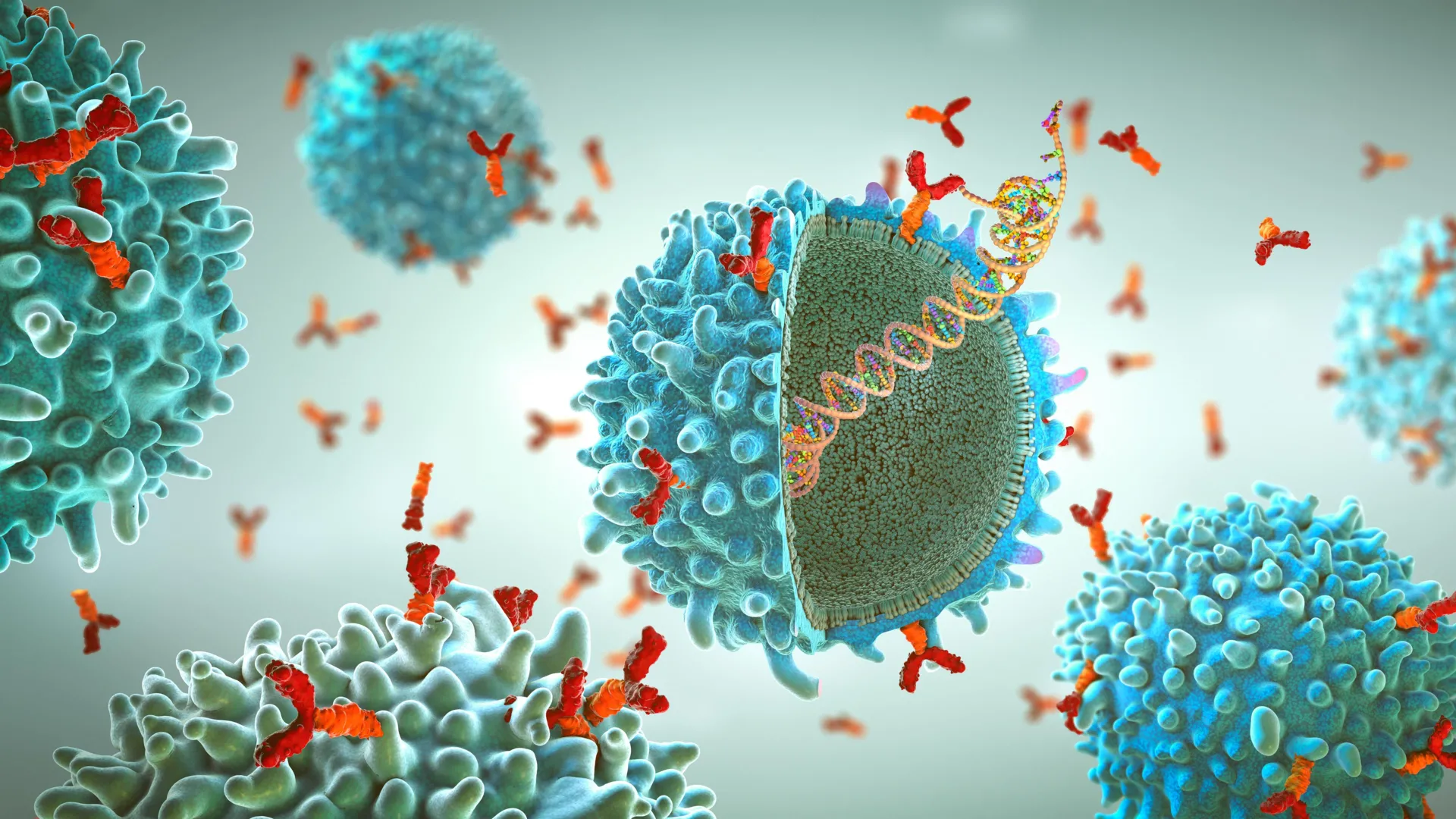
To understand the significance of this breakthrough, one must first understand the architecture of a virus. Viruses are not merely genetic material; they are sophisticated biological machines protected by an outer membrane studded with specialized glycoproteins. These proteins serve as the primary "keys" that allow a virus to unlock and enter human cells. Consequently, they are the main targets for the antibodies generated by vaccines.
Traditionally, scientists have studied these proteins in isolation. To simplify the process of laboratory analysis, researchers frequently remove the membrane-anchoring segments of the proteins. While this makes the molecules more soluble and easier to manipulate, it creates a significant "reality gap." Without their natural membrane base, these proteins often adopt a different shape than they would in an active infection.
"For many years, we’ve had to rely on versions of viral proteins that are missing important pieces," explains William Schief, a professor at Scripps Research and executive director of vaccine design at IAVI’s Neutralizing Antibody Center. "Our platform lets us study these proteins in a setting that better reflects their natural environment, which is critical if we want to understand how protective antibodies recognize a virus."
The danger of using "truncated" proteins is that they may hide the very targets that a potent antibody would normally attack. If a vaccine is designed based on a shape that does not exist in nature, the immune system may be trained to produce antibodies that are ineffective against the actual, intact virus.
Chronology of the Innovation: From Concept to Scalable Platform
The development of the nanodisc platform was not a sudden epiphany but the culmination of years of iterative research aimed at closing the gap between simplified protein structures and the chaotic, membrane-bound reality of a virus.
The Initial Challenge
The project began with the recognition that while individual components—such as lipid bilayer technology and protein engineering—existed, there was no standardized, reproducible system to integrate them into a pipeline for vaccine development. The team needed a way to hold these viral proteins in a stable, membrane-like patch that would remain accessible for high-resolution imaging and immune cell sorting.
Engineering the Nanodisc
The researchers focused on creating "nanodiscs"—tiny, stable patches of lipids that function as a synthetic membrane. By embedding vaccine candidate proteins into these discs, the team successfully mimicked the virus’s surface. This was not a passive achievement; it required precise engineering to ensure the proteins stayed upright and in their correct conformation.
Validating the System
The team first tested their platform using HIV and Ebola, two viruses notorious for their ability to evade the immune system through complex, hard-to-target surface structures. The validation phase confirmed that the nanodisc-bound proteins were not only stable but also capable of interacting with antibodies in a manner that mirrored natural infection.
Scaling for Reproducibility
As first author Kimmo Rantalainen, a senior scientist in Schief’s lab, notes, "The individual pieces already existed, but making them work together in a way that’s reproducible and scalable opens up new possibilities for how vaccines are analyzed and designed." The transition from a bespoke laboratory experiment to a scalable platform was the final, crucial step in making the technology a viable tool for the global research community.
Supporting Data: Unlocking New Insights into Antibody Interactions
The utility of the nanodisc platform was clearly demonstrated in its application to HIV. Researchers specifically targeted a stable, conserved region of the HIV surface protein located near the viral membrane. Because this region remains consistent even as the virus mutates, it is considered a "holy grail" for universal HIV vaccine development.
When studied in isolation, this region is often difficult to access. However, when presented within the nanodisc platform, the proteins provided a clearer "structural view" of how antibodies interact with the virus. The results were striking: the platform revealed previously invisible features of the membrane interface, explaining why certain antibodies are uniquely capable of neutralizing the virus. These insights provide a roadmap for designers, suggesting that future vaccines should focus on these specific, membrane-proximal targets.
Beyond structural analysis, the platform serves as an efficient "bait" system. By utilizing the nanodiscs to isolate immune cells that respond to viral proteins, researchers can gain a real-time understanding of how the body reacts to different vaccine candidates. Efficiency is a major selling point: processes that previously required over a month of labor-intensive work can now be completed in roughly one week, drastically accelerating the pace of candidate evaluation.
Official Perspectives: A Catalyst for Future Design
The consensus among the research team is that while this platform is not a vaccine itself, it is a "force multiplier" for the field. By providing a more accurate representation of the target, researchers can weed out ineffective vaccine candidates early in the development process, saving millions of dollars and years of time.
"This gives the field a more realistic, accurate way to test ideas early on," says Schief. "By improving how we study viral proteins and antibody responses, we hope this platform will help advance next-generation vaccines against some of the world’s most challenging viruses."
The inclusion of collaborators from Moderna Inc. and various academic institutions underscores the potential for this technology to cross the threshold from basic research into industrial application. As the platform is applied to other viruses like influenza and SARS-CoV-2, it is expected to provide a universal framework for understanding how membrane-bound proteins dictate the success or failure of a vaccine.
Implications for Global Health
The implications of this study reach far beyond the walls of Scripps Research. Vaccine development has traditionally been a slow, hit-or-miss process. By moving toward a "precision medicine" approach in vaccine design—where the structural targets are verified in near-natural conditions before human trials even begin—the scientific community can better address pathogens that have historically eluded containment.
Reducing Failure Rates
A significant portion of vaccine candidates fail because they don’t generate the specific, high-affinity antibodies needed to prevent infection. If a candidate looks good in a test tube but fails to replicate the natural viral structure, it is doomed to fail in the body. The nanodisc platform effectively acts as a quality-control filter, ensuring that only the most "physiologically relevant" candidates proceed to clinical evaluation.
Addressing Pandemic Preparedness
The adaptability of the platform is perhaps its greatest strength. Because the nanodisc system can be applied to almost any membrane-bound viral protein, it serves as a "plug-and-play" infrastructure for pandemic preparedness. If a new, novel virus emerges, researchers could theoretically utilize this platform to rapidly map the surface proteins and determine the best targets for neutralizing antibodies, potentially shaving months off the time required to design an effective vaccine.
A New Standard in Analytics
The study, titled "Virus glycoprotein nanodisc platform for vaccine analytics," sets a new standard for what should be expected in pre-clinical vaccine data. By showing that membrane-environment testing is both possible and scalable, the authors have effectively raised the bar for rigor in the field.
In conclusion, the development of this nanodisc platform marks a pivot point in modern vaccinology. By honoring the complex, membrane-bound architecture of viruses rather than stripping it away, scientists are finally gaining the clarity they need to outpace the most persistent pathogens of our time. As the platform gains wider adoption, it promises to turn the tide against viruses that have long been considered "unvaccinatable," offering hope for more effective, durable, and rapid vaccine responses in the future.