




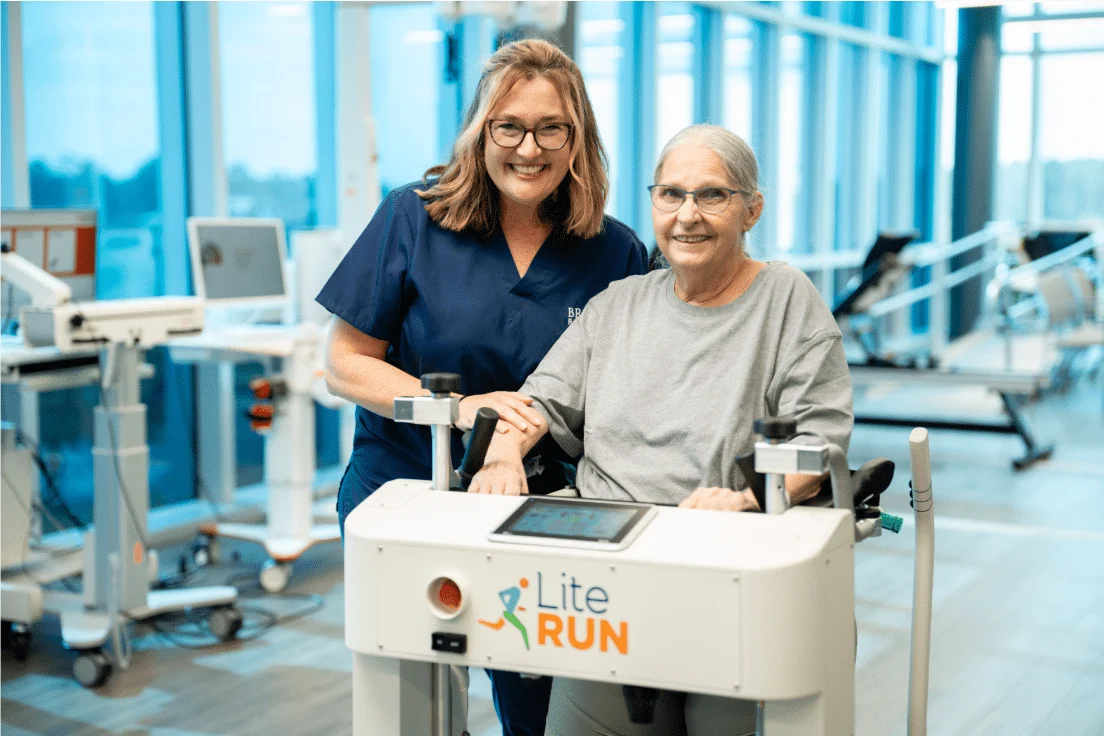
Jacksonville, FL – In a landmark move poised to redefine the landscape of inpatient rehabilitation, Brooks Rehabilitation, a nationally recognized leader in physical rehabilitation, has announced its pioneering adoption of Lite Run™’s FDA-registered anti-gravity mobility technology. This strategic integration makes Brooks the first nationwide inpatient rehabilitation hospital to implement this innovative system, significantly enhancing patient safety, accelerating recovery timelines, and alleviating the physical demands on clinical staff. The technology promises to unlock earlier, more effective mobilization for patients recovering from a wide spectrum of complex conditions, ranging from neurological injuries to orthopedic trauma.
The introduction of Lite Run’s advanced platform underscores Brooks Rehabilitation’s unwavering commitment to leveraging cutting-edge innovation for superior patient outcomes. By enabling individuals to safely bear weight and engage in functional therapy sooner than previously possible, the technology addresses critical challenges within rehabilitation medicine, including the complications associated with prolonged immobility and the increasing complexity of patient populations.
Main Facts: A New Era in Rehabilitation
Brooks Rehabilitation, consistently ranked among the nation’s top providers, has officially integrated Lite Run Inc.’s FDA-registered anti-gravity mobility technology across its facilities. This monumental step positions Brooks as the first inpatient rehabilitation hospital in the United States to deploy this advanced system on a national scale. The core objective of this adoption is to facilitate earlier and safer patient mobilization, a critical factor in optimizing recovery trajectories and improving long-term functional independence.
The Lite Run system utilizes a patented wearable Exosuit combined with low-pressure air technology to precisely offload up to 150 pounds of a patient’s body weight. This innovative approach effectively mitigates the risk of falls, allowing patients to remain upright, mobile, and actively engaged in their therapeutic exercises with unprecedented safety and comfort. This is particularly transformative for individuals with severe mobility impairments, neurological conditions, or post-surgical limitations who traditionally face significant barriers to early weight-bearing and ambulation.
Dr. Mark Bowden, PhD, PT, Vice President for Clinical Integration and Research at Brooks Rehabilitation, emphasized the strategic importance of this integration. "Through our Center for Innovation, Brooks meticulously evaluates and tests new and emerging technologies to ascertain their potential benefits for enhancing patient outcomes," Dr. Bowden stated. "Following an extensive, months-long evaluation period, we reached an informed decision: Lite Run effectively fills a crucial gap, empowering specific patients to mobilize safely and comfortably at an earlier stage, often with reduced reliance on extensive staff assistance."
This adoption extends beyond immediate patient benefits, also addressing the pressing issue of physical strain on rehabilitation clinicians. By significantly reducing the manual effort required to support and maneuver patients, Lite Run technology empowers therapists to deliver more efficient and ergonomically safer care, ultimately leading to improved staff morale and retention. Currently, three Lite Run devices have been acquired, with one each operational at Brooks’ two Jacksonville, Florida, hospitals. A third unit is slated for deployment upon the grand opening of Brooks’ newest facility in Phoenix, Arizona, situated on the Mayo Clinic campus, signaling a consistent commitment to this technology as the organization expands its national footprint.
Chronology: From Concept to Clinical Integration
The journey of Lite Run’s anti-gravity technology from an innovative concept to a cornerstone of patient care at Brooks Rehabilitation is a testament to the institution’s forward-thinking approach and its rigorous evaluation processes.
Phase 1: Identification and Initial Assessment (Pre-Evaluation)
Brooks Rehabilitation, through its renowned Center for Innovation, maintains a proactive stance in identifying novel technologies that hold the promise of transforming rehabilitation care. The Center’s mission is to explore, evaluate, and integrate advancements that can significantly improve patient outcomes, enhance clinician efficiency, and address evolving healthcare challenges. Lite Run’s anti-gravity system first came onto Brooks’ radar as a potential solution for early patient mobilization, a recognized area for improvement across the rehabilitation spectrum. The Center’s experts, comprising physical therapists, occupational therapists, researchers, and engineers, conducted preliminary research into the technology’s core principles, existing safety data, and potential applications.
Phase 2: The Months-Long Evaluation (Clinical Testing and Data Collection)
Following initial interest, Brooks embarked on a comprehensive, "months-long evaluation" of the Lite Run platform. This rigorous testing phase was critical to validate the technology’s efficacy, safety, and practicality within a busy inpatient rehabilitation setting. During this period, the Lite Run devices were put through their paces with a diverse cohort of patients, including those recovering from stroke, spinal cord injury (SCI), traumatic brain injury (TBI), various neurological conditions, and complex orthopedic injuries.
The evaluation focused on several key metrics:
- Patient Safety: Monitoring for any adverse events, assessing the effectiveness of fall prevention mechanisms, and ensuring patient comfort.
- Mobilization Timelines: Documenting how much earlier patients could initiate standing, walking, and balance exercises compared to traditional methods.
- Functional Gains: Observing improvements in gait, balance, endurance, and overall independence.
- Therapist Workflow and Ergonomics: Quantifying the reduction in physical burden on clinicians, assessing ease of use, and integration into existing therapy protocols.
- Patient Experience: Gathering direct feedback on comfort, perceived security, and psychological impact of early movement.
This extensive data collection and analysis allowed Brooks’ clinical and research teams to gain a deep understanding of Lite Run’s capabilities and limitations. Dr. Bowden’s statement about "making an educated decision and determin[ing] that Lite Run filled a gap" directly reflects the outcome of this meticulous evaluation, confirming that the technology offered unique advantages not readily available through existing equipment or manual techniques.
Phase 3: Strategic Procurement and Initial Deployment (Post-Evaluation Decision)
Upon successful completion of the evaluation, Brooks Rehabilitation made the strategic decision to procure three Lite Run devices. This commitment was informed by the conclusive evidence demonstrating the technology’s tangible benefits. The initial deployment saw one device each installed at Brooks’ two prominent Jacksonville, Florida, hospitals. These facilities serve as critical hubs for complex rehabilitation, making them ideal locations to maximize the immediate impact of the new technology.
Phase 4: National Expansion and Future Integration (Ongoing and Future Plans)
The acquisition of a third Lite Run unit underscores Brooks’ vision for national integration. This device is earmarked for the organization’s newest, state-of-the-art hospital opening in Phoenix, Arizona, on the Mayo Clinic campus. This expansion signifies that Lite Run is not merely a pilot project but a foundational element of Brooks’ evolving model of care, designed to be scaled across its growing network.
The broader chronological context also highlights a critical trend in rehabilitation: the increasing prioritization of early mobilization and upright functional therapy. Healthcare providers are acutely aware of the detrimental complications associated with immobility, such as deep vein thrombosis (DVT), pressure ulcers, muscle atrophy, and cardiovascular deconditioning. By proactively addressing these risks through technologies like Lite Run, the industry aims to improve patient endurance, accelerate recovery, and restore independence faster, ultimately leading to shorter hospital lengths of stay and improved long-term quality of life. Brooks Rehabilitation’s adoption of Lite Run is a direct response to, and a leading example of, this evolving paradigm in post-acute care.
Supporting Data: Unpacking the Impact of Anti-Gravity Mobility
The decision by Brooks Rehabilitation to integrate Lite Run technology is underpinned by a robust understanding of its mechanical advantages, clinical applications, and far-reaching benefits for both patients and healthcare providers. This section delves into the specifics that justify its position as a game-changer in rehabilitation.
The Technology Unpacked: Precision and Safety in Motion
At its core, the Lite Run system represents a sophisticated fusion of biomechanics and pneumatic engineering. It comprises two primary components:
- The Patented Wearable Exosuit: This specially designed garment is fitted to the patient, providing a secure interface with the anti-gravity system. It is engineered for comfort, allowing for natural movement while ensuring stability. The Exosuit evenly distributes the upward lift force, preventing concentrated pressure points and enhancing the patient’s sense of security.
- Low-Pressure Air Technology: This is the heart of the system. Through an integrated air compressor and precise controls, a calculated amount of upward force is applied to the Exosuit. This force effectively counteracts a user-defined portion of the patient’s body weight, ranging up to 150 pounds. The adjustability is crucial, allowing therapists to gradually increase weight-bearing as a patient progresses, or to provide maximum support for severely impaired individuals.
The key to Lite Run’s effectiveness lies in its ability to offload weight dynamically and precisely. Unlike traditional overhead harness systems that can restrict natural movement patterns, Lite Run’s design supports a more physiological gait and balance training. It keeps patients upright, mobile, and crucially, prevents falls by providing continuous, responsive support. This dynamic offloading allows patients to practice walking, balance, and strengthening exercises with significantly reduced impact and fear, fostering confidence and active participation in therapy.
Clinical Applications: A Spectrum of Recovery
Lite Run’s versatility makes it applicable across a broad spectrum of conditions treated at Brooks Rehabilitation:
- Stroke: For stroke survivors, early initiation of gait training and weight-bearing activities is critical for neuroplasticity and motor recovery. Lite Run allows patients with hemiparesis or balance deficits to practice walking patterns and weight shifting in a safe, controlled environment, promoting motor relearning.
- Spinal Cord Injury (SCI): Patients with SCI often face significant challenges with lower extremity weakness and paralysis. Lite Run enables them to engage in upright activities, facilitating standing balance, step training, and even assisted ambulation, which is vital for maintaining bone density, muscle mass, and cardiovascular health.
- Traumatic Brain Injury (TBI): TBI patients frequently present with a combination of motor, balance, and cognitive impairments. The secure, fall-safe environment provided by Lite Run allows them to focus on motor tasks without the added cognitive load of fear of falling, supporting more effective rehabilitation.
- Neurological Conditions: Conditions like Parkinson’s disease, multiple sclerosis, and cerebral palsy often involve progressive gait and balance disturbances. Lite Run offers a consistent support system for maintaining mobility, practicing compensatory strategies, and improving endurance in a protected setting.
- Orthopedic Injuries: Post-surgical patients (e.g., total joint replacements, fracture repairs) or those with significant lower extremity trauma often have strict weight-bearing precautions. Lite Run allows for controlled, partial weight-bearing activities much earlier in recovery, preventing muscle atrophy and accelerating the healing process.
Patient Outcomes: The Transformative Power of Early Movement
The benefits of early mobilization, facilitated by technologies like Lite Run, are profound and multifaceted:
- Reduced Complications of Immobility: Prolonged bed rest and inactivity lead to a cascade of negative physiological effects, including deep vein thrombosis (DVT), pulmonary embolism, pressure ulcers, muscle atrophy, bone demineralization, cardiovascular deconditioning, and pneumonia. By enabling patients to move earlier, Lite Run directly mitigates these life-threatening and recovery-hindering complications.
- Improved Endurance and Strength: Active participation in upright therapy builds physical stamina and strengthens muscles more effectively than passive exercises. Patients can sustain longer therapy sessions and engage in more challenging tasks.
- Faster Restoration of Independence: The ability to practice functional movements such as walking, standing, and balancing directly translates to quicker recovery of activities of daily living (ADLs), fostering greater independence and reducing reliance on caregivers.
- Enhanced Psychological Well-being: The psychological impact of immobility can be devastating. Being able to stand and walk again, even with assistance, provides a significant boost to morale, confidence, and motivation, which are crucial for adherence to therapy and overall recovery. Patients "appreciated the comfort and ability to use the technology in multiple, overground therapies without being confined to a treadmill," as noted by Kathryn Swanson, reinforcing the dignity and natural feel of the experience.
- Reduced Hospital Lengths of Stay (LOS): By accelerating functional recovery and reducing complications, early mobilization directly contributes to shorter inpatient hospital stays, which benefits both patients and the healthcare system.
Therapist Efficiency & Safety: Empowering the Care Team
Lite Run isn’t just a patient-centric technology; it’s a vital tool for empowering rehabilitation clinicians:
- Reduced Physical Strain and Injury Risk: Manually supporting patients during gait and balance training is physically demanding and carries a high risk of musculoskeletal injuries for therapists. Lite Run significantly reduces this burden, safeguarding the health and longevity of clinical staff.
- Increased Patient Throughput: With less physical exertion required, therapists can more efficiently manage their caseloads, potentially assisting more patients in a given day. Gregg Smith, CEO of Lite Run, articulated this point, stating, "Lite Run reduces the physical burden on clinicians to help more patients each day in ways not possible before."
- Enhanced Focus on Therapeutic Intervention: When therapists are not primarily focused on preventing falls or manually supporting weight, they can dedicate more attention to guiding proper movement patterns, providing verbal cues, and implementing advanced therapeutic techniques, thereby optimizing the quality of care.
- Addressing Staffing Constraints: In an era of increasing healthcare staffing shortages, technologies that amplify clinician capabilities and allow for "dividing and conquering" complex patient needs become invaluable. Lite Run enables a single therapist to safely manage tasks that might otherwise require two or more, making optimal use of limited personnel.
Lite Run supports a comprehensive range of activities, including walking, balance training, weight shifting, strengthening, and endurance training. By answering the fundamental question of "how early therapists can help a patient move again and become active," it not only increases clinician efficiency but also provides a comfortable and dignified patient experience that prioritizes active participation over passive assistance.
Official Responses: Voices of Innovation and Vision
The integration of Lite Run technology at Brooks Rehabilitation has garnered enthusiastic responses from key leaders within both organizations, highlighting the strategic vision and the tangible benefits anticipated from this partnership.
Brooks Rehabilitation Leadership: Commitment to Pioneering Care
Mark Bowden, PhD, PT, Vice President for Clinical Integration and Research at Brooks Rehabilitation, articulated the institutional philosophy driving this significant investment. Dr. Bowden underscored the critical role of Brooks’ Center for Innovation as a crucible for evaluating and validating advanced medical technologies. "Through our Center for Innovation, Brooks evaluates and tests new and emerging technologies to determine their potential benefits for improving patient outcomes," he explained. This statement reinforces Brooks’ reputation not just as a provider, but as a thought leader and innovator in rehabilitation science.
Dr. Bowden’s comments further clarified the rigorous, data-driven process that led to Lite Run’s adoption. He noted, "After a months-long evaluation, Brooks was able to make an educated decision and determine that Lite Run filled a gap in helping specific patients safely and comfortably mobilize earlier with less staff assistance." This emphasis on a "gap" signifies that Lite Run addresses a previously unmet clinical need, offering a solution where existing modalities were either insufficient or too labor-intensive. It speaks to the technology’s unique ability to bridge the transition from bed-bound immobility to active, upright therapy, particularly for patients who are too fragile or weak for conventional gait training. The reduction in required staff assistance is a critical practical benefit, directly impacting operational efficiency and therapist well-being.
Kathryn Swanson, PT, DPT, NCS, Inpatient Clinical Technology and Programmatics Coordinator at Brooks Rehabilitation, provided a clinician’s perspective, emphasizing the direct impact on therapy teams and patient experience. "After a lengthy evaluation period, Brooks Rehabilitation continues to add advanced technologies for patient recovery with the Lite Run platform, which opens many possibilities for our patients and our clinicians as we expand nationwide," Swanson remarked. Her statement highlights the expansive potential of Lite Run, not just for current operations but as an integral component of Brooks’ strategic growth, particularly with the new Phoenix facility.
Swanson elaborated on the immediate advantages for therapists: "Our therapy teams gain an additional tool to safely mobilize patients earlier." This "additional tool" is crucial in a profession that constantly seeks innovative methods to optimize recovery. Crucially, she also relayed invaluable patient feedback: "Patients appreciated the comfort and ability to use the technology in multiple, overground therapies without being confined to a treadmill." This observation is highly significant. It speaks to the psychological and physiological benefits of natural, unconstrained movement, fostering a sense of dignity and normalcy that treadmill-based systems often cannot replicate. The freedom to move in an open clinical setting allows for a wider range of functional tasks and a more engaging therapy experience, promoting active participation and better carryover into daily life.
Lite Run Inc. Leadership: Addressing Industry Challenges with Innovation
Gregg Smith, CEO of Lite Run, offered an industry-wide perspective, framing the adoption within the broader challenges facing rehabilitation providers today. Smith acknowledged the increasing pressures on healthcare systems: "We know that rehabilitation providers face increasing pressure to improve outcomes, mobilize patients earlier and support those more medically complex conditions with fewer clinical staff." This concise summary captures the trifecta of demands—clinical excellence, operational efficiency, and resource scarcity—that Lite Run aims to address.
Smith further elucidated the strategic design philosophy behind Lite Run: "Our technology was specifically designed to help therapists divide and conquer in safely supporting specific patients earlier in their recovery. Lite Run reduces the physical burden on clinicians to help more patients each day in ways not possible before." The phrase "divide and conquer" aptly describes how the technology enables therapists to manage complex cases more effectively, freeing them from the strenuous physical demands of patient support and allowing them to focus their expertise on therapeutic interventions. This not only enhances therapist safety and reduces the risk of work-related injuries but also significantly improves productivity, a crucial factor in managing growing patient volumes with potentially static or shrinking staff numbers.
Smith concluded with a forward-looking statement about the future trajectory of rehabilitation technology: "As hospitals, inpatient rehabilitation facilities, and other providers manage staffing constraints and increasingly complex patient populations, Smith believes technologies that support safer, earlier mobility will become a standard of care." This vision posits Lite Run, and similar anti-gravity systems, not as niche tools but as essential components of modern rehabilitation. It anticipates a future where such technologies are routinely expected and integrated, fundamentally reshaping best practices and ensuring that every patient, regardless of their condition, has access to the earliest and safest possible mobilization. This commitment to making safer, earlier mobility a standard underscores Lite Run’s role as a catalyst for systemic change in post-acute care.
Implications: Reshaping the Future of Rehabilitation
The adoption of Lite Run’s anti-gravity mobility technology by Brooks Rehabilitation represents more than just the integration of a new device; it signals a profound shift with wide-ranging implications for patient care, rehabilitation facilities, and the broader healthcare landscape.
For Patient Care: A Paradigm Shift in Recovery Trajectories
The most immediate and impactful implication is for the patient. By enabling earlier and safer mobilization, Lite Run has the potential to fundamentally alter recovery trajectories across a multitude of conditions.
- Accelerated Functional Recovery: Patients who can begin weight-bearing and ambulation earlier are likely to regain functional independence at a faster rate. This means a quicker return to activities of daily living, a reduced need for long-term care, and ultimately, an improved quality of life.
- Reduced Morbidity and Mortality: The prevention of complications associated with prolonged immobility—such as DVT, pressure ulcers, muscle atrophy, and pneumonia—is a critical benefit. This translates to fewer secondary medical issues, smoother recovery processes, and a lower risk of readmission or adverse events.
- Enhanced Patient Empowerment and Dignity: The ability to stand and move with less fear and more comfort provides a significant psychological boost. Patients feel more in control of their recovery, fostering greater motivation and active participation in therapy. The natural, overground movement experience, as opposed to being confined to a treadmill, contributes to a more dignified and empowering rehabilitation journey.
- Personalized Therapy Progression: The precise adjustability of weight offloading allows therapists to tailor support levels to individual patient needs, enabling highly personalized and progressive therapy that adapts as the patient gains strength and confidence.
For Rehabilitation Facilities: A Model for Innovation and Efficiency
Brooks Rehabilitation’s pioneering move sets a new benchmark for inpatient rehabilitation facilities nationwide, offering a blueprint for how innovation can address complex operational and clinical challenges.
- Leadership in Advanced Technology Adoption: Brooks solidifies its position as an industry leader, demonstrating a proactive approach to integrating advanced technologies that improve patient outcomes. This can attract both top-tier talent (clinicians and researchers) and patients seeking the most advanced care available.
- Addressing Staffing Challenges and Ergonomics: In an era of increasing healthcare workforce shortages and high rates of therapist injuries, Lite Run offers a tangible solution. By reducing the physical burden on staff, it improves clinician safety, job satisfaction, and potentially, retention. This allows facilities to optimize their human resources, enabling therapists to focus on their clinical expertise rather than manual labor.
- Operational Efficiency and Cost Savings: Earlier patient mobilization can lead to shorter hospital lengths of stay, which directly translates to cost savings for both patients and healthcare systems. Reduced complications also mean fewer resources allocated to managing secondary conditions, further enhancing efficiency.
- Competitive Advantage: Offering cutting-edge technology like Lite Run differentiates Brooks from other providers, strengthening its market position and appeal to a broader patient base, including those with complex and challenging conditions.
- Data-Driven Care Improvement: The integration of such technology facilitates continuous data collection on patient progress and outcomes, allowing facilities to further refine their treatment protocols and demonstrate measurable improvements in care quality.
For the Broader Healthcare Landscape: Redefining Standards of Care
The widespread adoption of anti-gravity mobility technology, as championed by Brooks Rehabilitation, has the potential to fundamentally reshape the standards of care in post-acute and long-term rehabilitation.
- Shift Towards Proactive Early Intervention: This technology reinforces the growing understanding that early intervention is paramount in recovery. It pushes the boundaries of "how early" mobilization can occur, encouraging a proactive rather than reactive approach to rehabilitation.
- Integration as a Standard Practice: As Gregg Smith, CEO of Lite Run, envisions, technologies that support safer, earlier mobility are poised to become a "standard of care." This implies that future rehabilitation facilities may be expected to offer such systems as a fundamental component of their services, much like physical therapy or occupational therapy itself.
- Catalyst for Further Innovation: Brooks’ success with Lite Run could inspire other institutions and technology developers to explore and invest in similar advancements, fostering a new wave of innovation in rehabilitation equipment and methodologies. This could lead to even more sophisticated, personalized, and accessible mobility solutions.
- Impact on Healthcare Policy and Reimbursement: As the evidence base for the effectiveness and cost-efficiency of anti-gravity technologies grows, it could influence healthcare policy and reimbursement models, potentially leading to broader coverage and integration into standard treatment pathways.
- Empowering an Aging Population: With an increasingly aging global population, the need for effective and safe mobility rehabilitation is paramount. Technologies like Lite Run can play a crucial role in maintaining the independence and quality of life for older adults recovering from injury or illness, reducing the societal burden of long-term care.
Brooks Rehabilitation’s strategic adoption of Lite Run’s anti-gravity mobility technology is a testament to its forward-thinking approach and its dedication to delivering the highest quality of patient care. By pioneering this national integration, Brooks is not only transforming individual patient journeys but also setting a new paradigm for the entire field of rehabilitation medicine, promising a future where earlier, safer, and more effective mobilization is a universal standard.